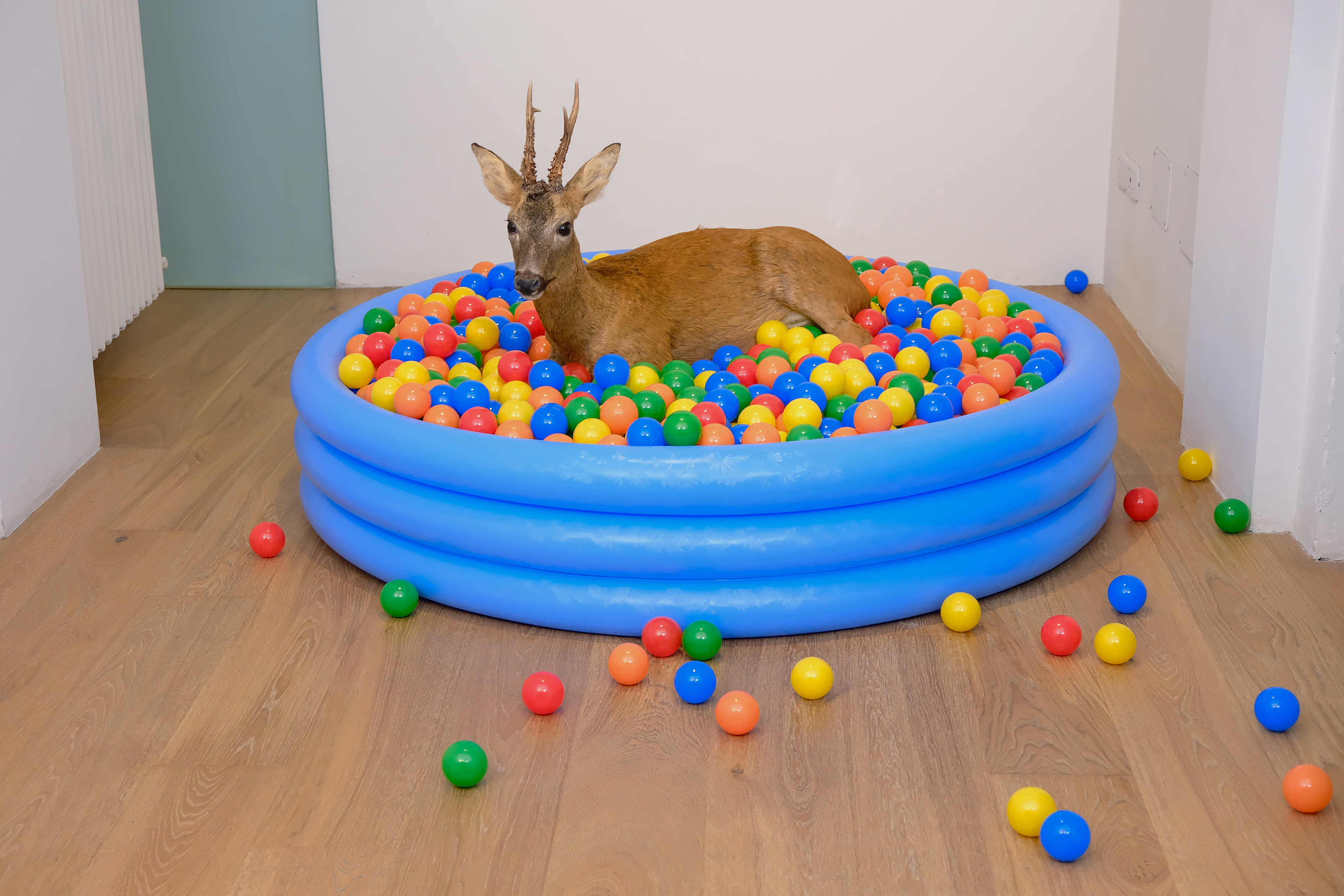
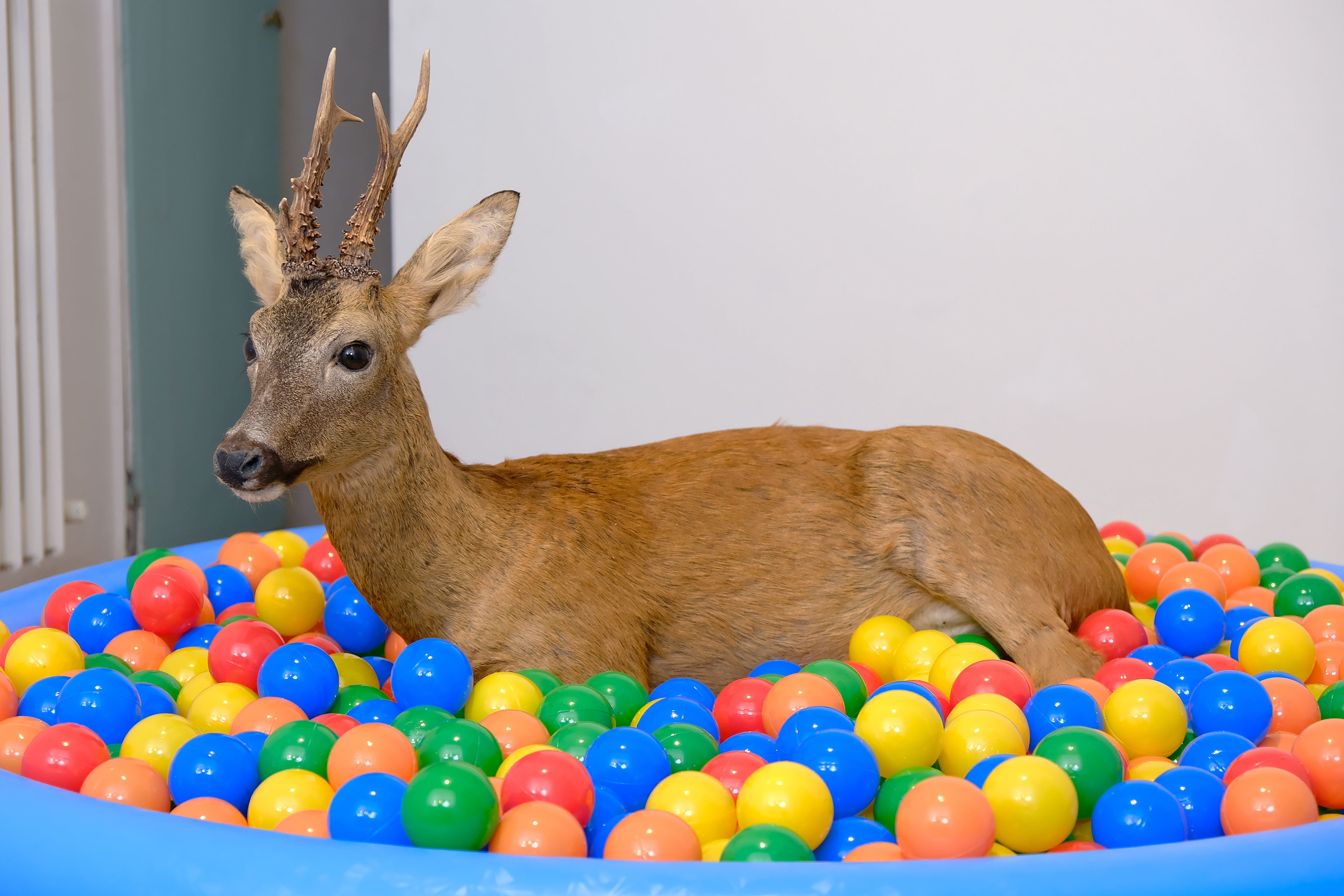
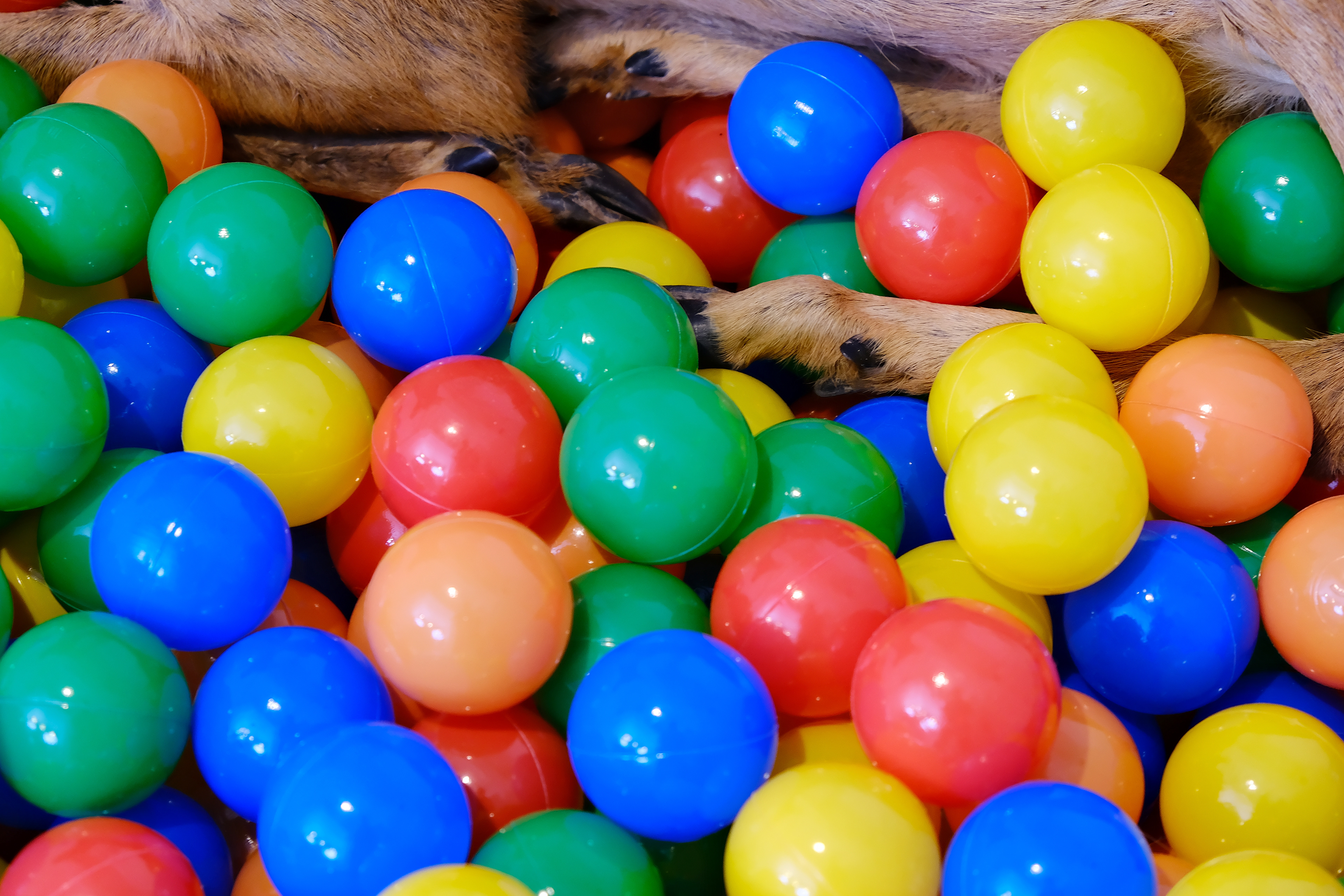
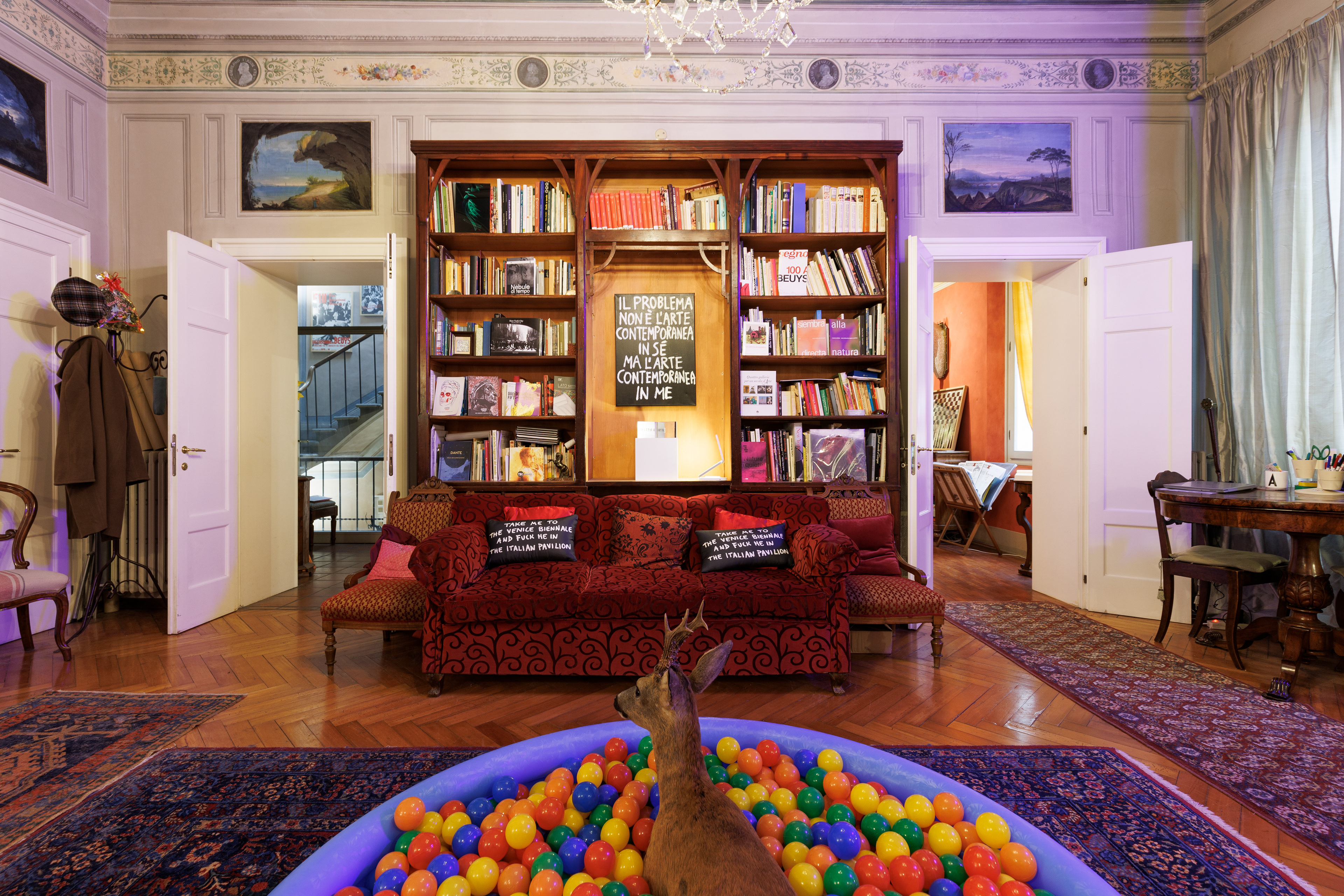
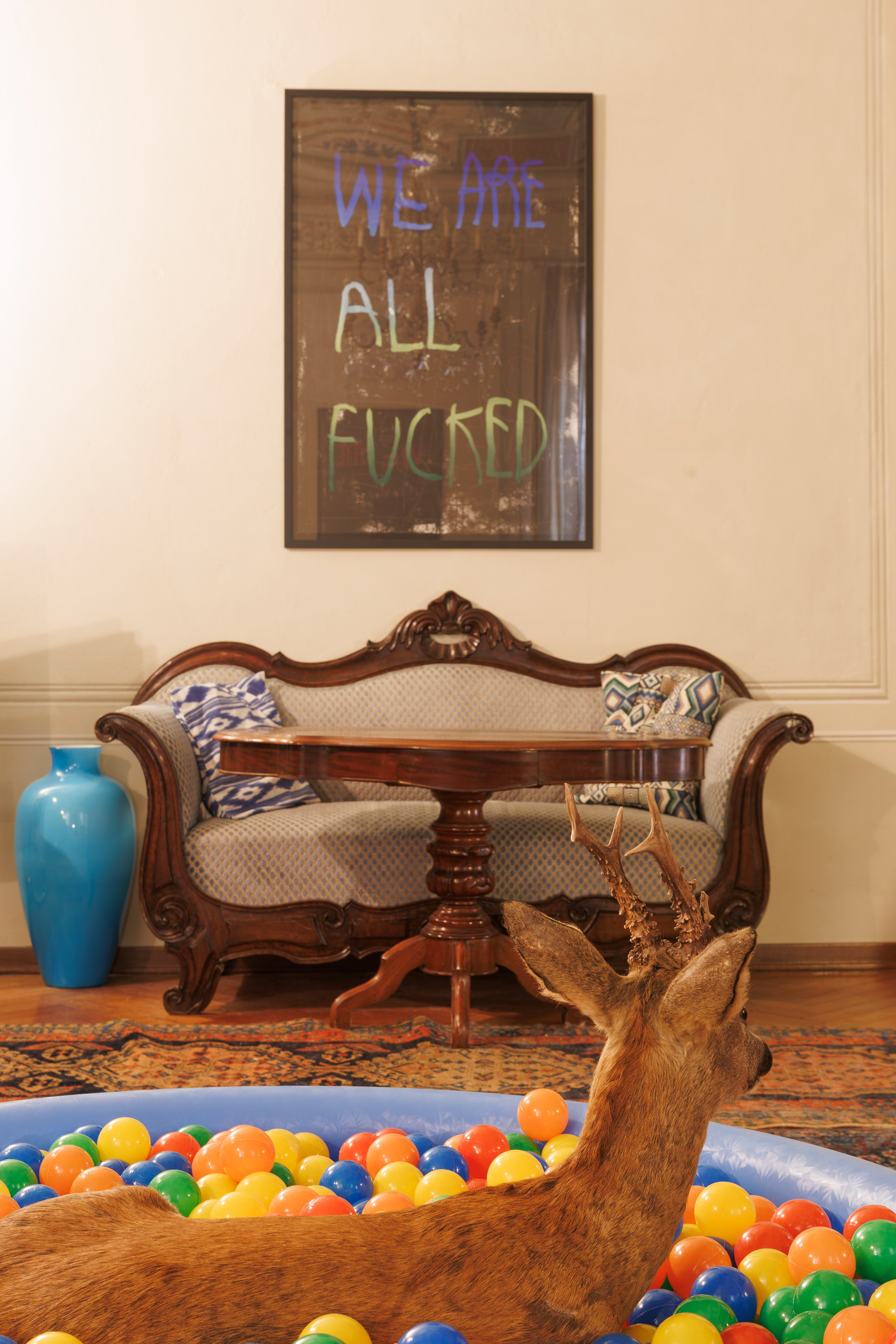
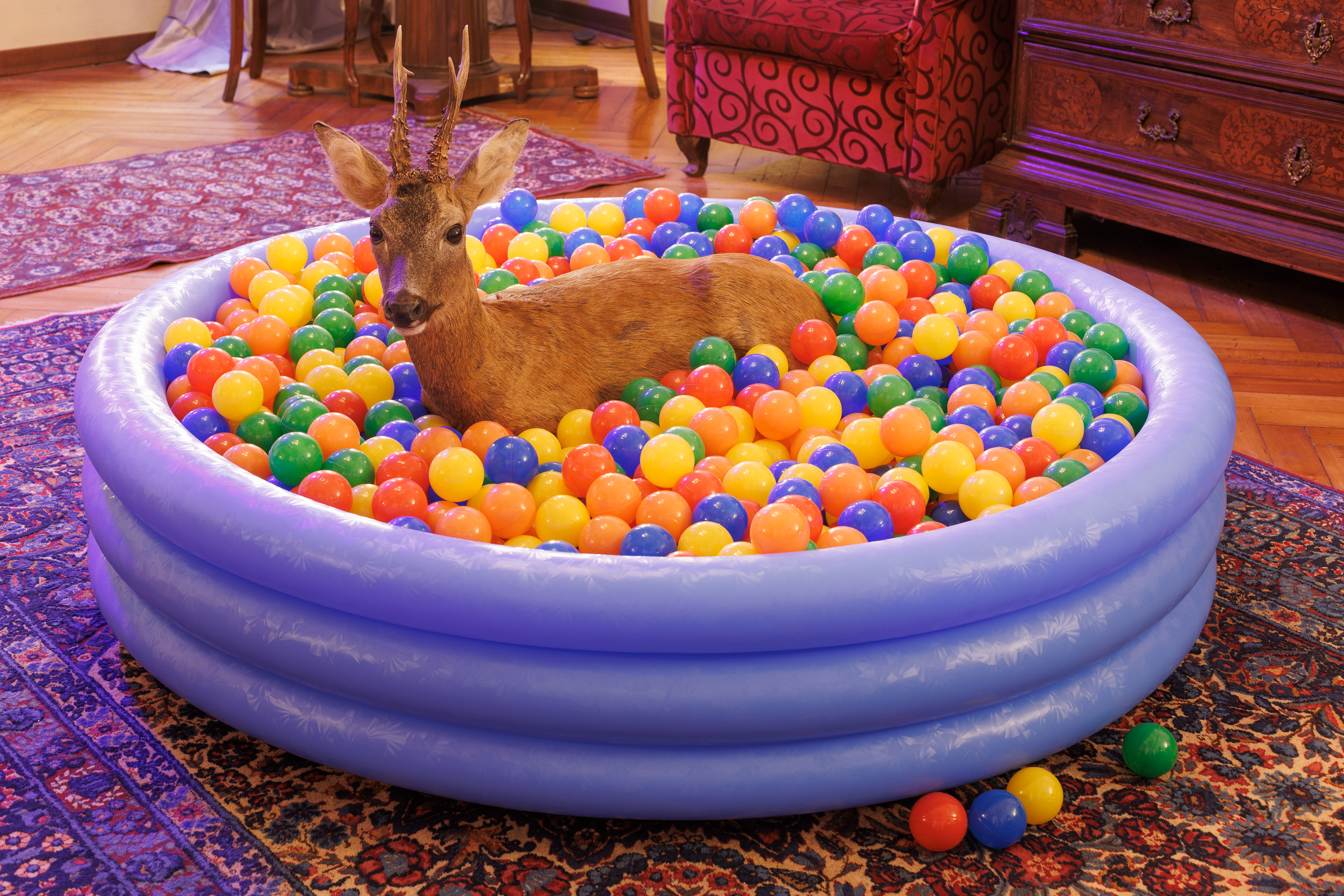
Occupied places a taxidermy deer inside an inflatable pool filled with colored plastic balls. The pool immediately recalls children’s play areas in shopping malls, waiting rooms, or commercial family spaces. It is bright, soft, and seemingly safe. Yet the space has already been taken over by a body that does not belong there.
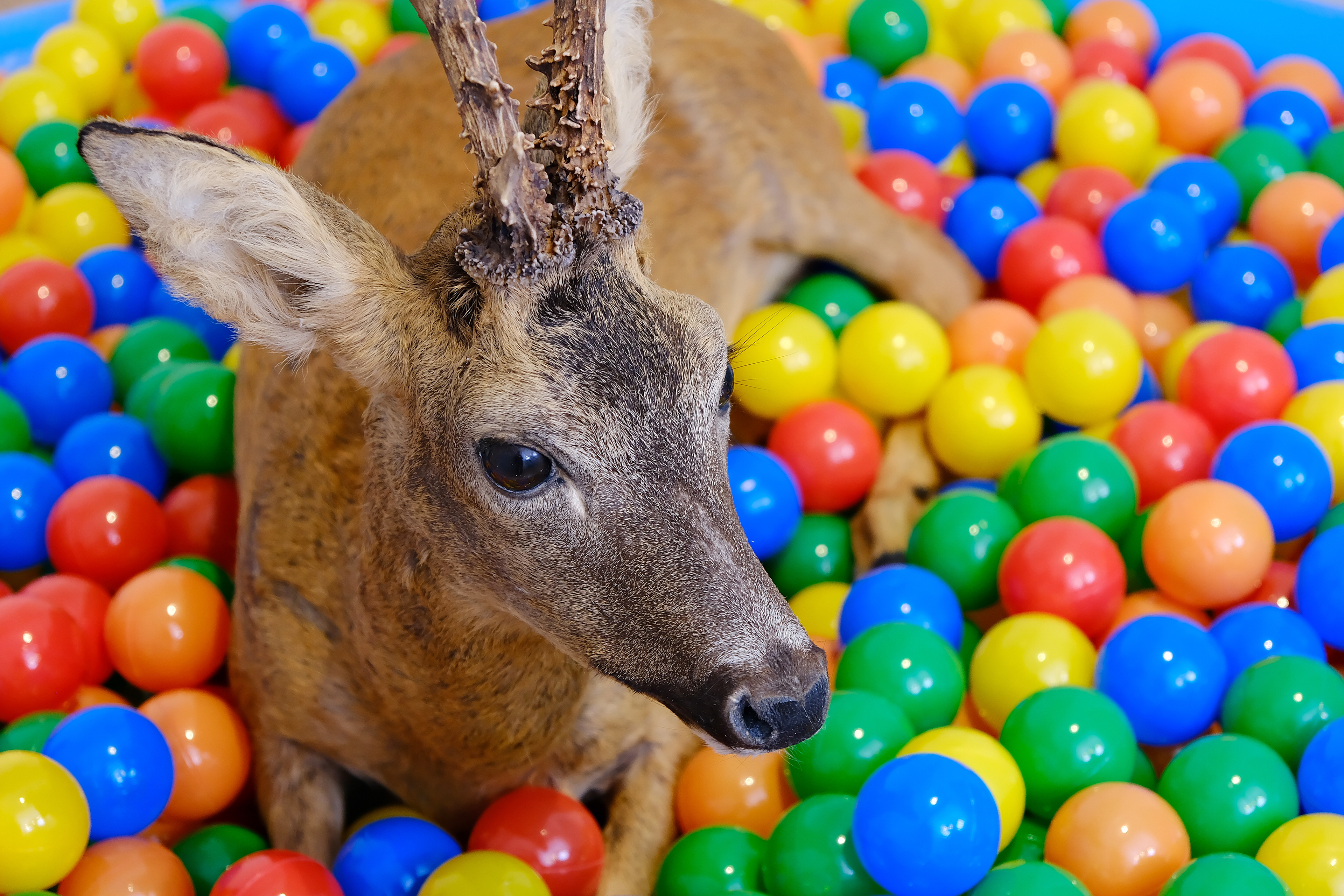
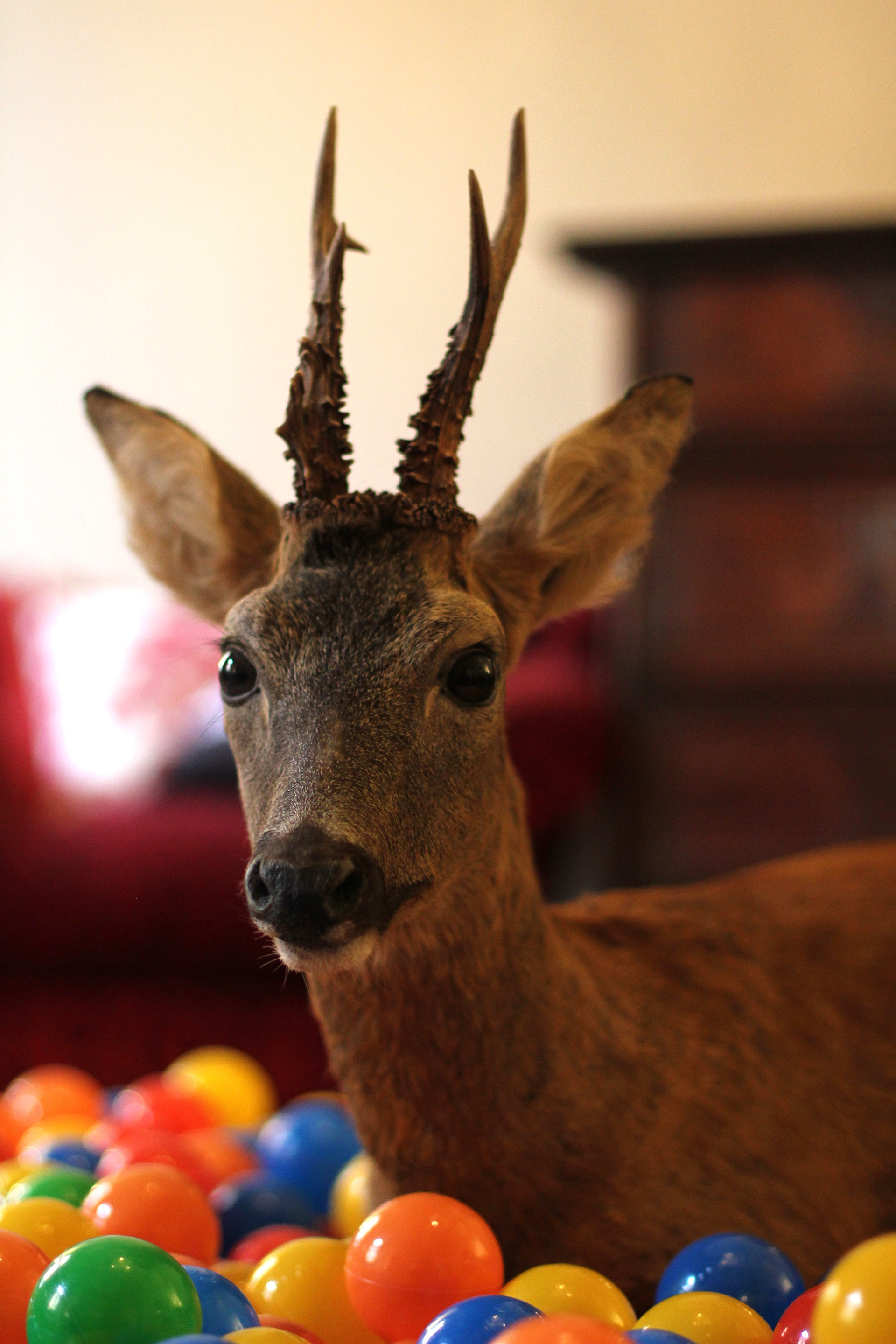
The work depends on a clash between two kinds of artificiality. The pool and balls imitate an ideal children’s environment: colorful, protected, repeatable, and easy to consume. The taxidermy deer is artificial in another way: a dead body preserved to look present. Yú brings these two manufactured worlds together and lets them expose each other. The play space becomes less innocent; the animal becomes less natural.
The title is direct. The pool is not simply filled; it is occupied. This is not only a comic mismatch, but a question of who or what is allowed to take space. A place designed for children has been entered by an adult animal body, dead but preserved, natural but displaced. The deer sits calmly among the balls, turning a site of play into a scene of possession.
The colored balls make the installation appear playful at first, but they also create a soft enclosure. The deer seems trapped in a game built for someone else, while the balls spill out onto the floor as if the boundary of the game has already failed. What should contain play can no longer hold its own rules.
Occupied speaks to childhood without showing a child. It shows a child’s place after it has been replaced. This absence is important. The work can be read alongside Yú’s experience of growing up during the final years of China’s one-child policy, but it does not reduce childhood to biography. Instead, it presents childhood as a space shaped by absence, pressure, and strange substitutions. The game is still there, but the player’s place has already been taken.