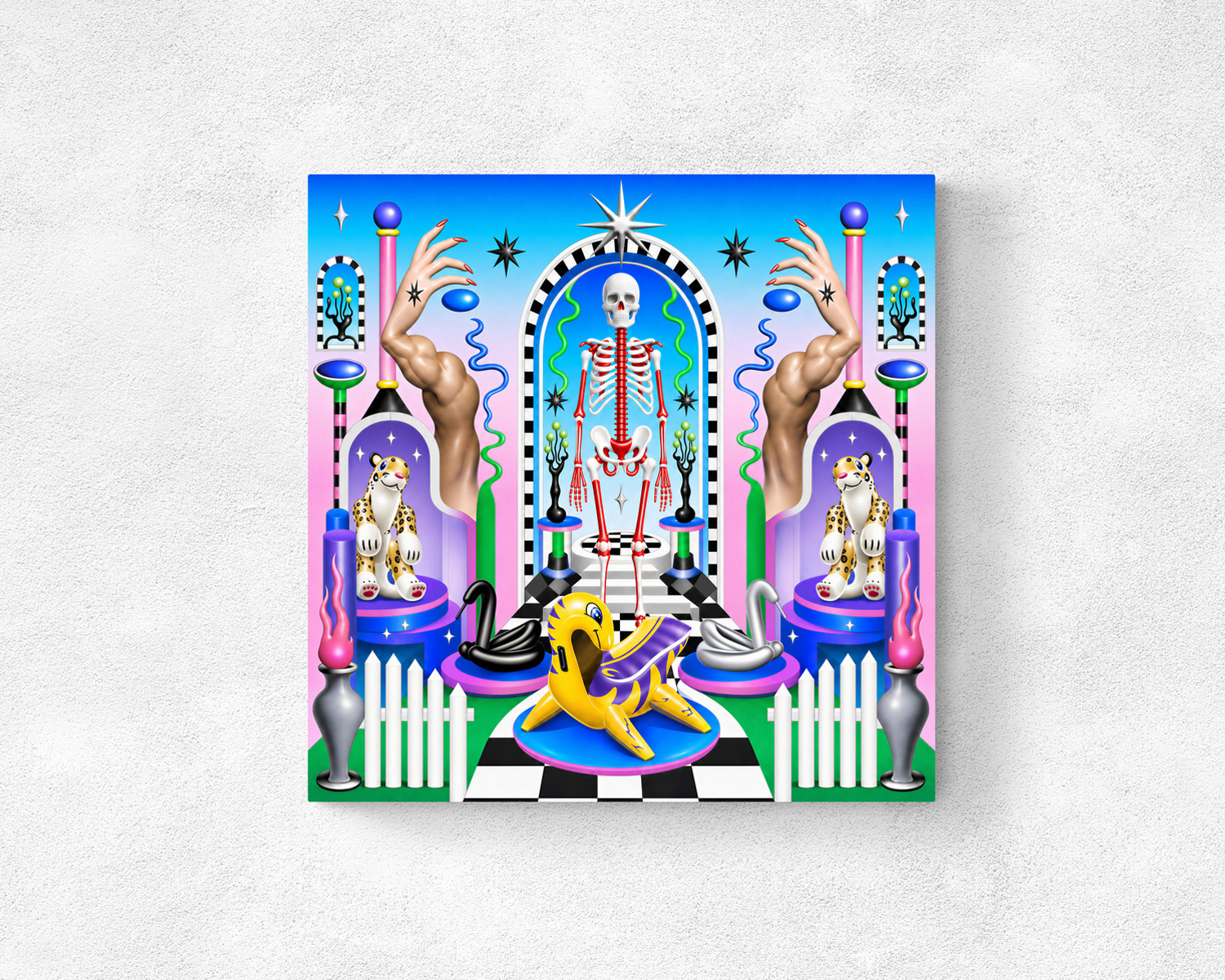
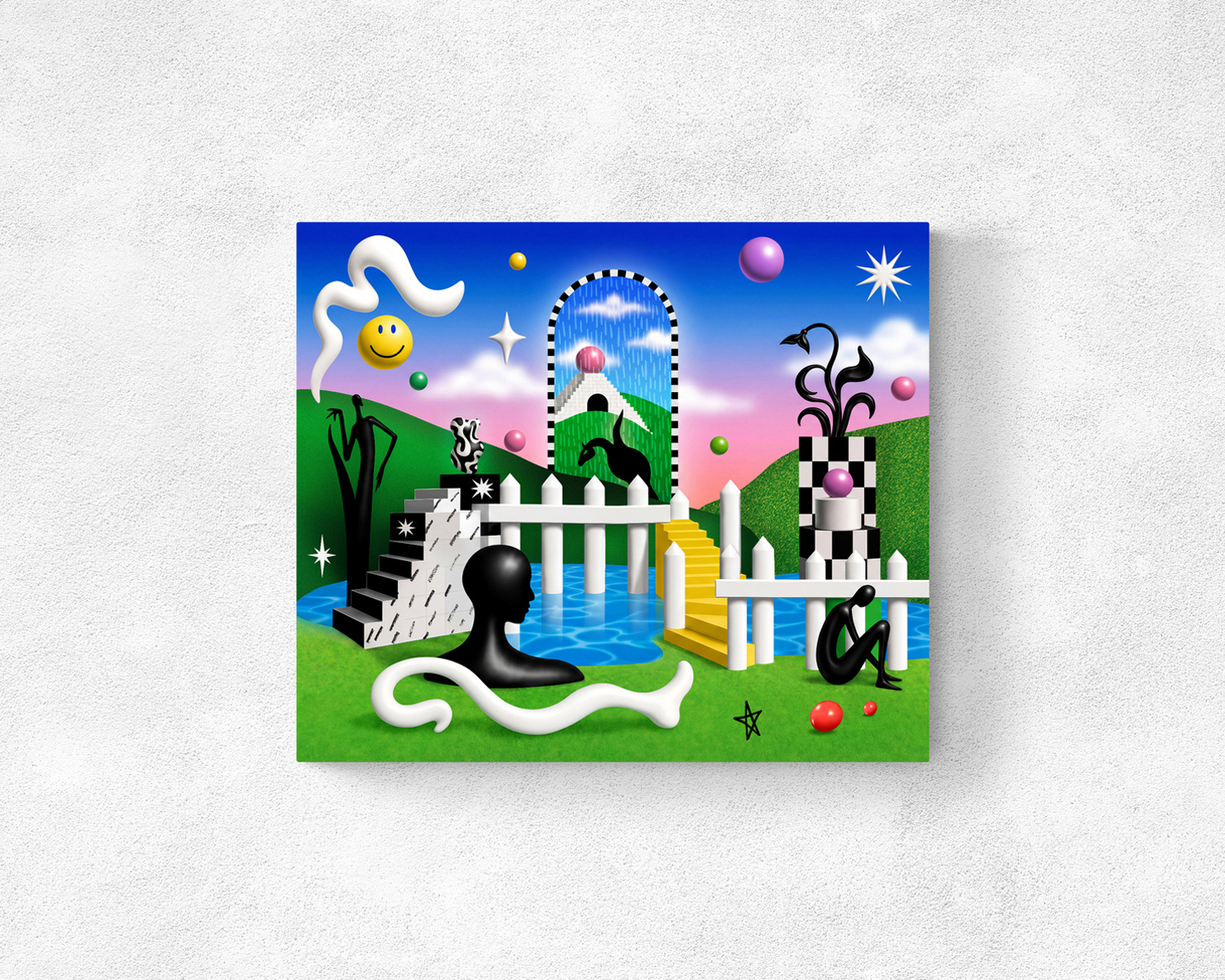
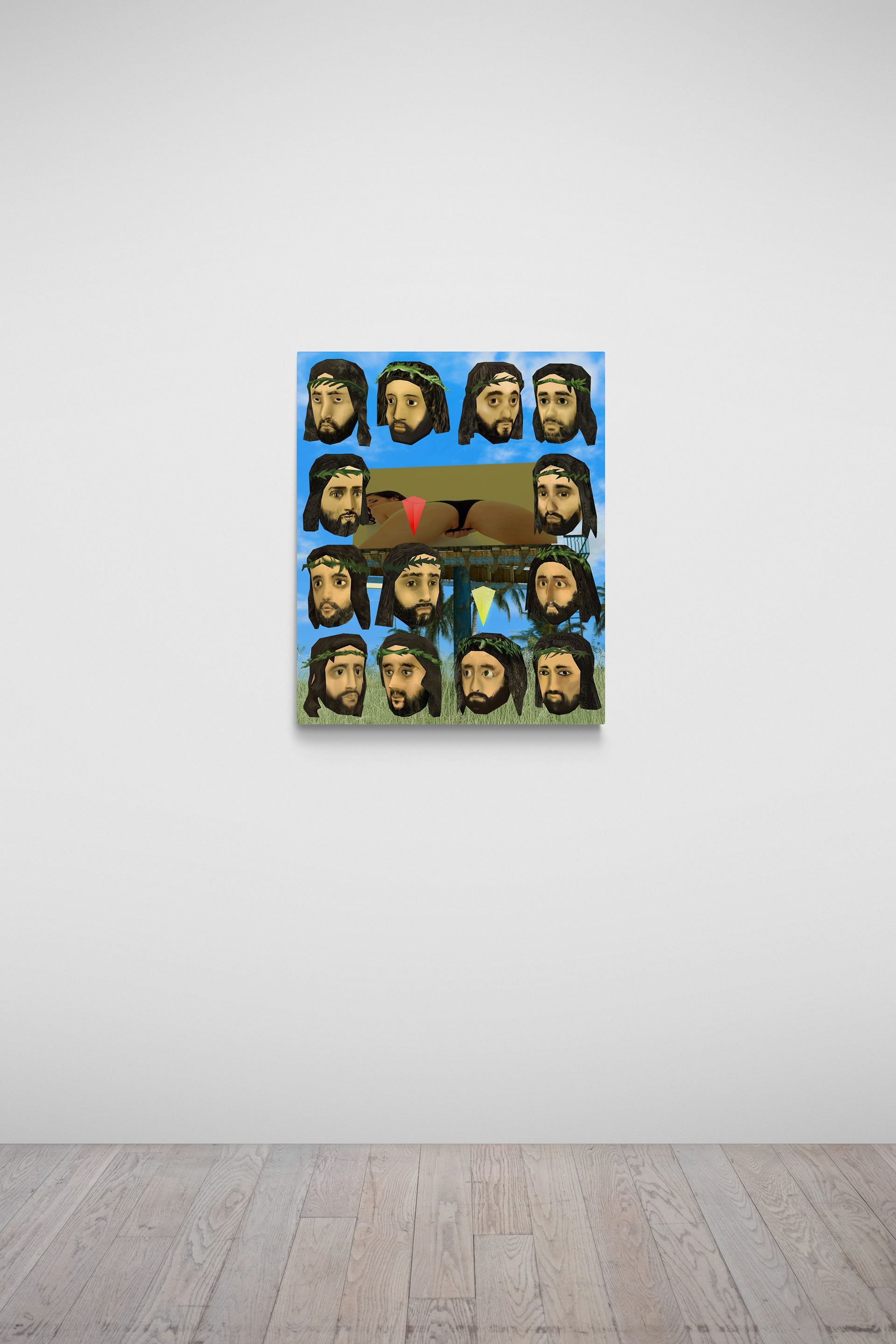
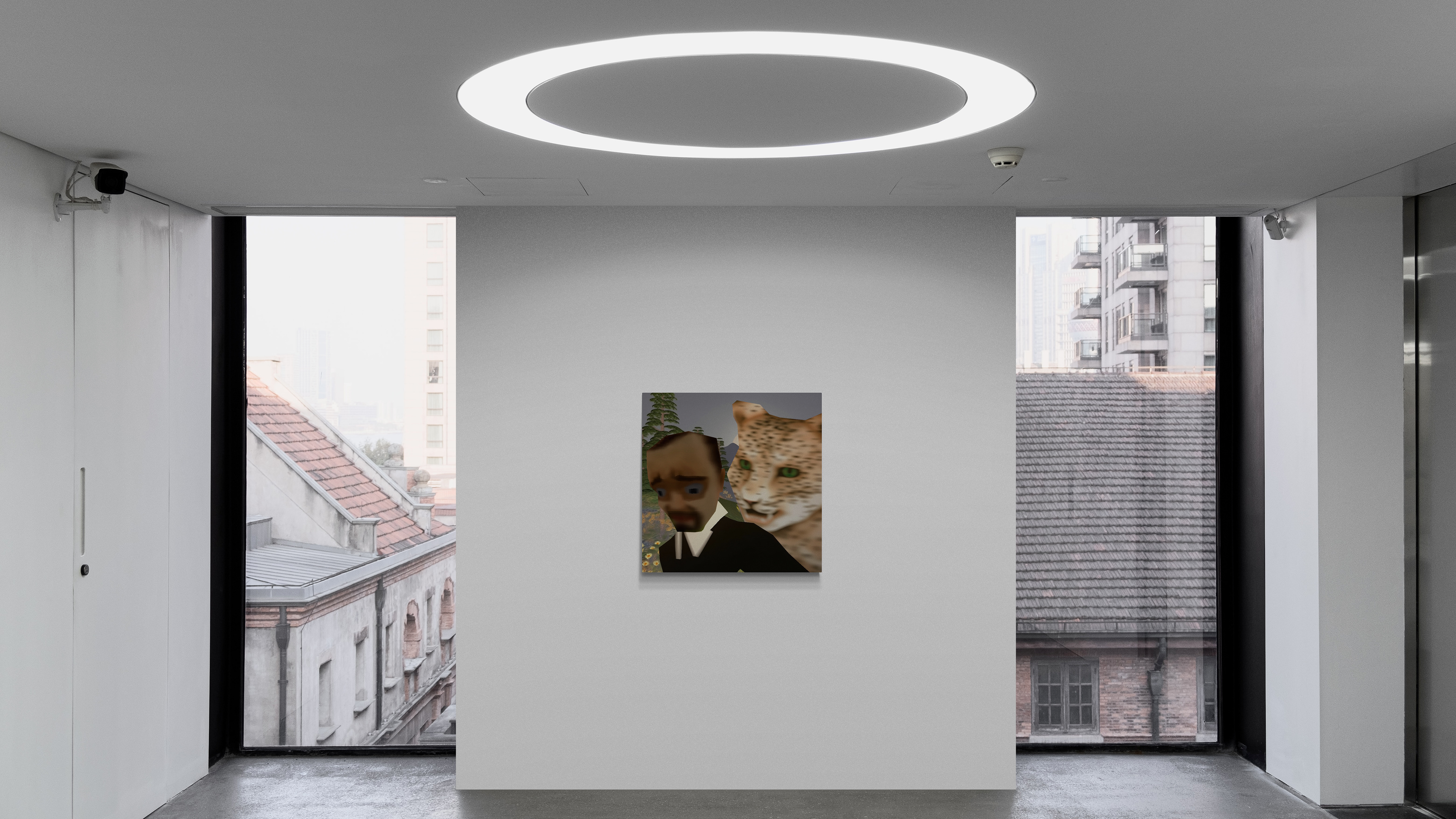
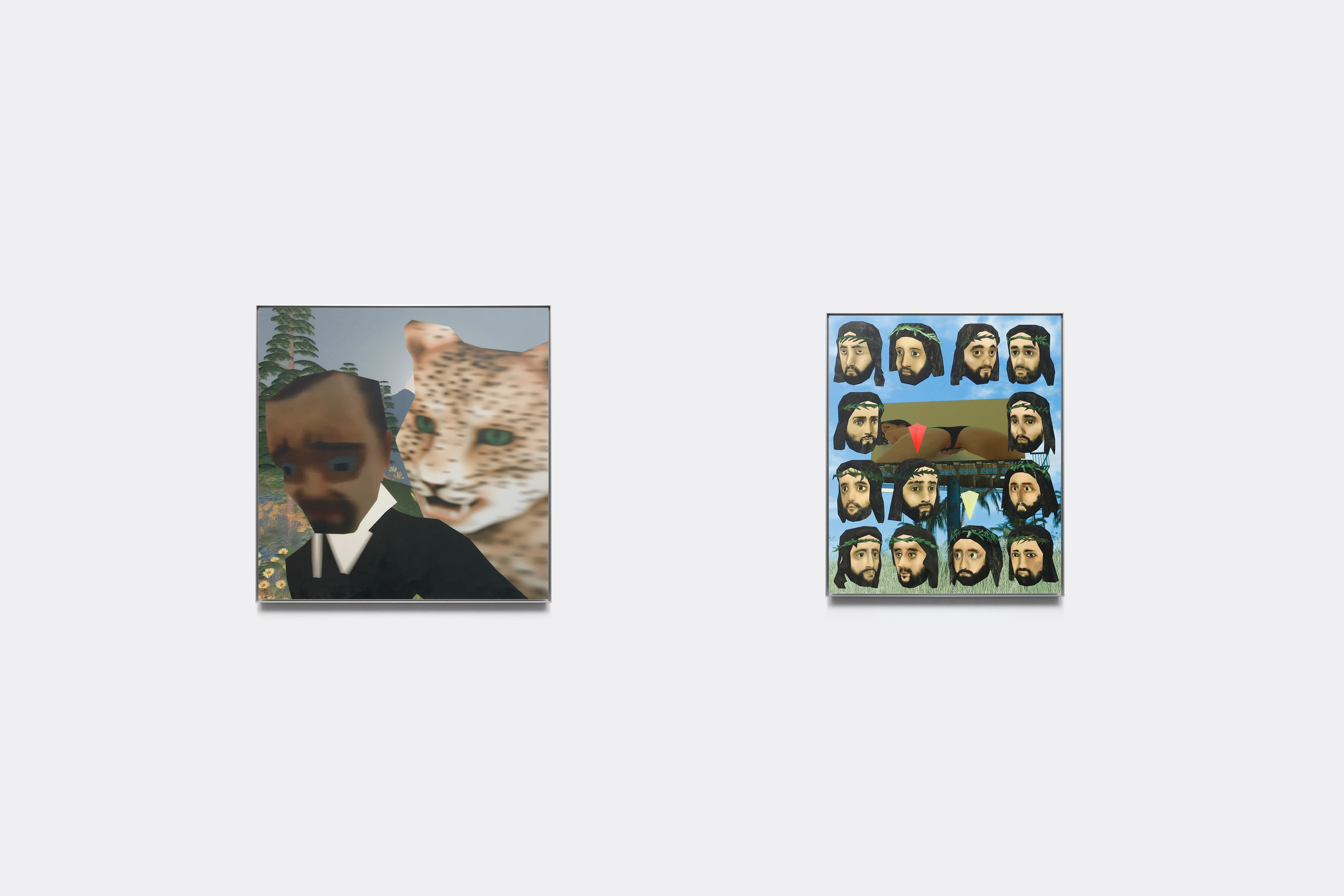
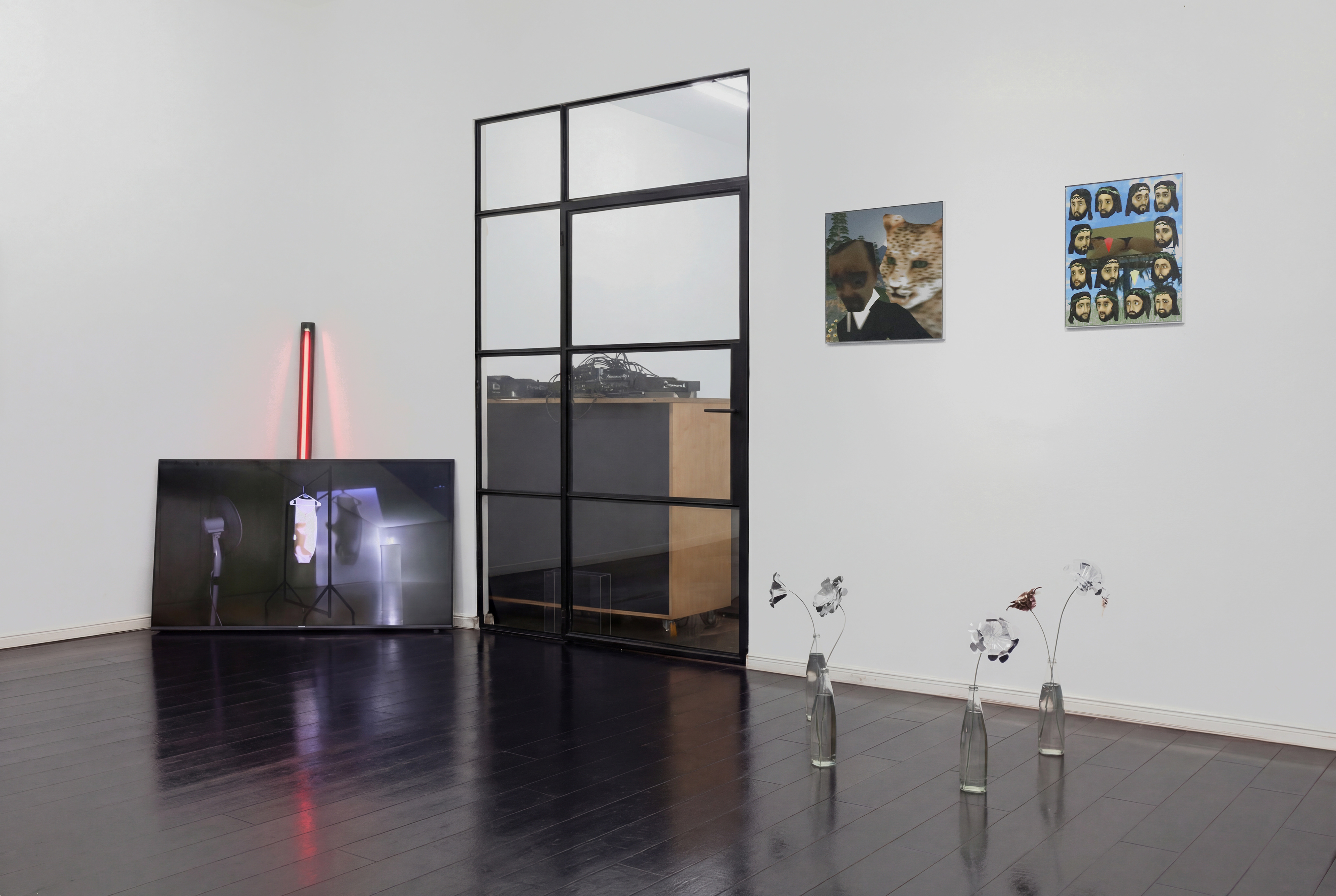
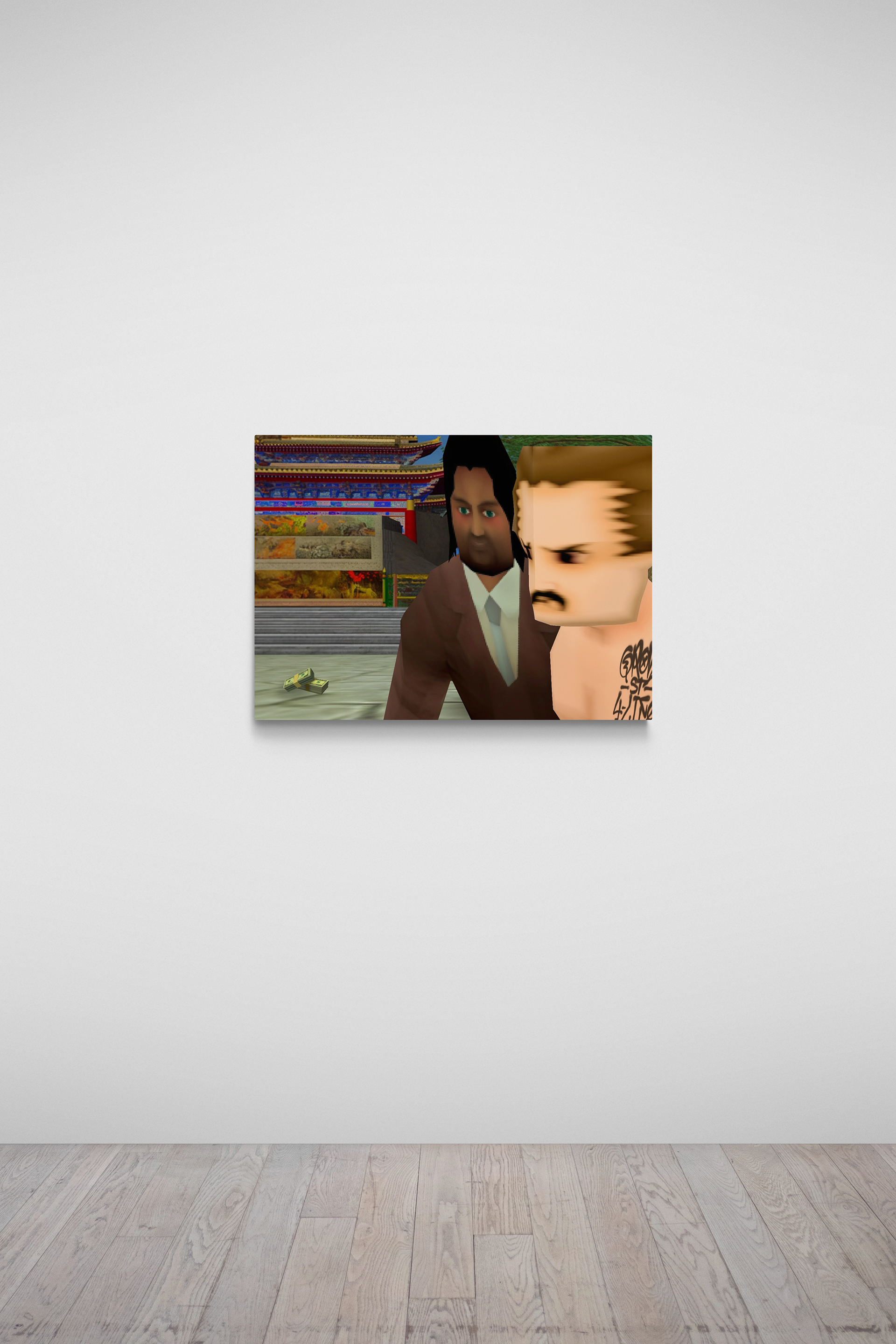
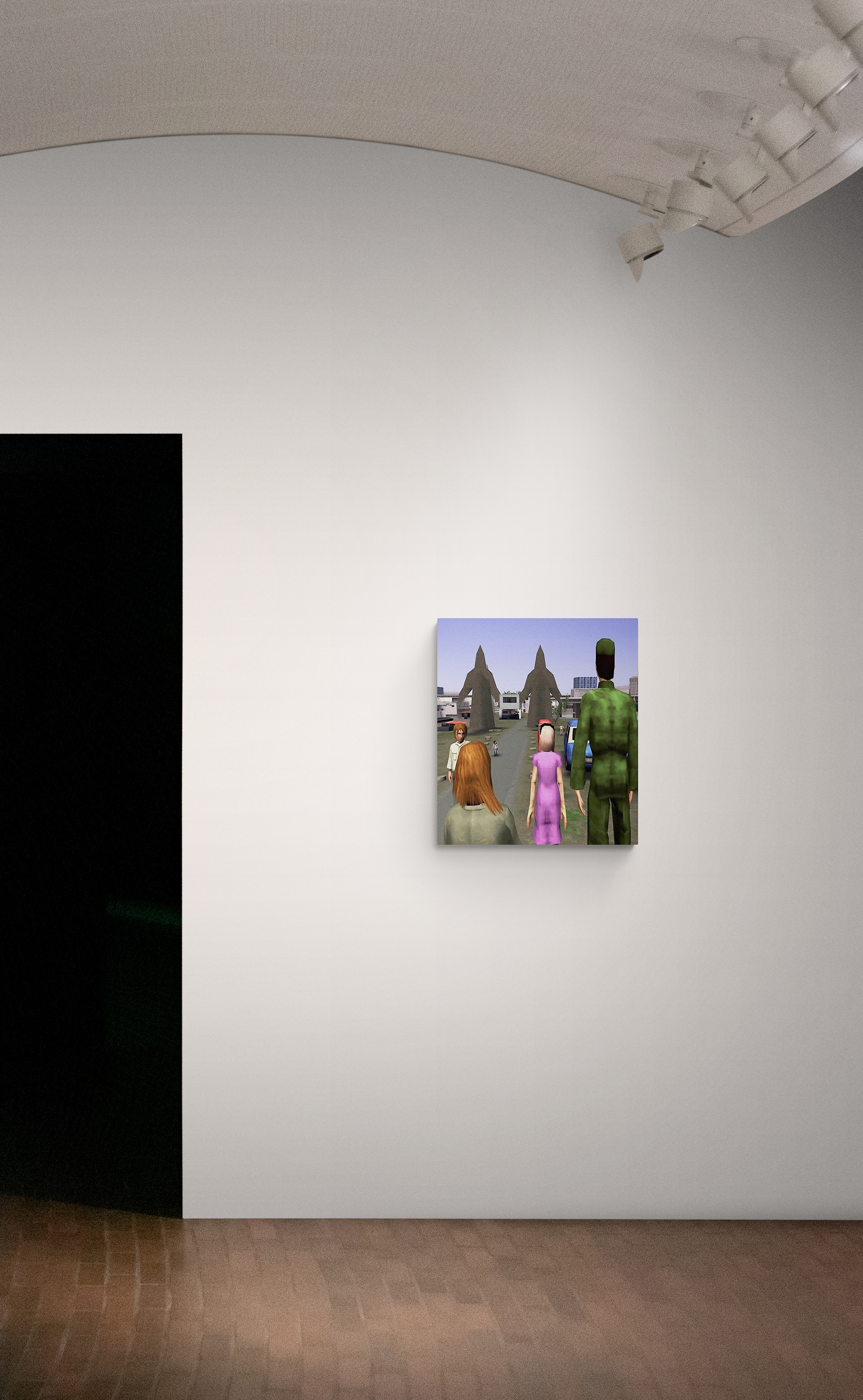
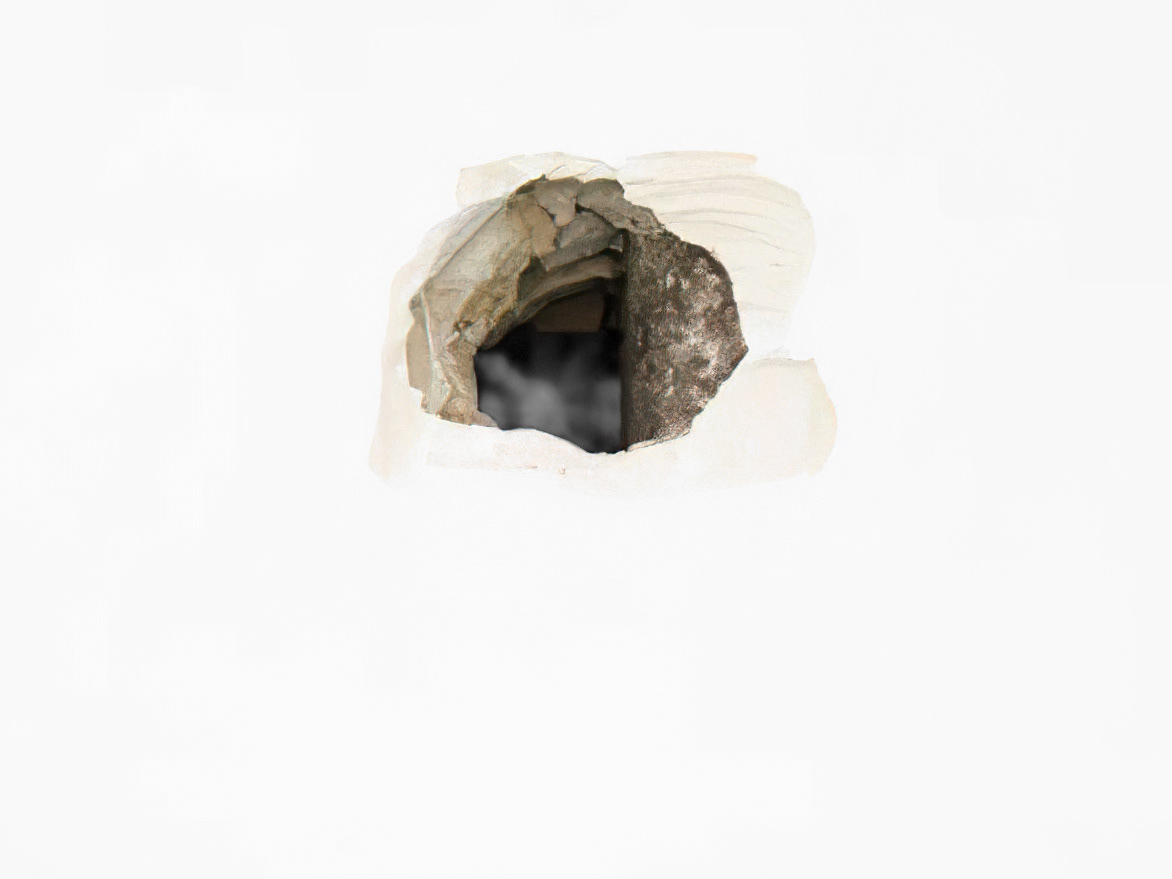
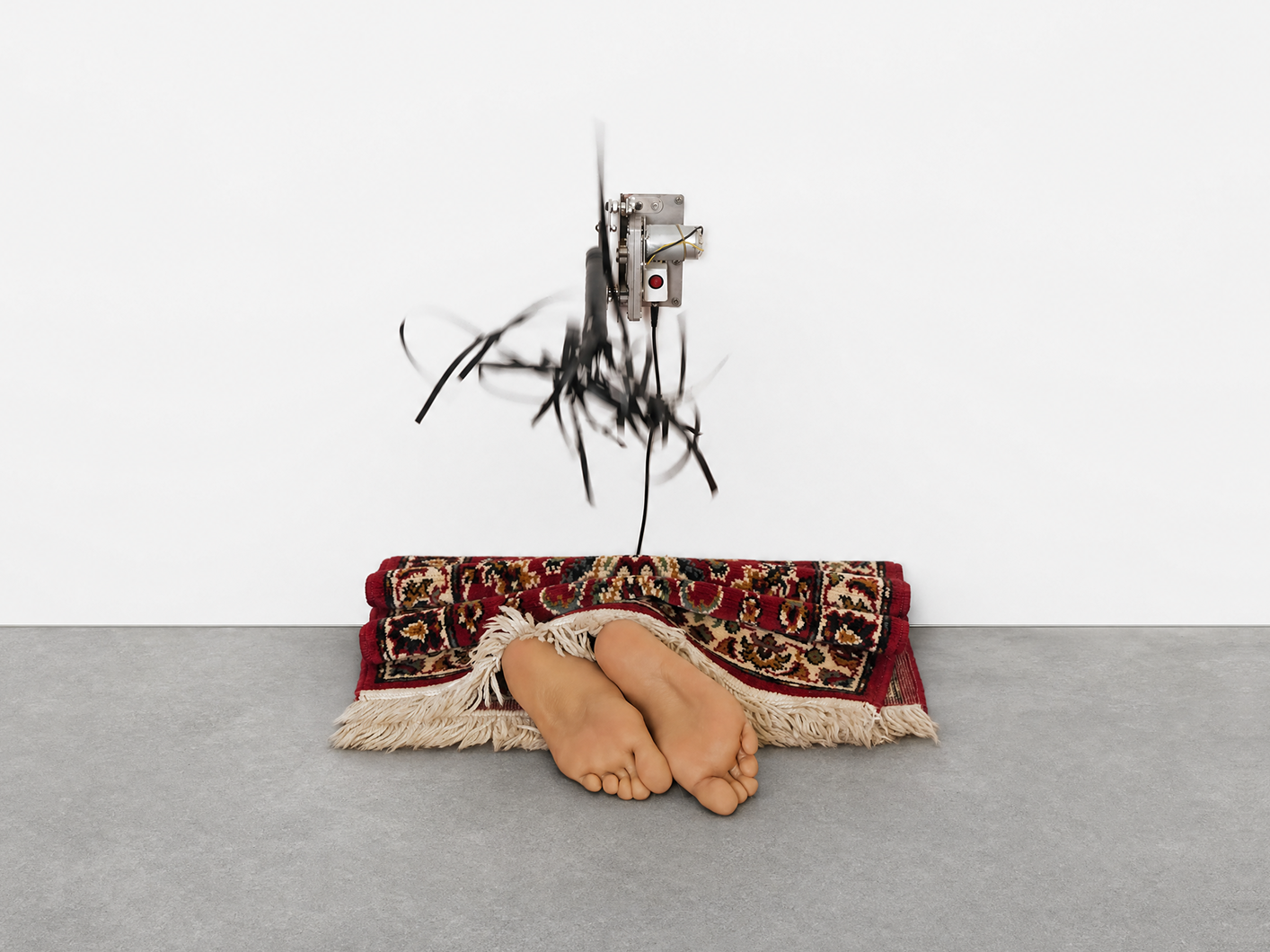
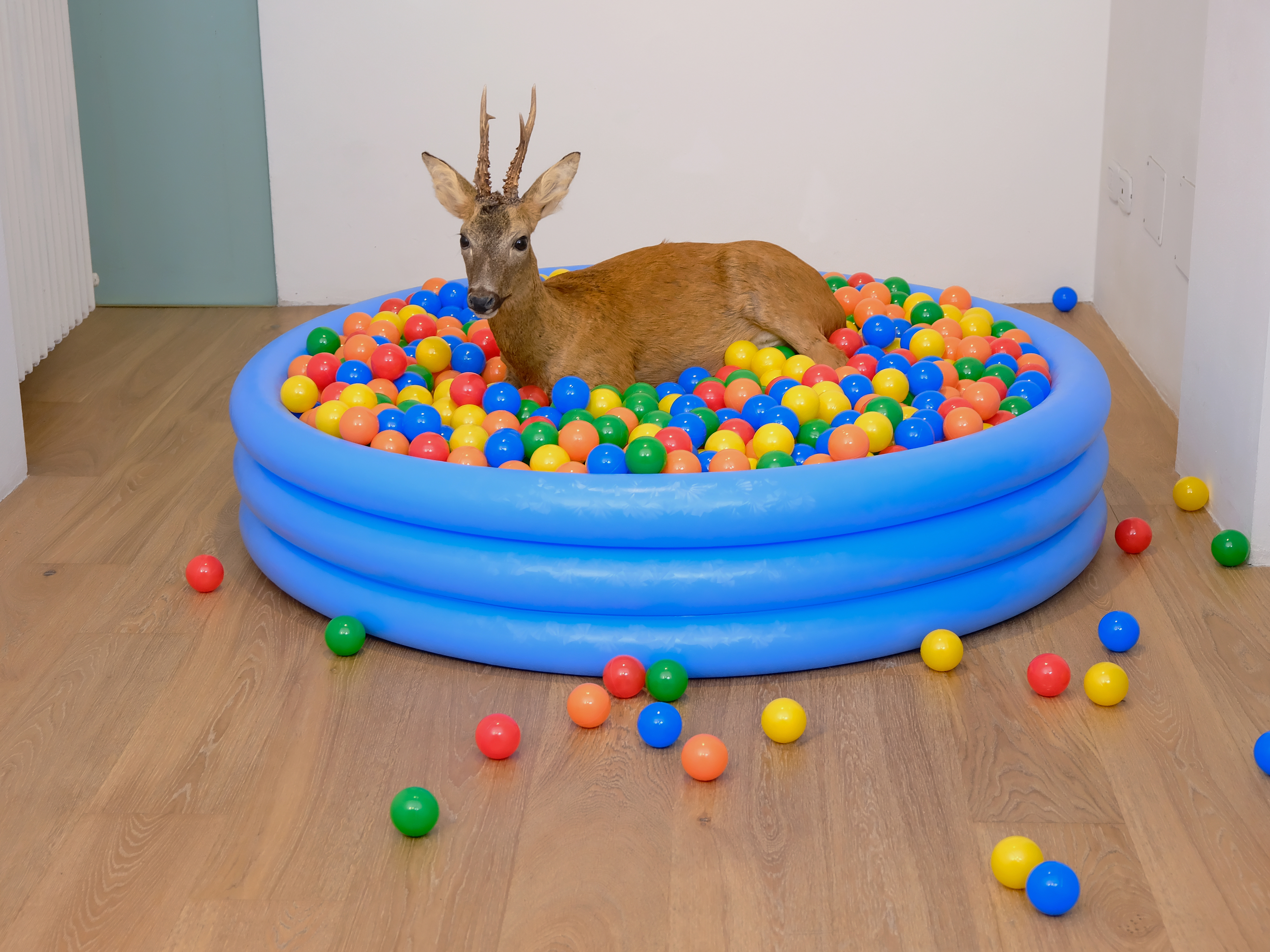
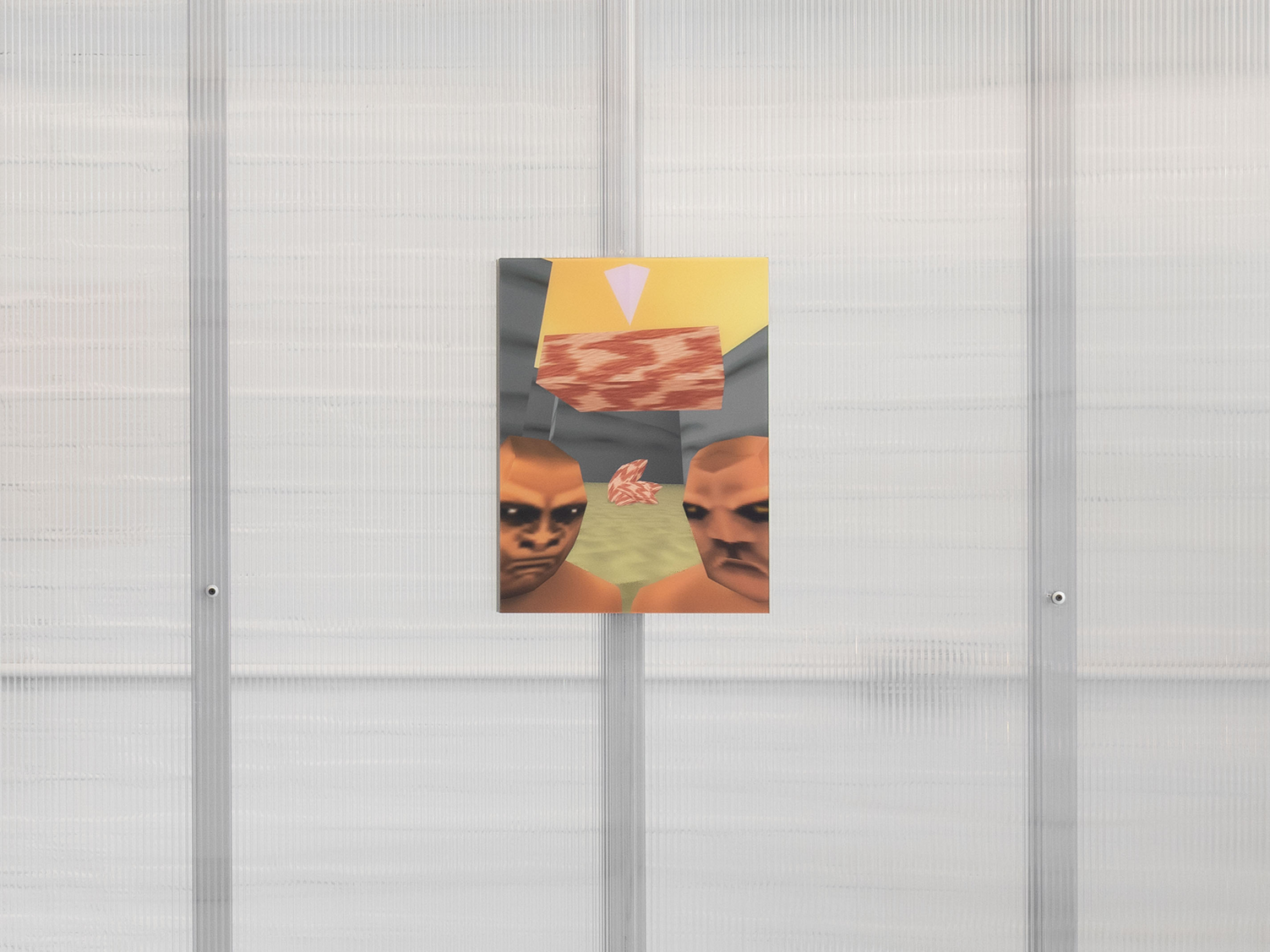
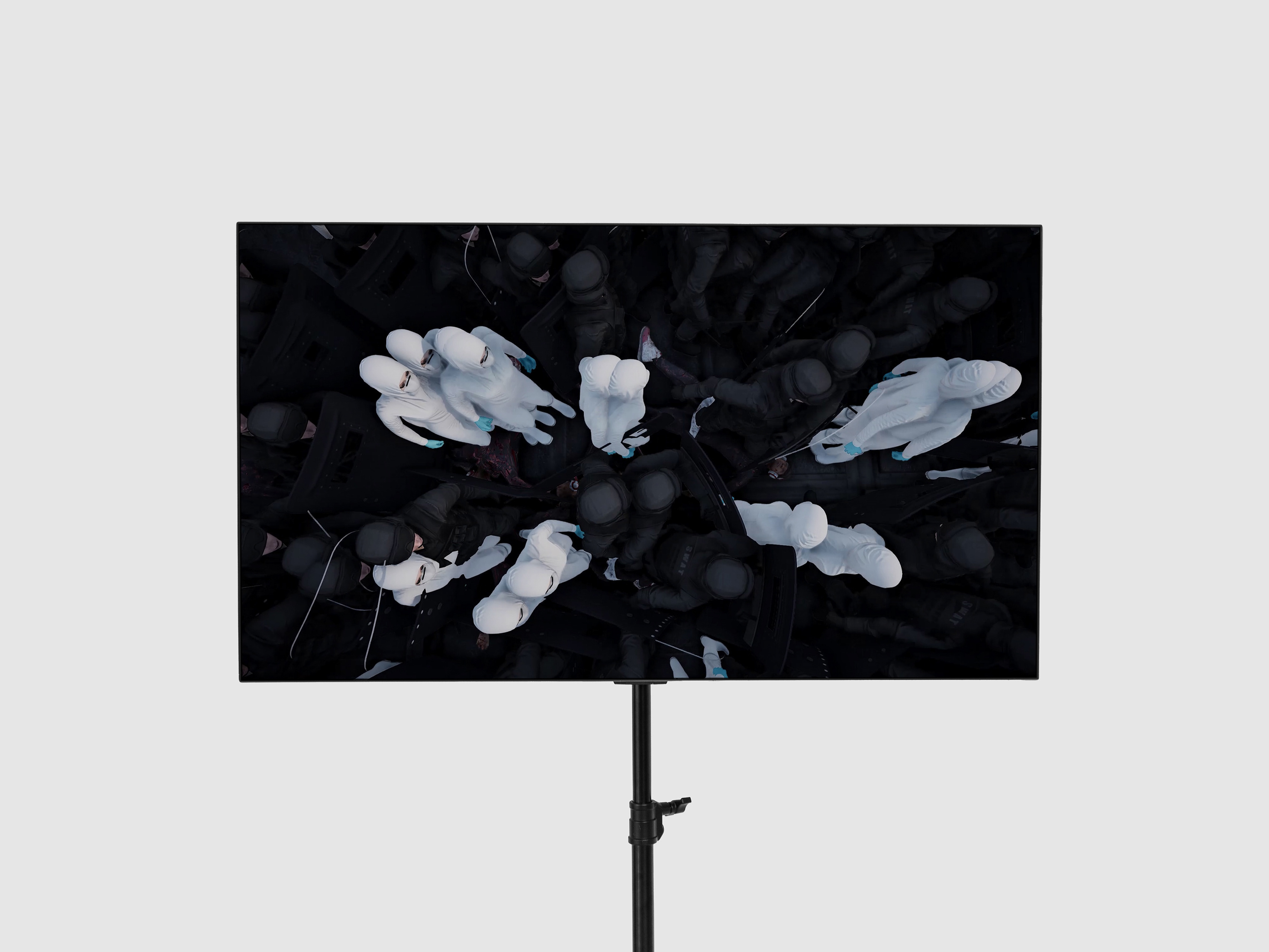
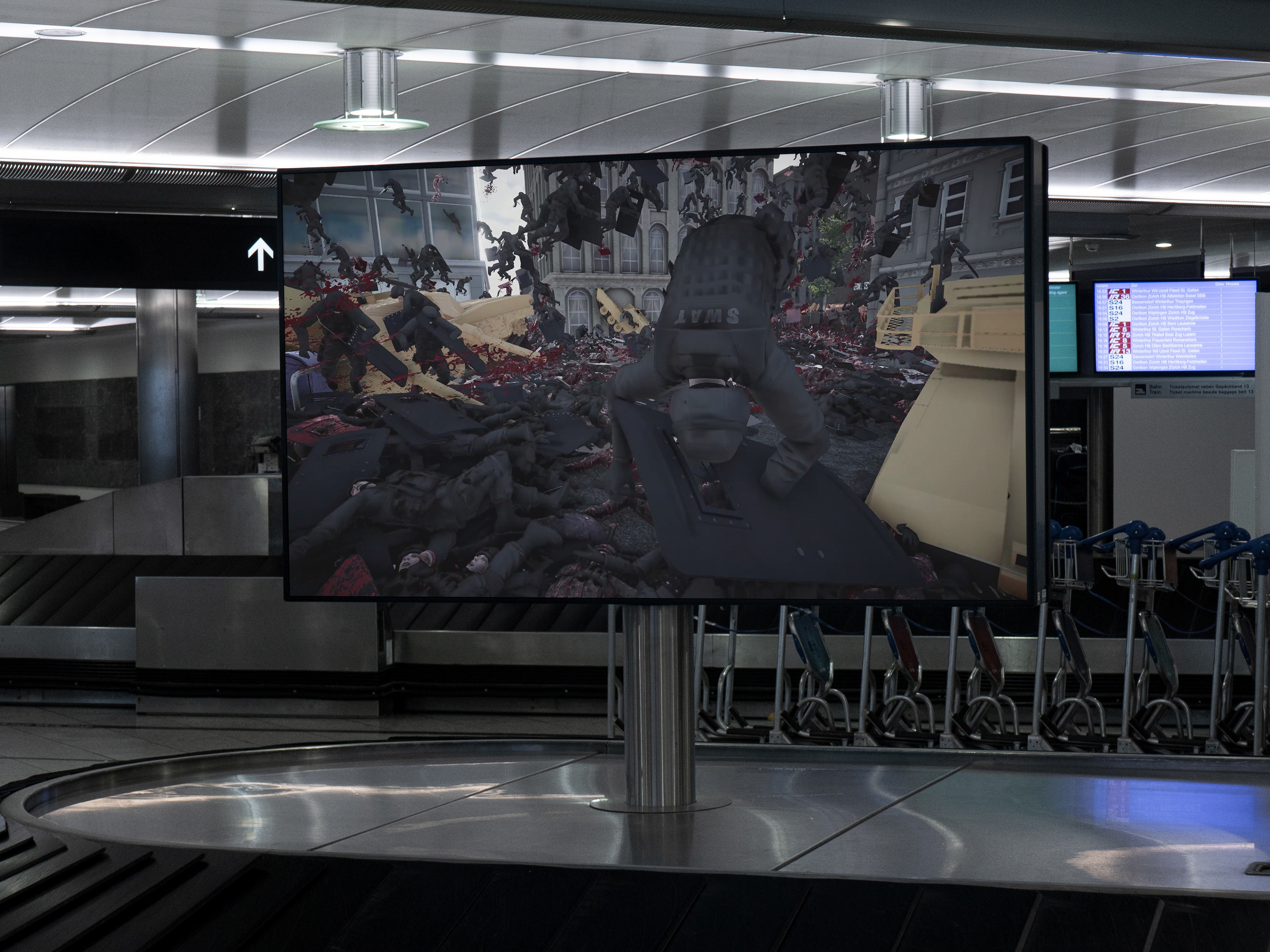
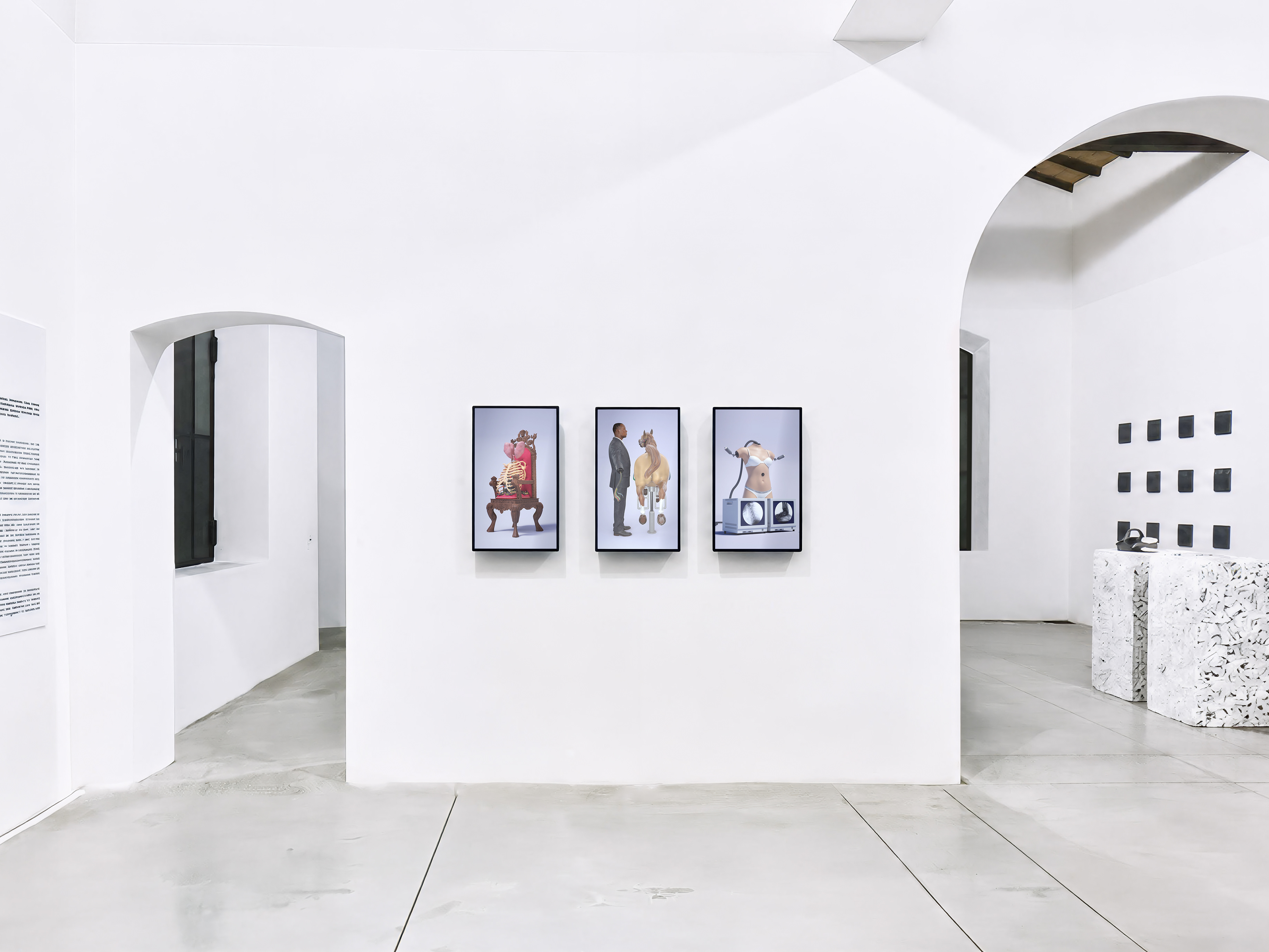
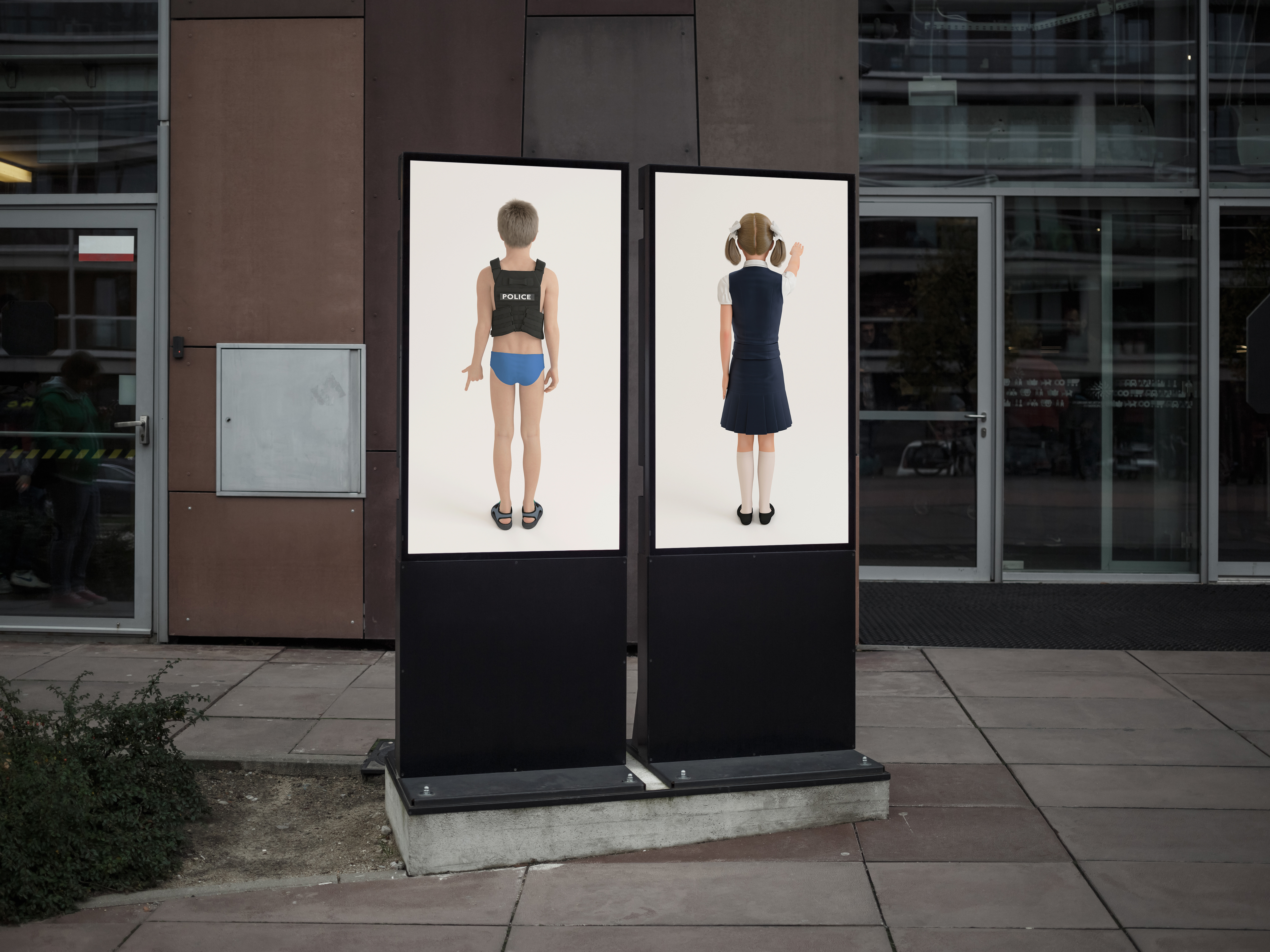
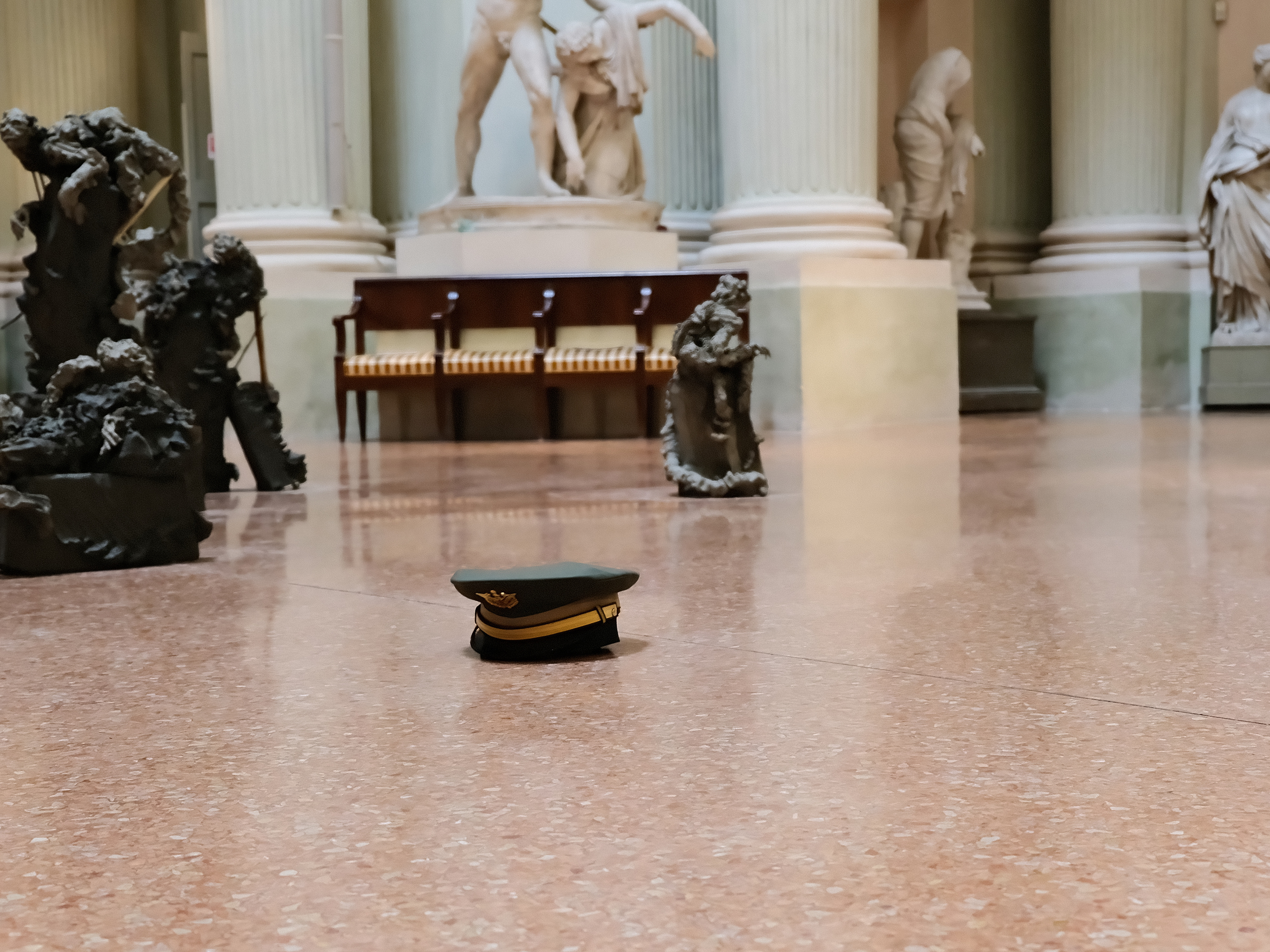
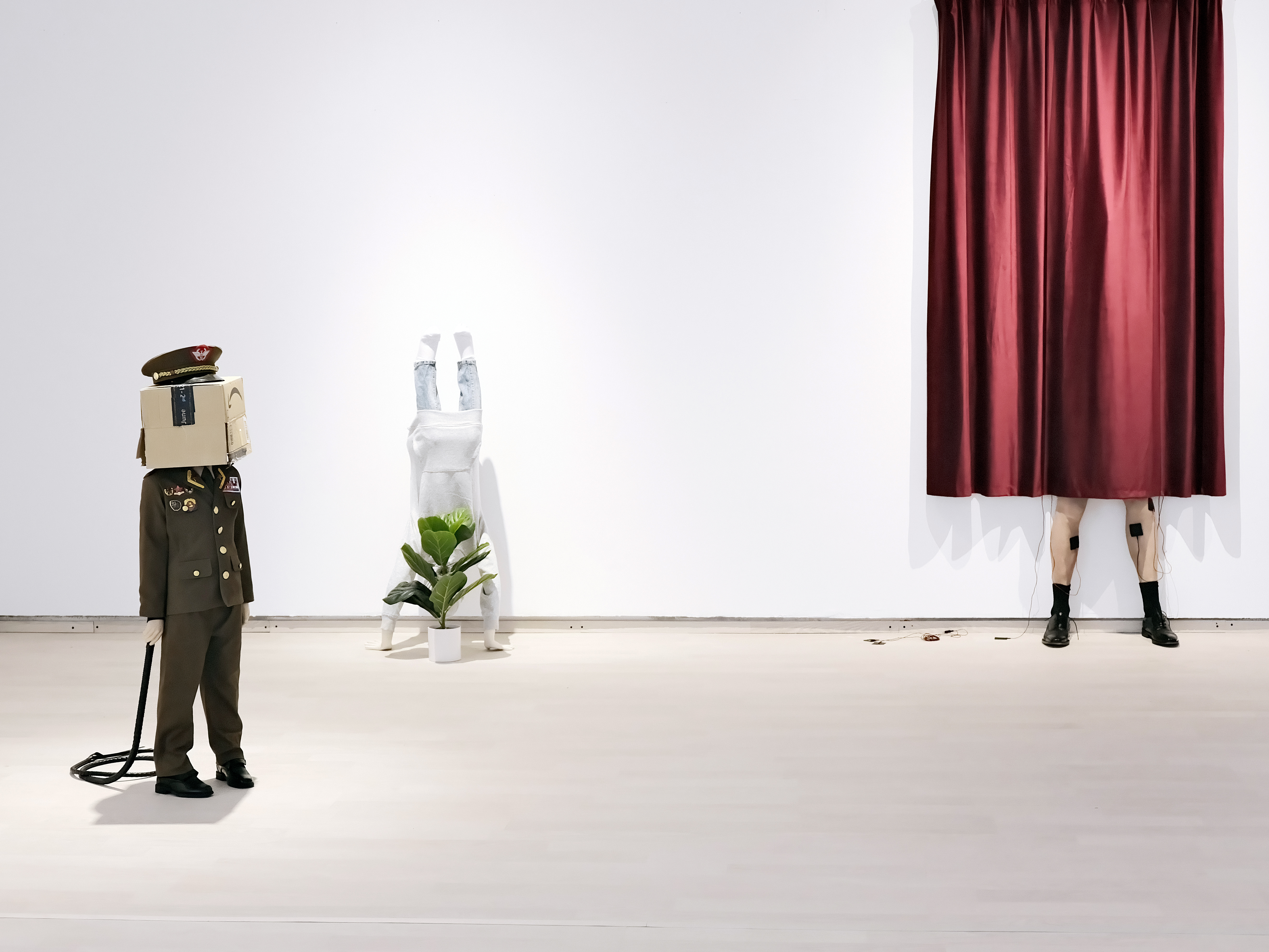
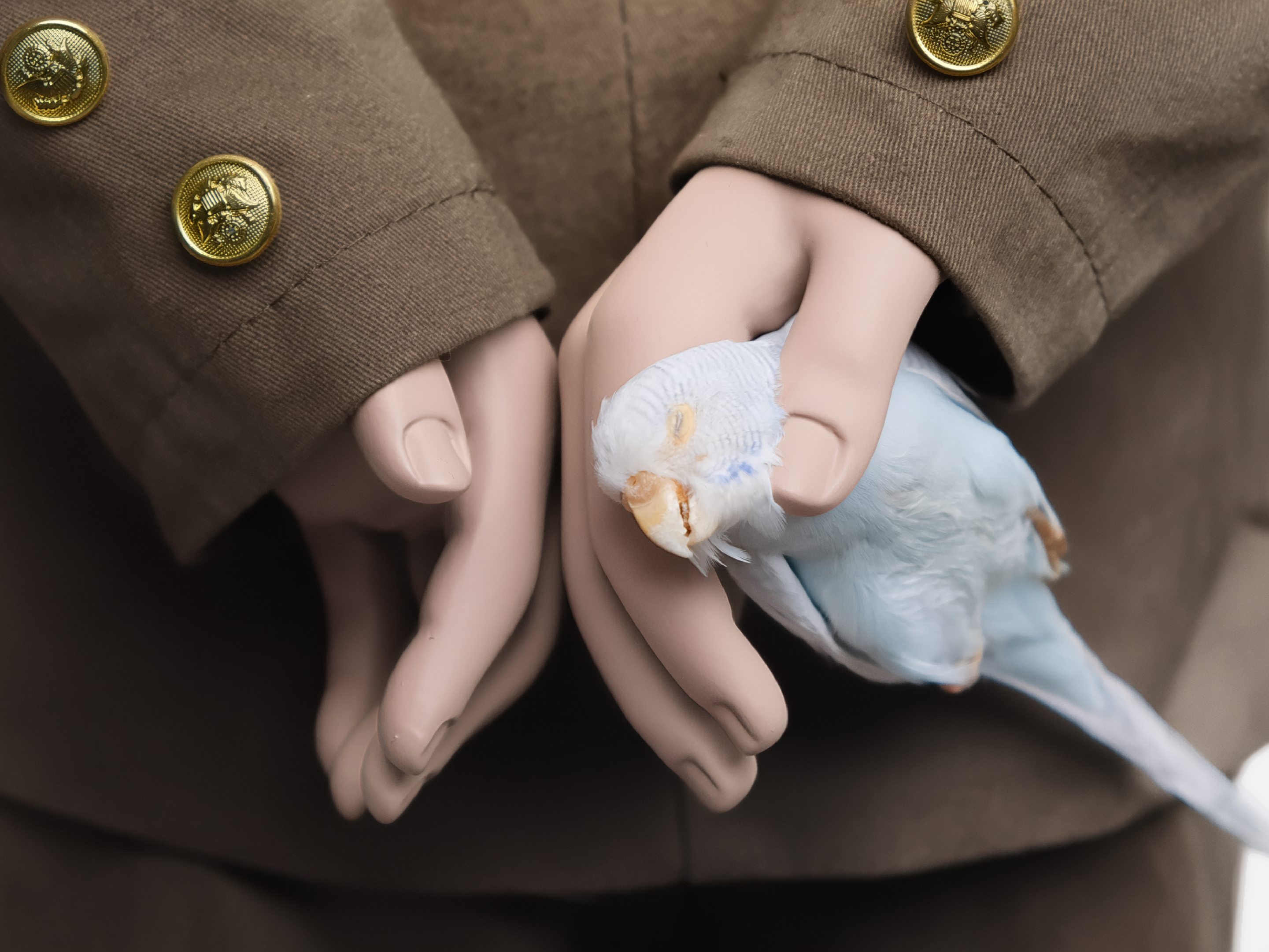
This series of digital image works is built from the visual language of games, online image culture, and digital rendering. Rather than presenting a set of isolated pictures, Yú constructs an image system made of avatars, mascots, icons, religious frames, artificial gardens, repeated heads, body fragments, cartoon animals, checkerboard floors, fences, portals, stars, and decorative props. Each composition feels like a screen where symbols from different sources have been loaded into the same field.
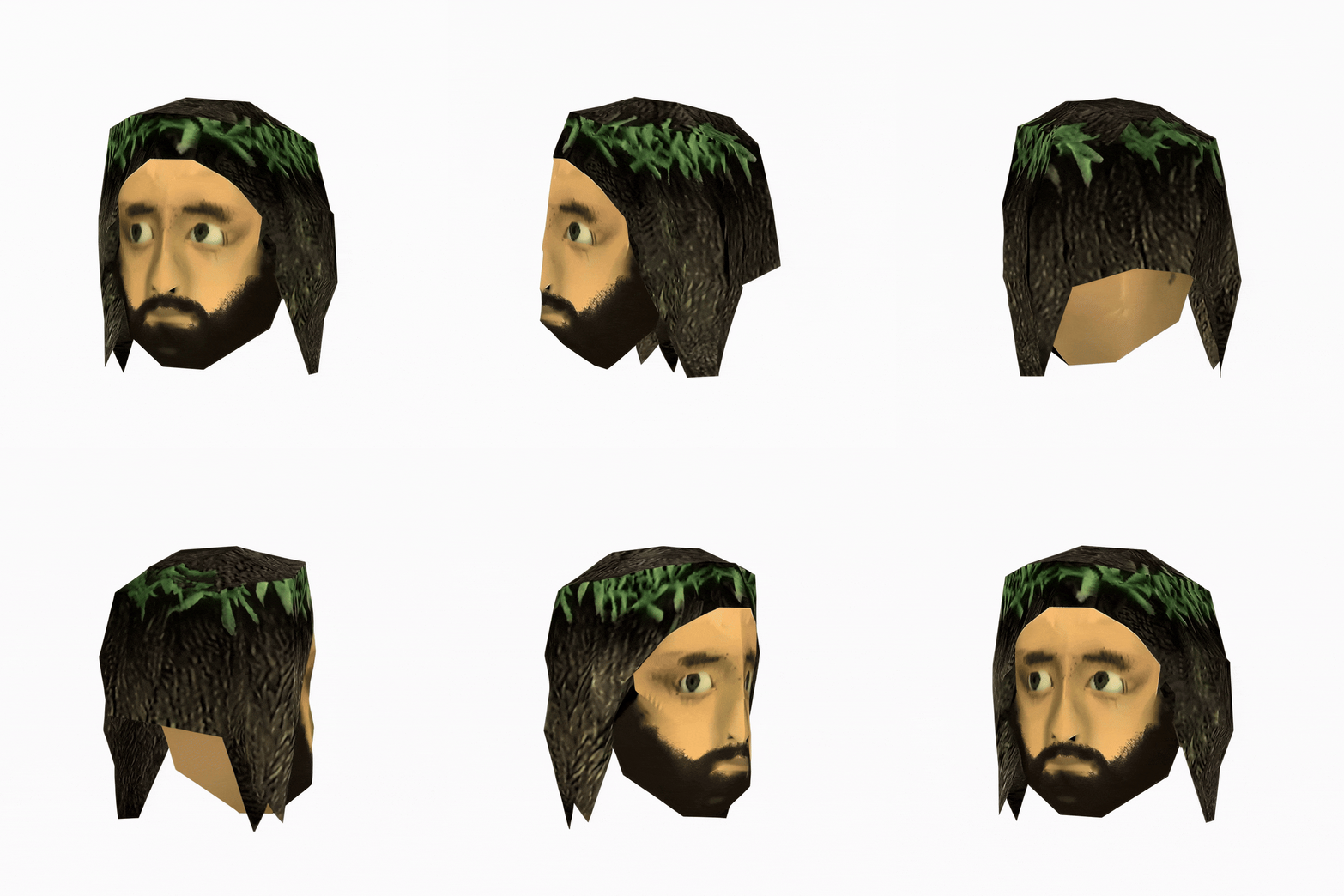
The logic of the series is close to an inventory, a collectible card set, or a character-selection system. Heads repeat like avatar options. Bodies appear as partial objects, surfaces, or props. Animals, stars, fences, and portals function like elements inside a game world. A religious composition can become a level design; a cartoon animal can act like a mascot, a collectible, or a guide. These images do not simply illustrate stories. They operate like signs with assigned roles.
This game logic is not limited to entertainment. It becomes a way to think about how images assign identity, value, and function. A figure can become a collectible card. A head can become a skin. A body can become a surface for projection. A symbol can move from religion to decoration, from decoration to interface, from interface to commodity. The same image can play several roles at once.
The works are bright, glossy, and playful, but they do not offer a free playground. Their scenes feel organized by hidden rules. Repetition, symmetry, classification, and display determine how each element appears. Everything looks selectable, exchangeable, and ready to be used. In this sense, Yú treats digital culture as a field where desire and control are produced together.
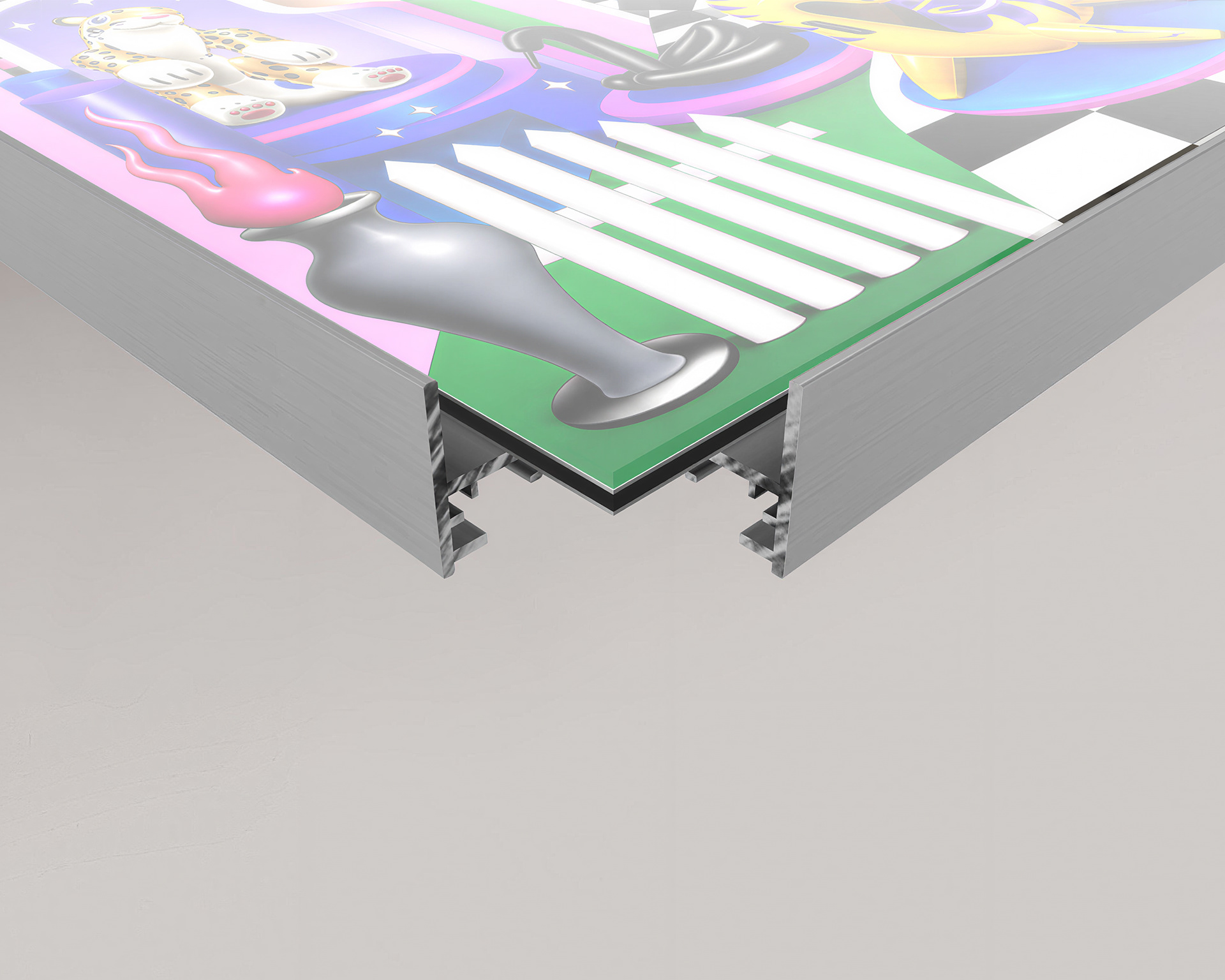
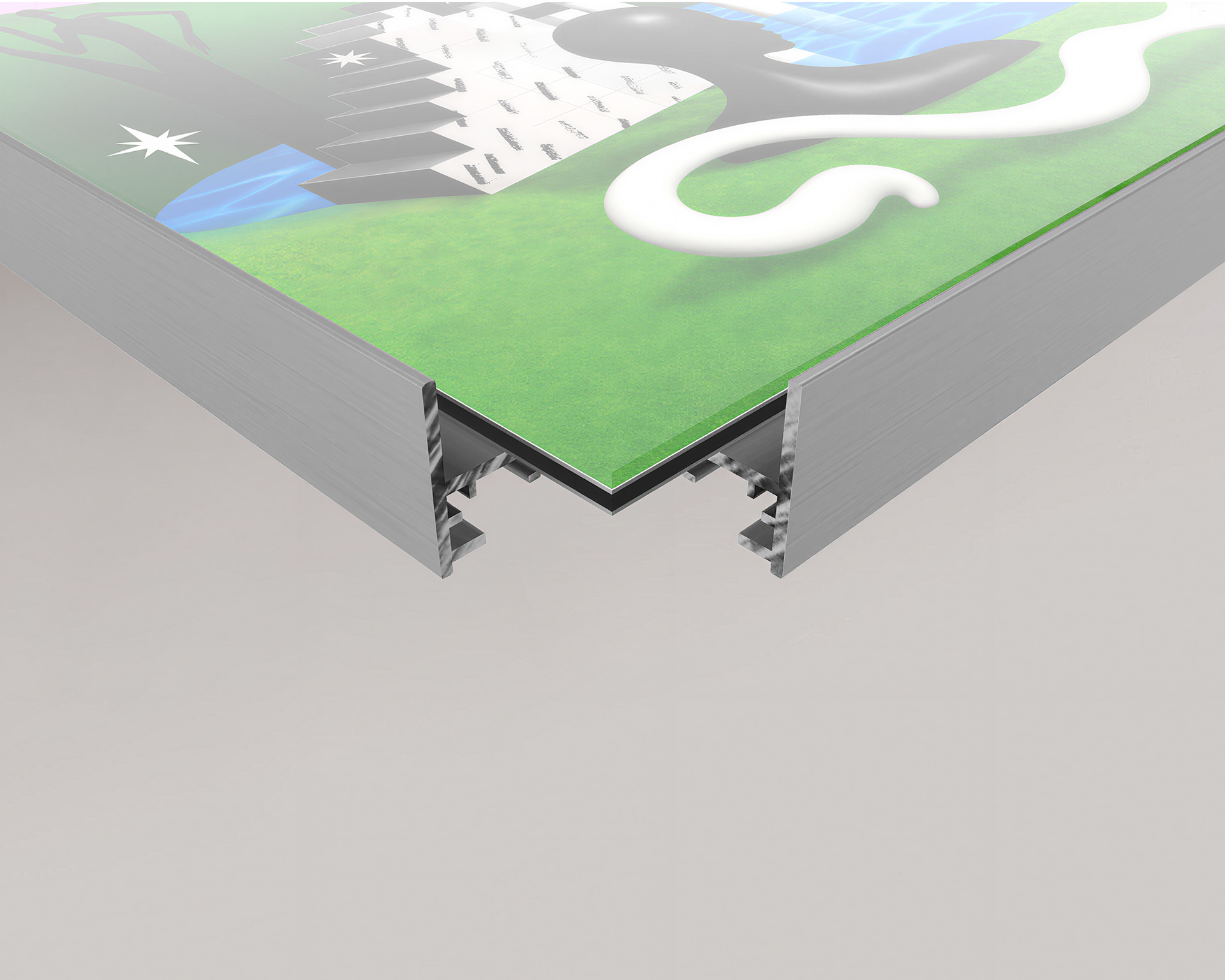
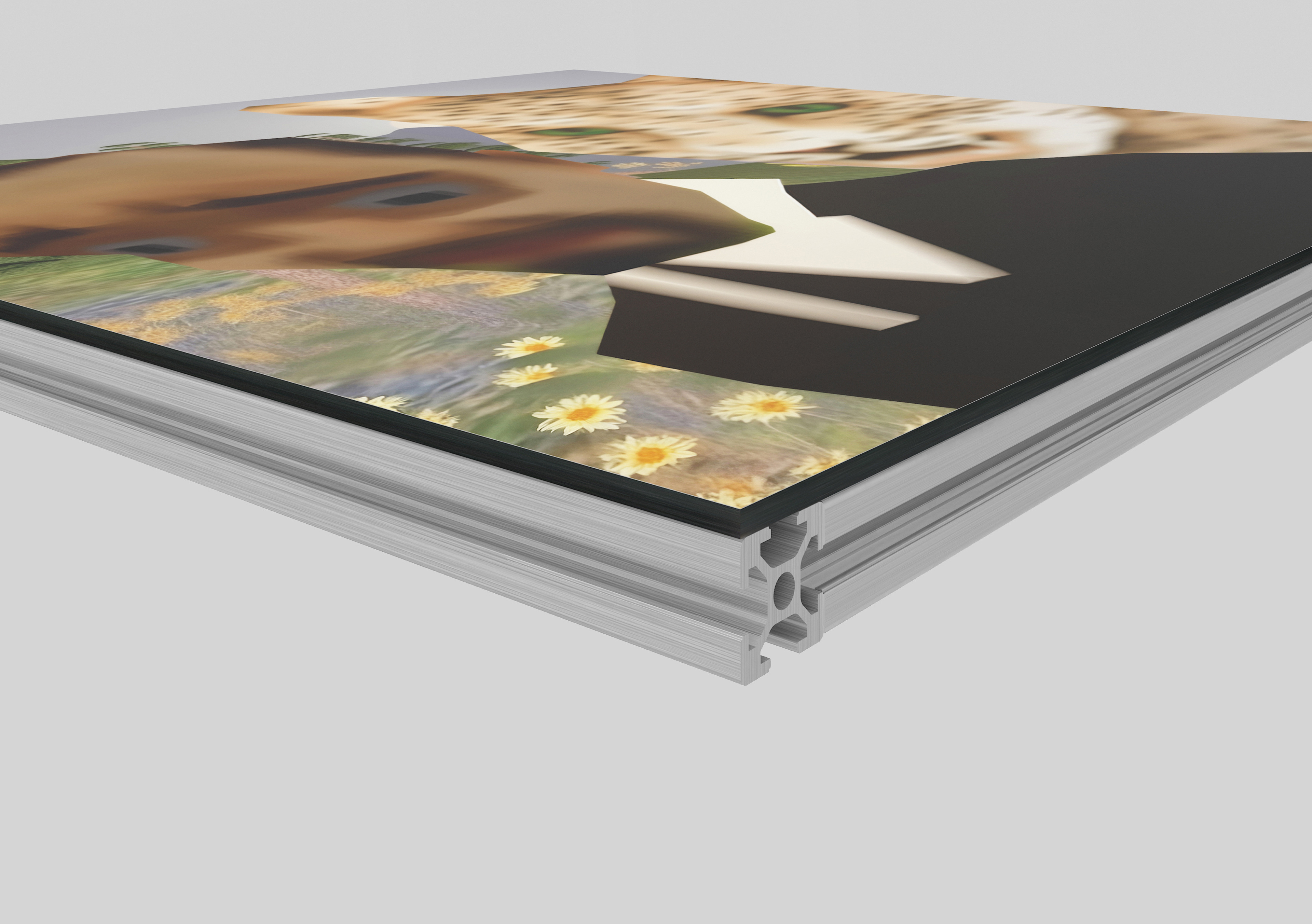
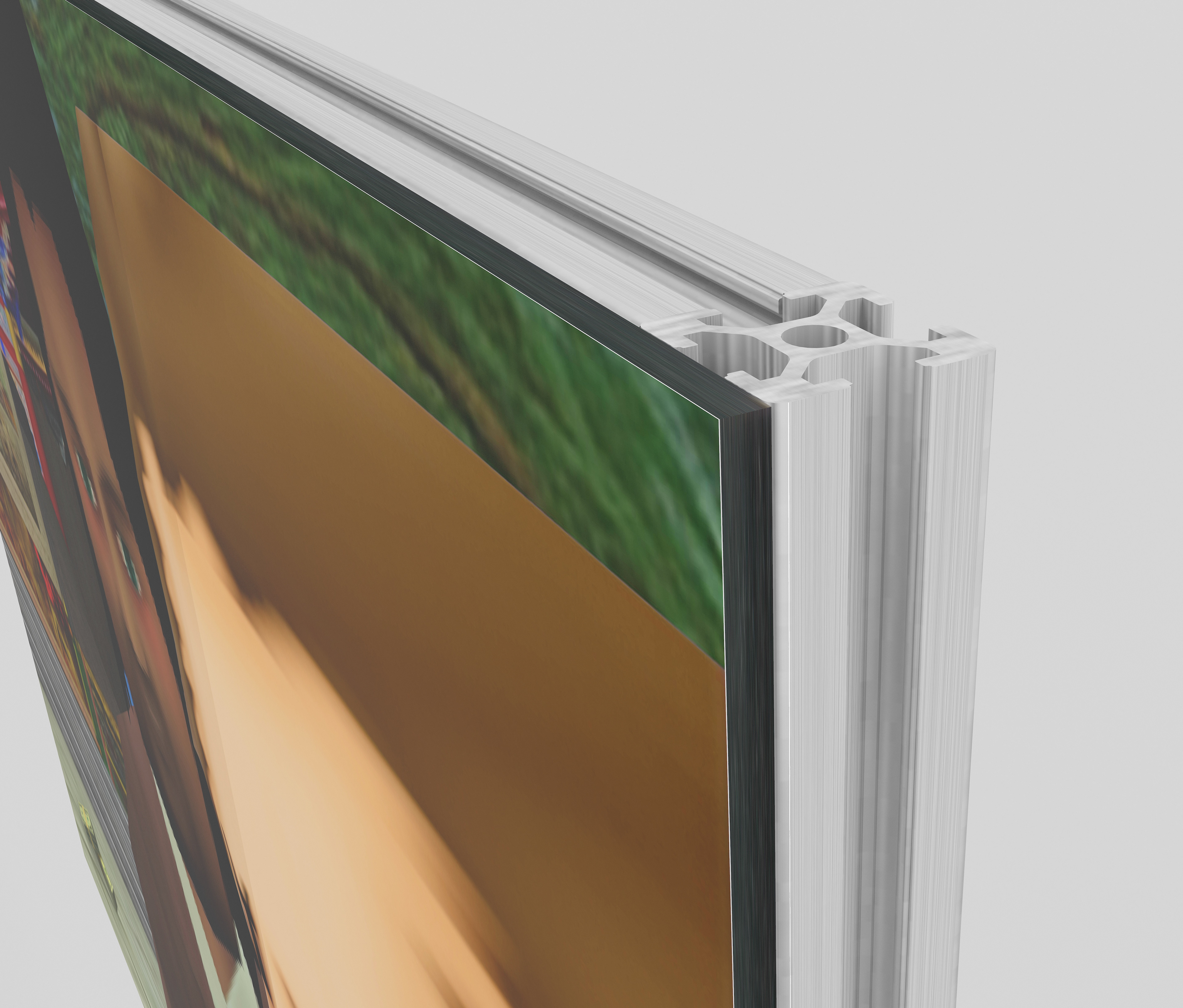
The series suggests that contemporary images no longer only represent things. They behave like game assets: stored, exchanged, upgraded, collected, and re-skinned. What first appears decorative becomes a system for managing bodies, beliefs, identities, and power through visual signs. Printed on aluminum Dibond, the images leave the screen, but they keep the logic of the screen: inventory, role assignment, symbolic exchange, and value production.