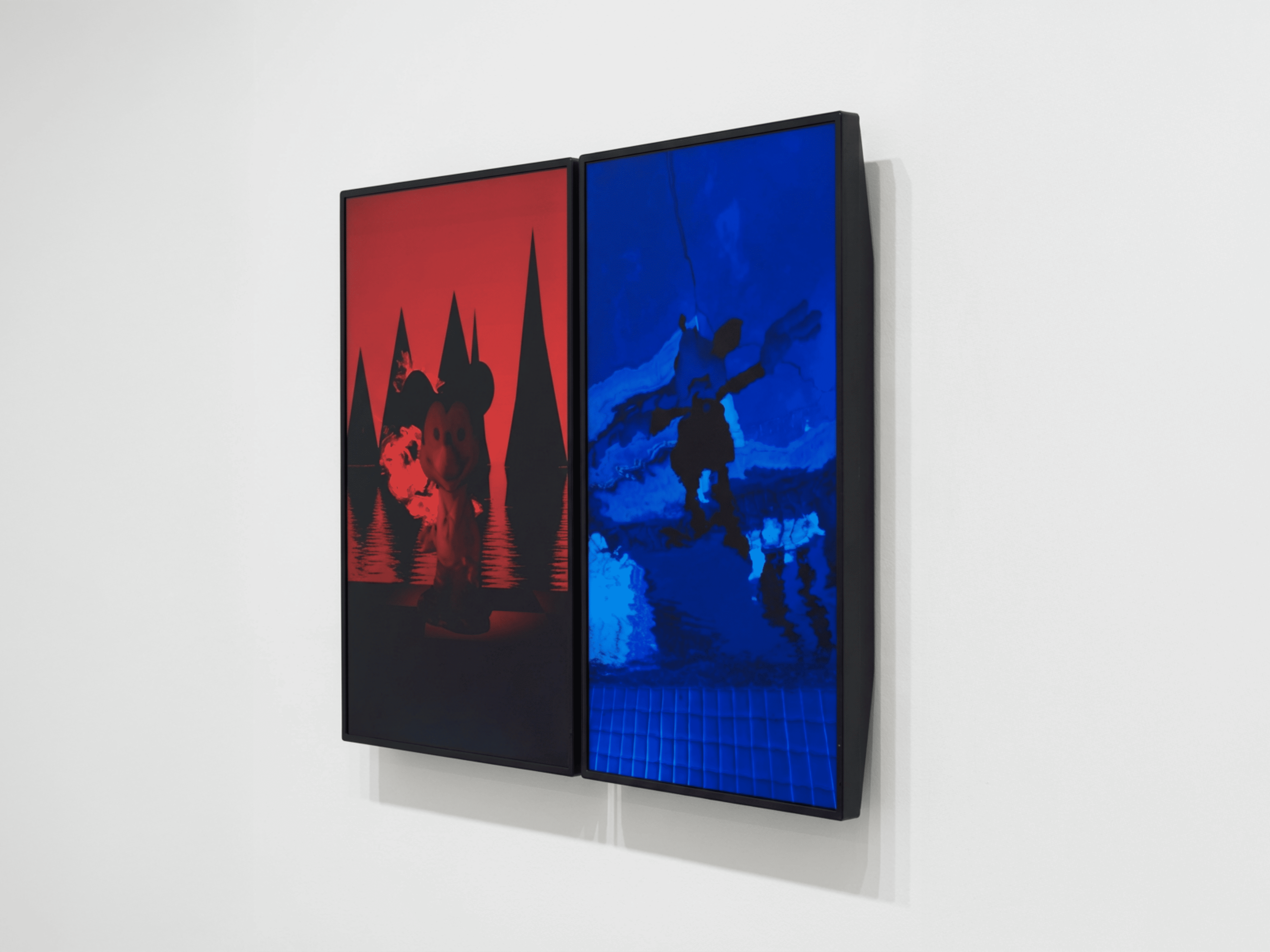
To permit is constructed from DV recordings, abandoned home-video fragments, and internet-sourced footage connected to the years of China’s one-child policy. The video brings together images that feel private and public at the same time: kindergarten scenes, marriages, hospital rooms, faceless figures, beds, masks, and staged moments of absurdity. These fragments do not form a linear account. They move like damaged family memories, carrying traces of policy, intimacy, and social pressure inside ordinary images.
Yú uses the degraded quality of the material as part of the work’s structure. Blurred resolution, unstable framing, domestic video noise, and copied digital surfaces keep the images from becoming clean documentary evidence. They feel close to home, but also partial, delayed, and difficult to fully recover. The low-quality image becomes a way to hold memory at a distance, as if the past could only return through fragments that have already been handled, compressed, and worn down.
The work does not turn the policy into a single historical event or a direct political statement. Instead, it follows how state decisions remain inside everyday visual life: in celebrations, medical spaces, children’s bodies, family rituals, and the habits of recording. What appears on screen is less a complete archive than a field of emotional remains, where private memory and public control continue to overlap.