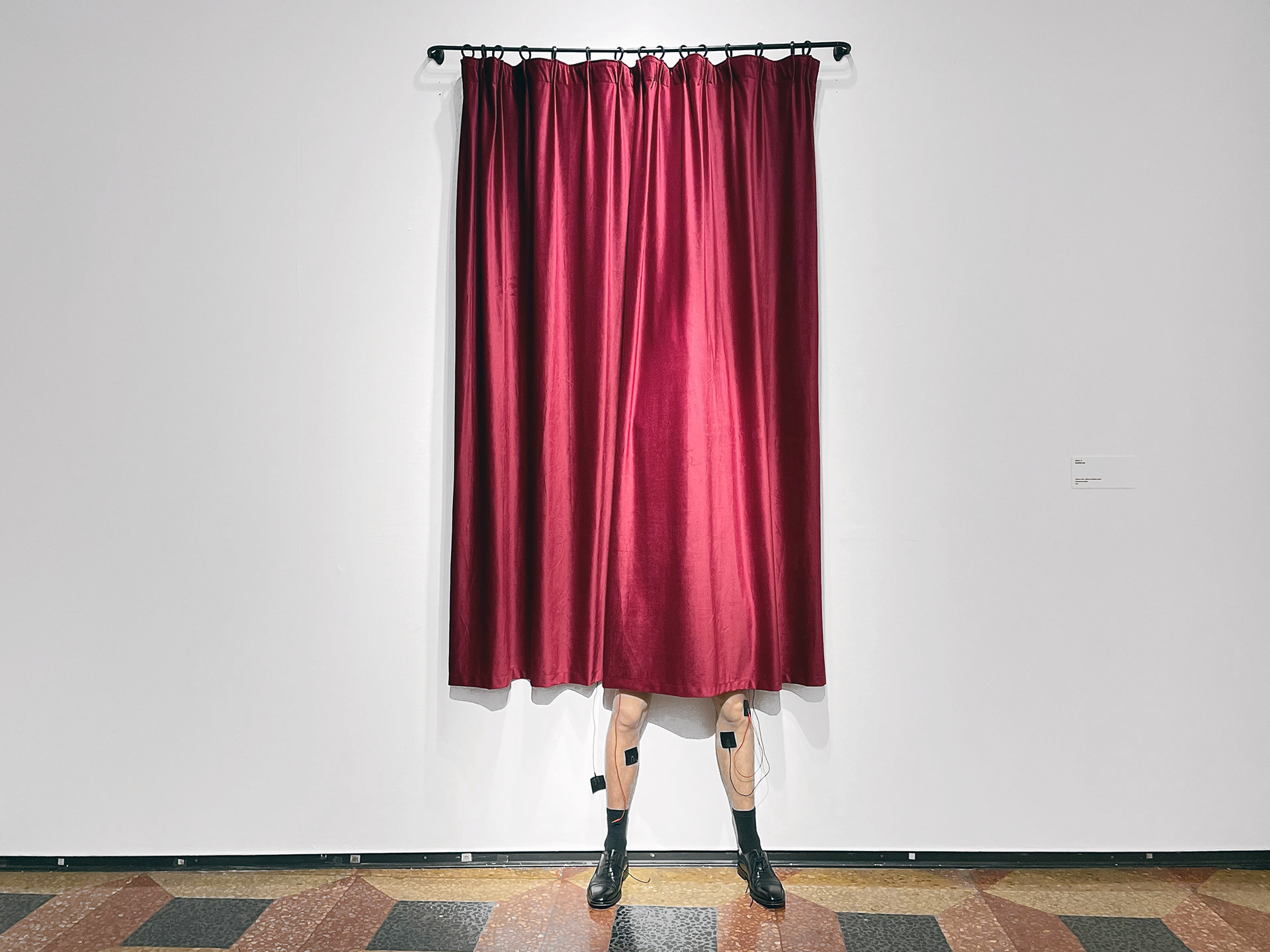
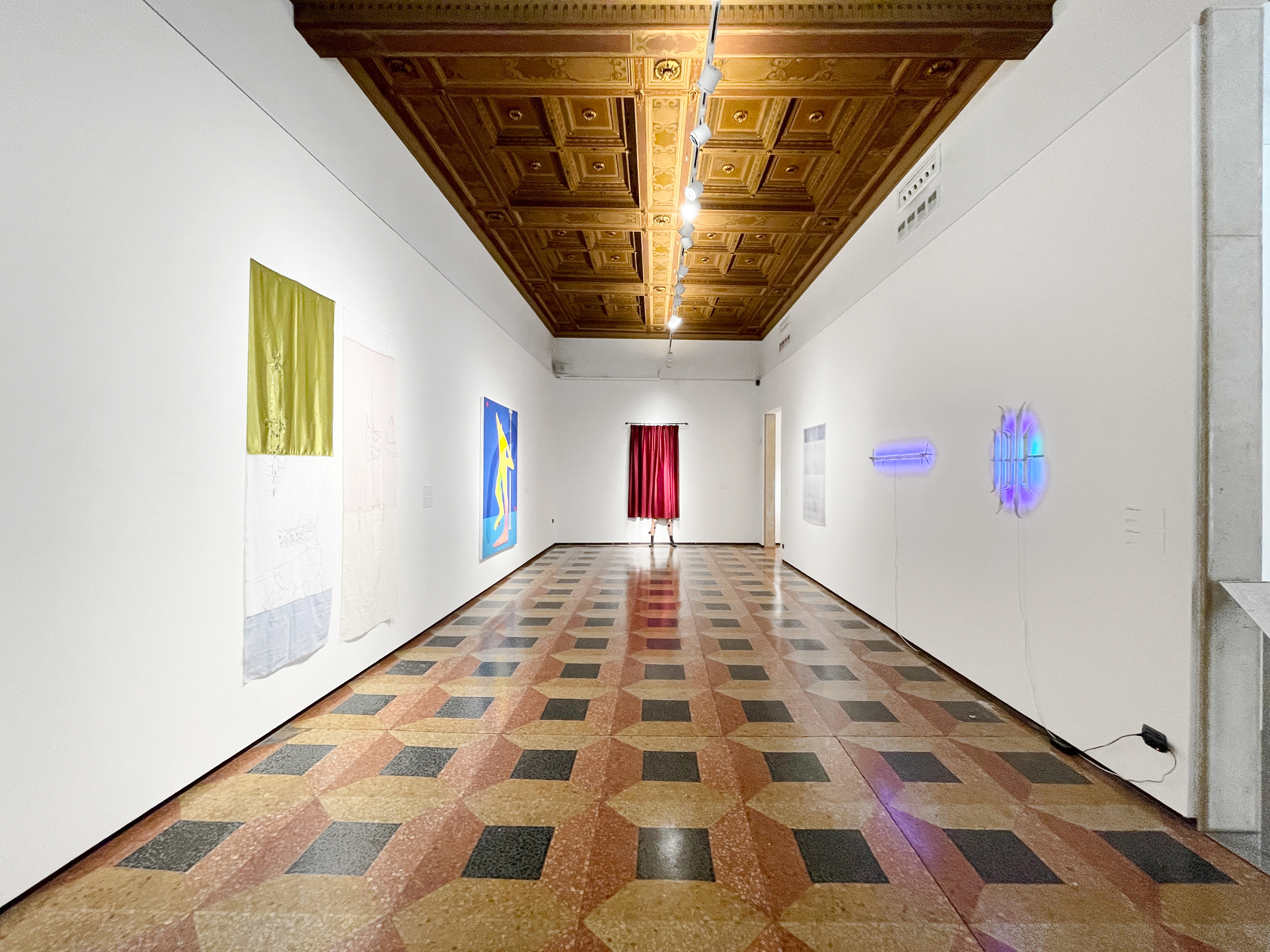
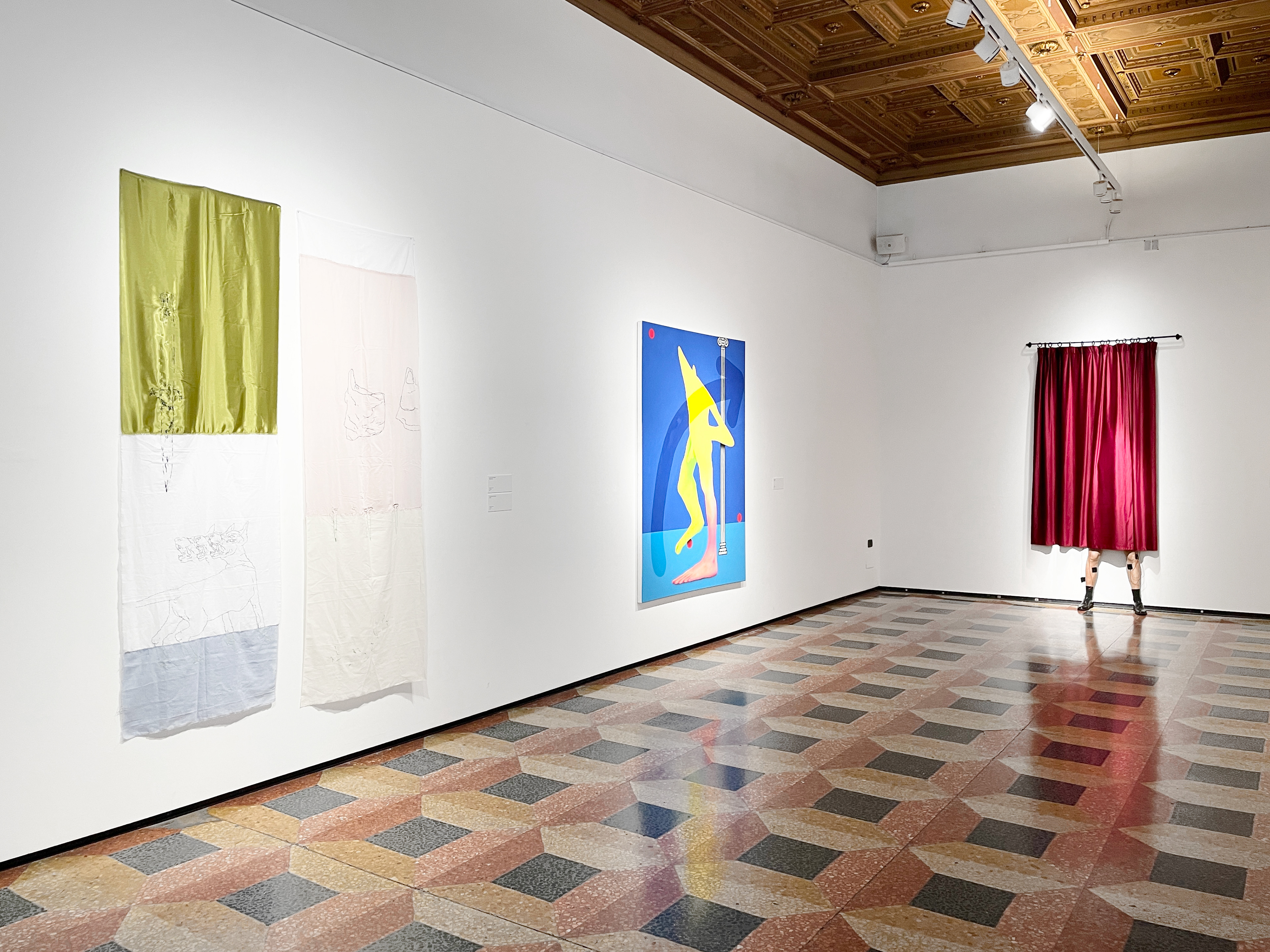
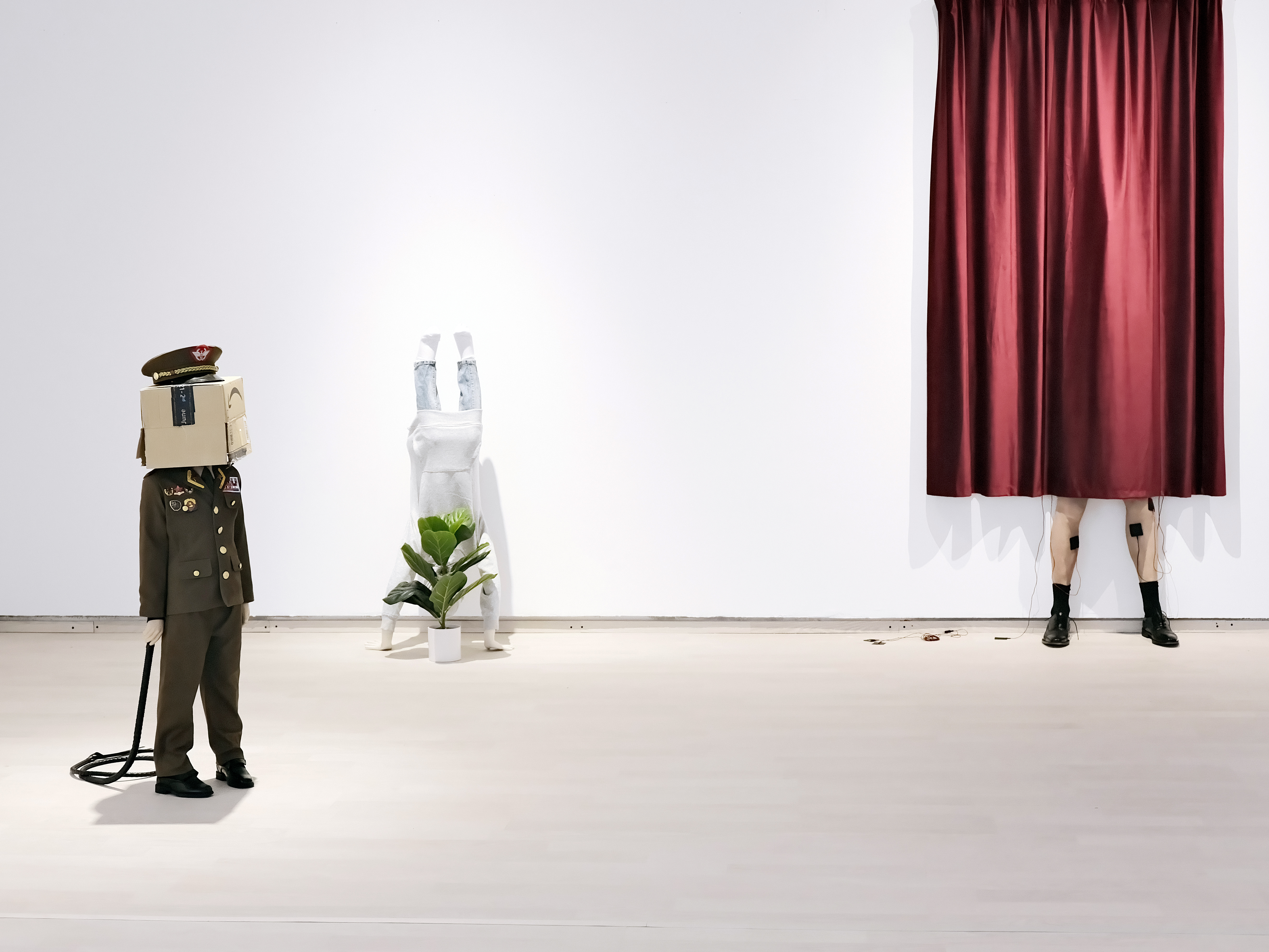
Invisible man is a silicone sculpture with vocal audio, electrode stickers, and a red stage curtain. The curtain covers almost the entire figure, leaving only the lower legs visible. Electrode stickers are attached to the exposed skin, with thin wires hanging down toward the floor. From behind the curtain comes a murmuring voice, somewhere between prayer, confession, and self-talk.
The work begins with an unresolved question: has this man escaped from a hospital, an asylum, or a stage? Yú keeps all three possibilities active. Each one changes how the body is read. The curtain belongs to theatre, where a body is expected to perform, but it also functions as a screen that hides and controls what can be seen. The electrodes suggest medical or psychological observation, while the covered body suggests someone being protected, examined, or confined.
The man is not invisible because he has disappeared. He is made incomplete by the conditions around him. Behind the curtain, he becomes a body without a face, a voice without a clear listener, and a patient or performer without a stable role. The visible legs become evidence, but they are not enough to identify the person. The voice confirms that someone is there, but it does not explain who he is or what has happened.
The viewer stands before a scene that looks like a performance, but also like a diagnostic setup or a private breakdown. Medical observation and theatrical presentation begin to overlap. Both depend on a body being placed, framed, and partially exposed. In this arrangement, visibility is not freedom. It is a rule that decides which parts of the body can appear and which parts must remain hidden.
There is a quiet violence in this work. It is not an act of direct attack, but the violence of being reduced to signs: legs, wires, curtain, voice. The body is present only through fragments that can be watched, measured, or interpreted. In this sense, Invisible man connects to Yú’s broader interest in how rules and institutions decide the role a body is allowed to play.
The work does not ask us to solve the man’s identity. It asks what kind of space can make a person appear this way: visible as a symptom, audible as a murmur, but still withheld as a subject.