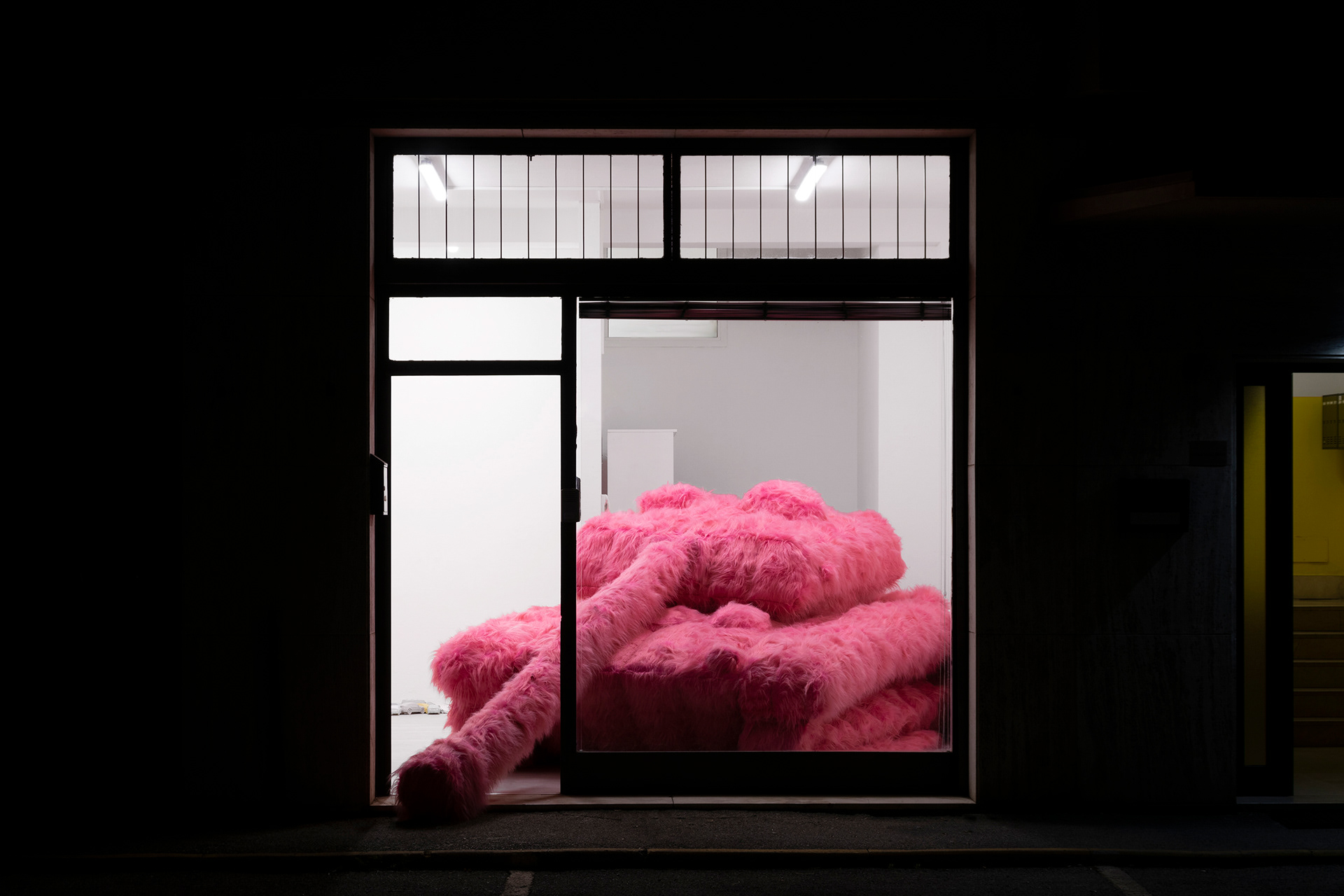
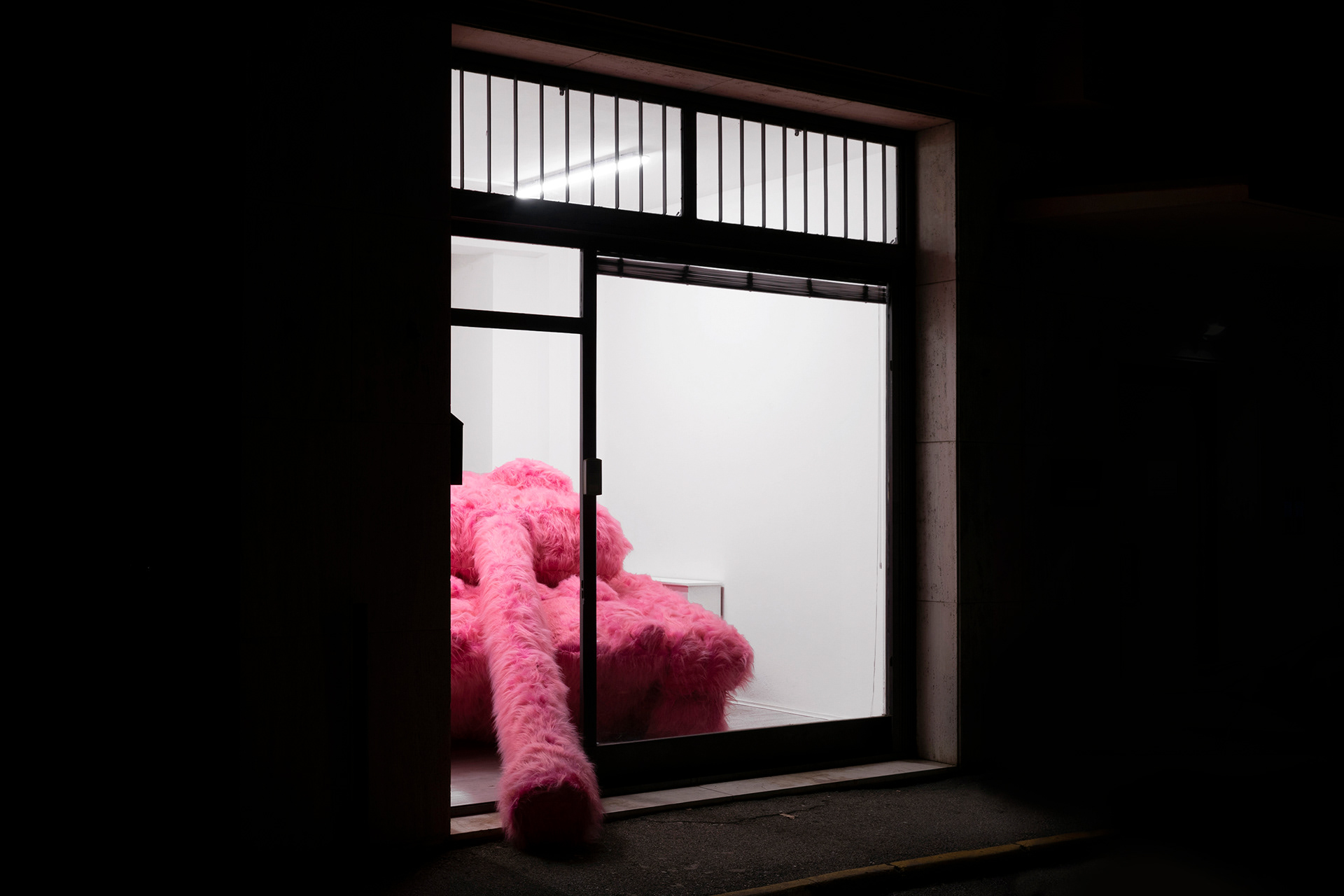
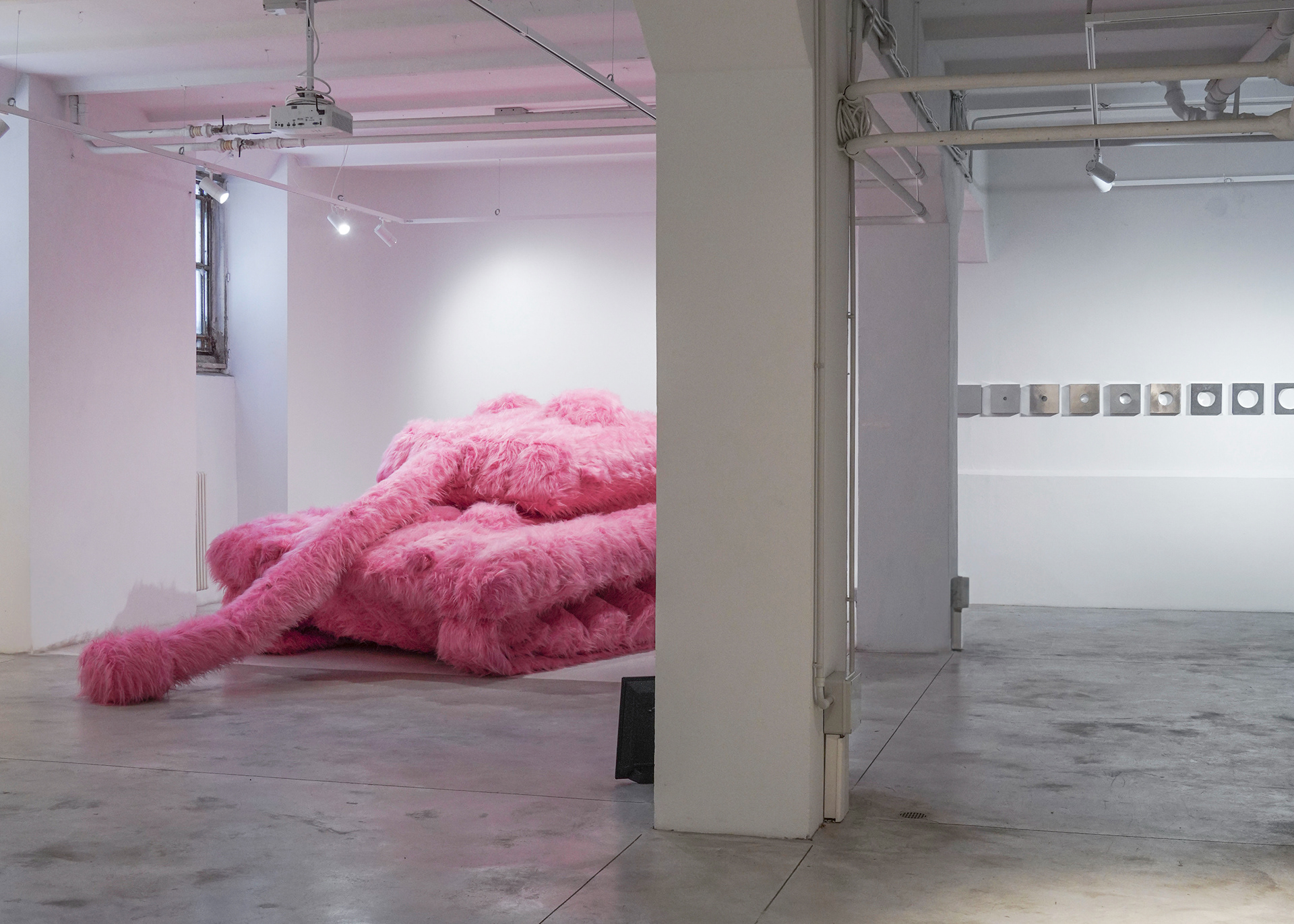
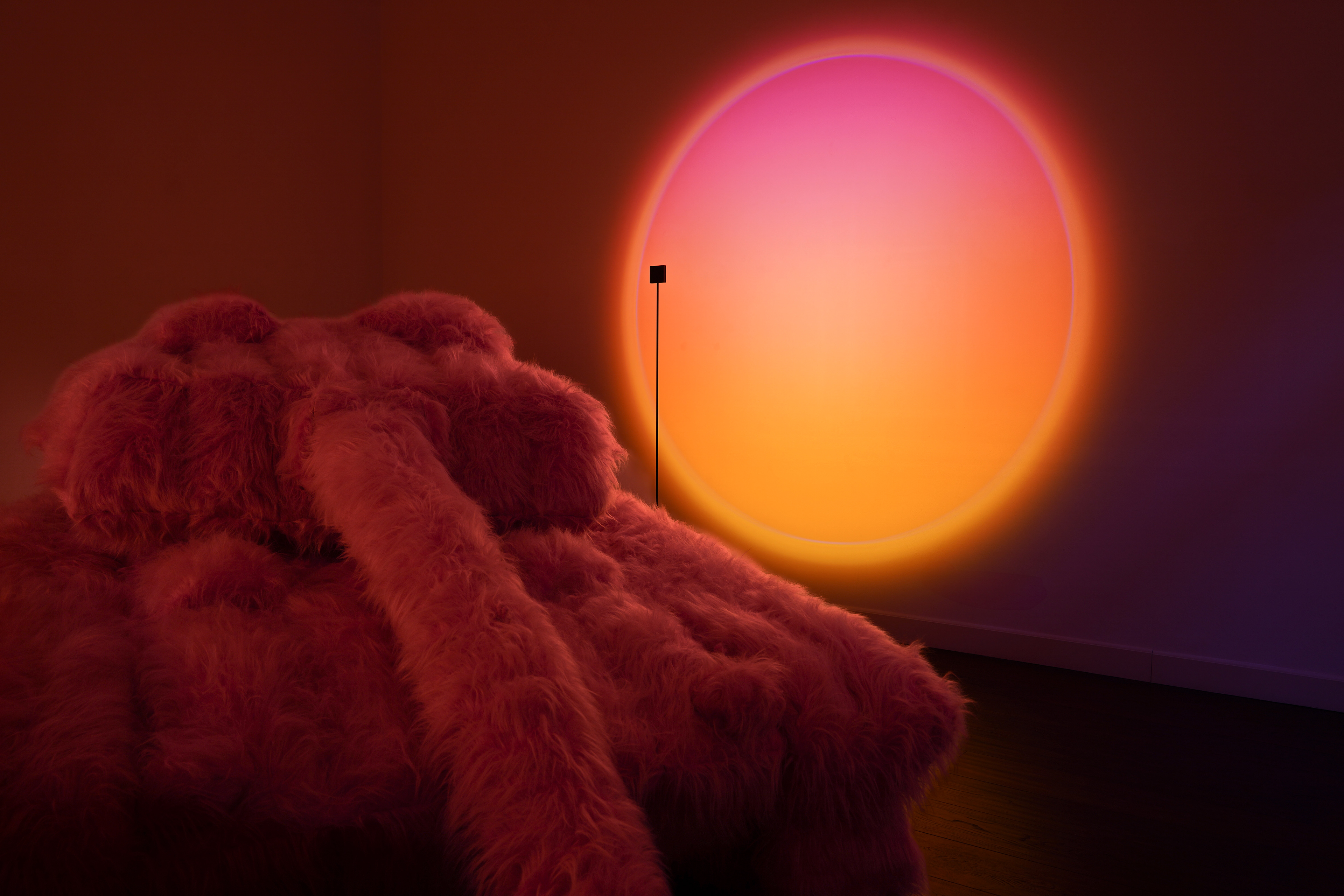
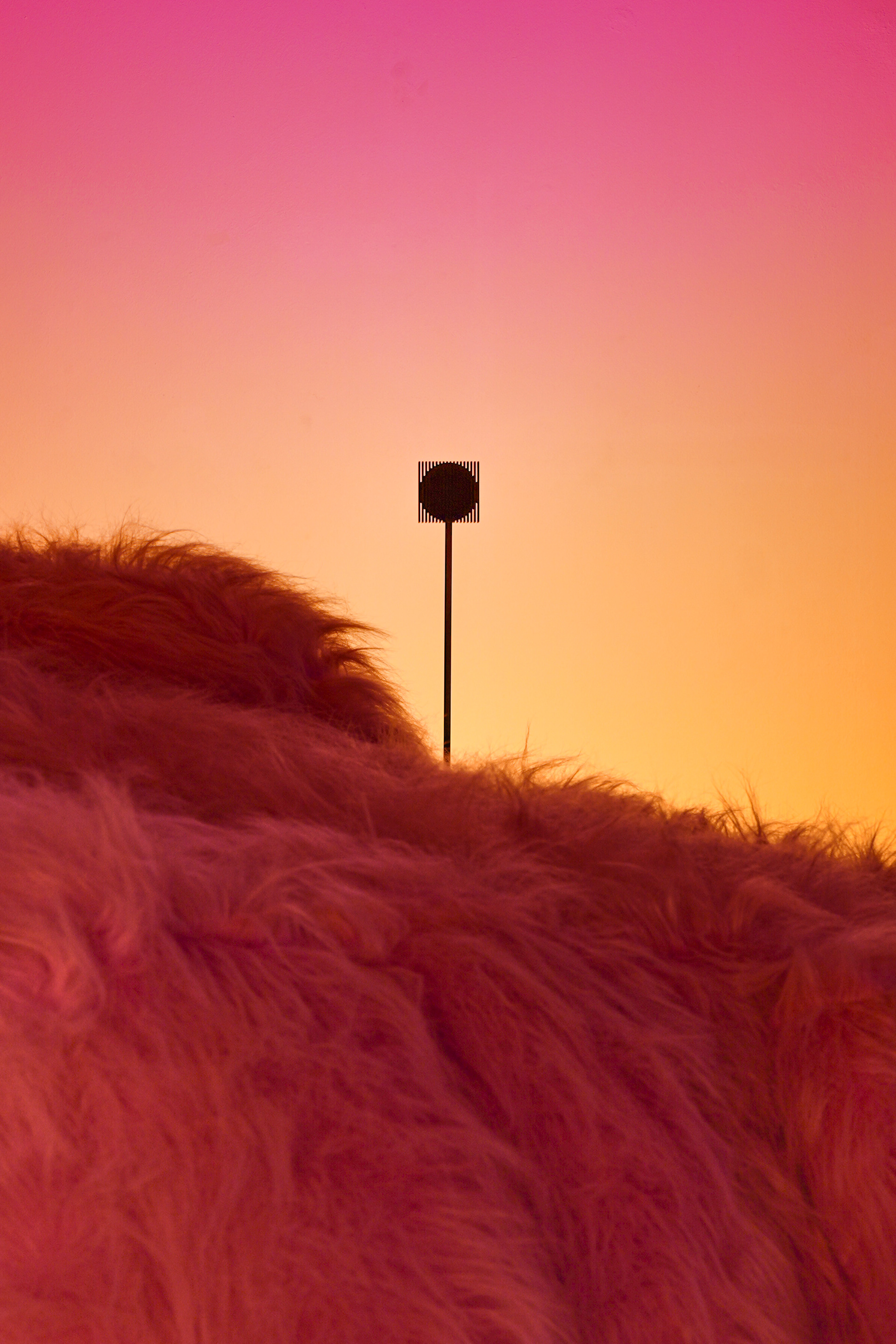
A shy girl rebuilds the tank as a large pink plush inflatable installation. Its scale still recalls a military vehicle, but its surface has been changed into something soft, decorative, and almost childish. Seen through windows or placed across architectural thresholds, the object appears approachable, touchable, even playful, while its shape remains unmistakably tied to force, command, and public trauma.
The choice of pink is not neutral. In Chinese popular language, “young girl pink” suggests sweetness, softness, and a fragile kind of femininity. Yú uses this color code against the tank’s usual image of hardness and authority. The work does not simply make the tank cute, nor does it turn violence into decoration. It stages a sharper displacement: a political symbol is dressed in a surface that first seems harmless, before its original meaning returns.
In a Chinese context, the tank carries a direct relation to the 1989 Tiananmen Square protests and massacre, as well as to the censorship that continues to surround that history. Even simplified or playful images of tanks can become politically sensitive when they reappear in public culture. By covering this forbidden symbol in plush material and “young girl pink,” Yú shows how a censored image can return indirectly through toys, colors, surfaces, and coded forms.
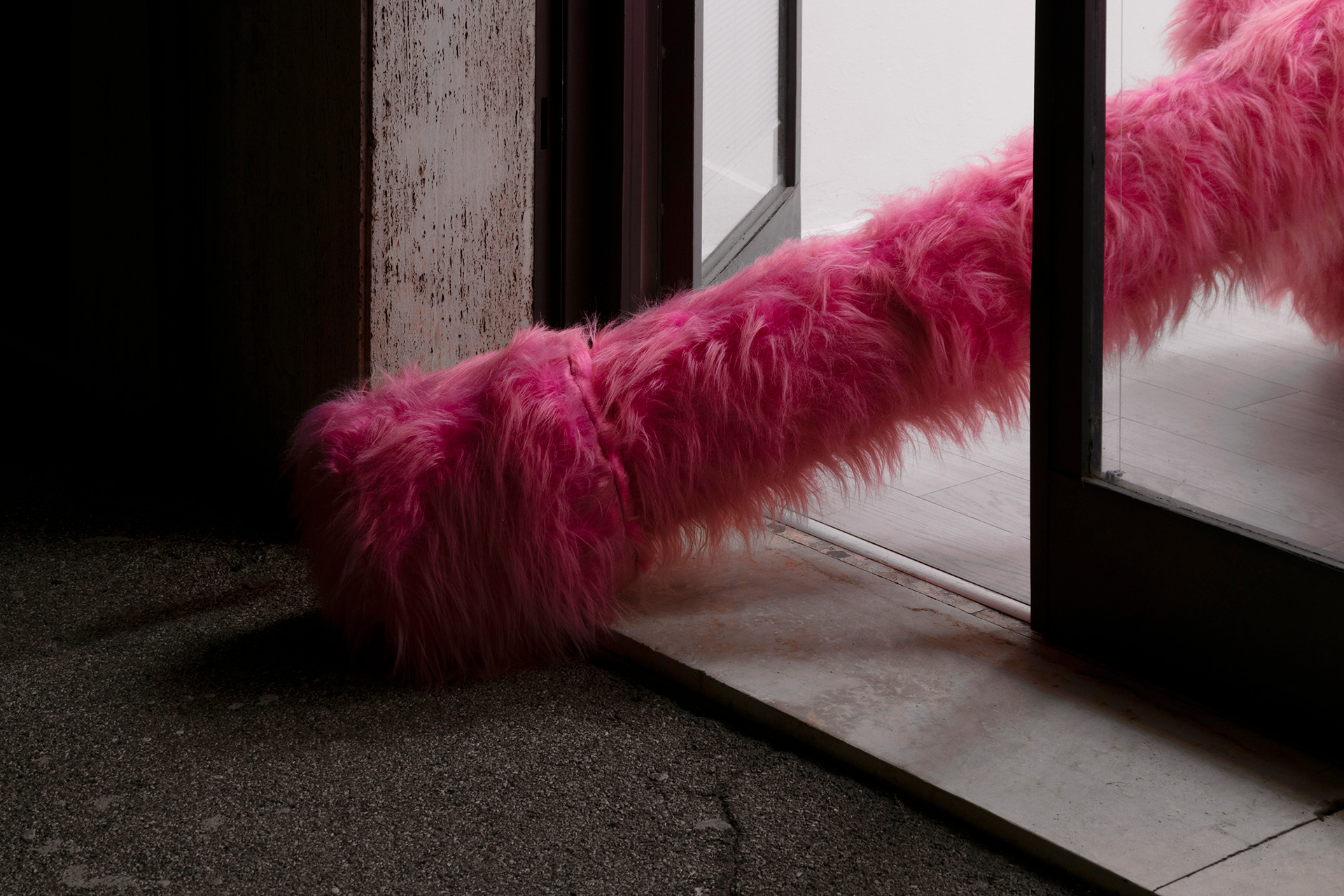
The work also follows a game-like operation: change the skin, change the rules, and test whether the object can still perform its original meaning. Here the tank becomes an oversized prop, a soft obstacle, and a body occupying the exhibition space. Its long barrel crosses thresholds and points outward, reminding us that softness does not remove threat. The object has been re-skinned, enlarged, softened, and made unstable, but it has not lost its charge. A shy girl asks what happens when power is made touchable, childish, and fragile, while still remaining recognizable as power.