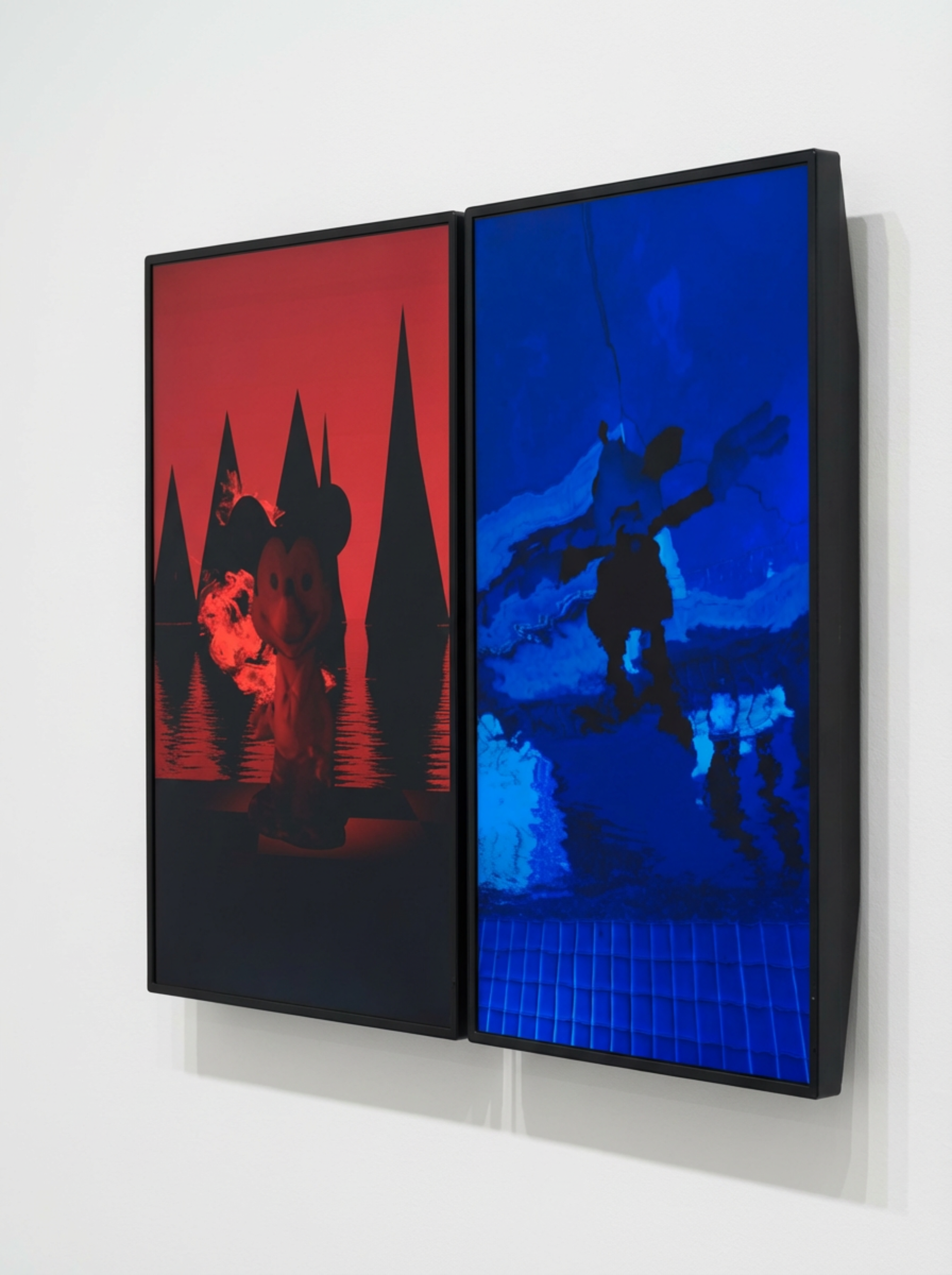
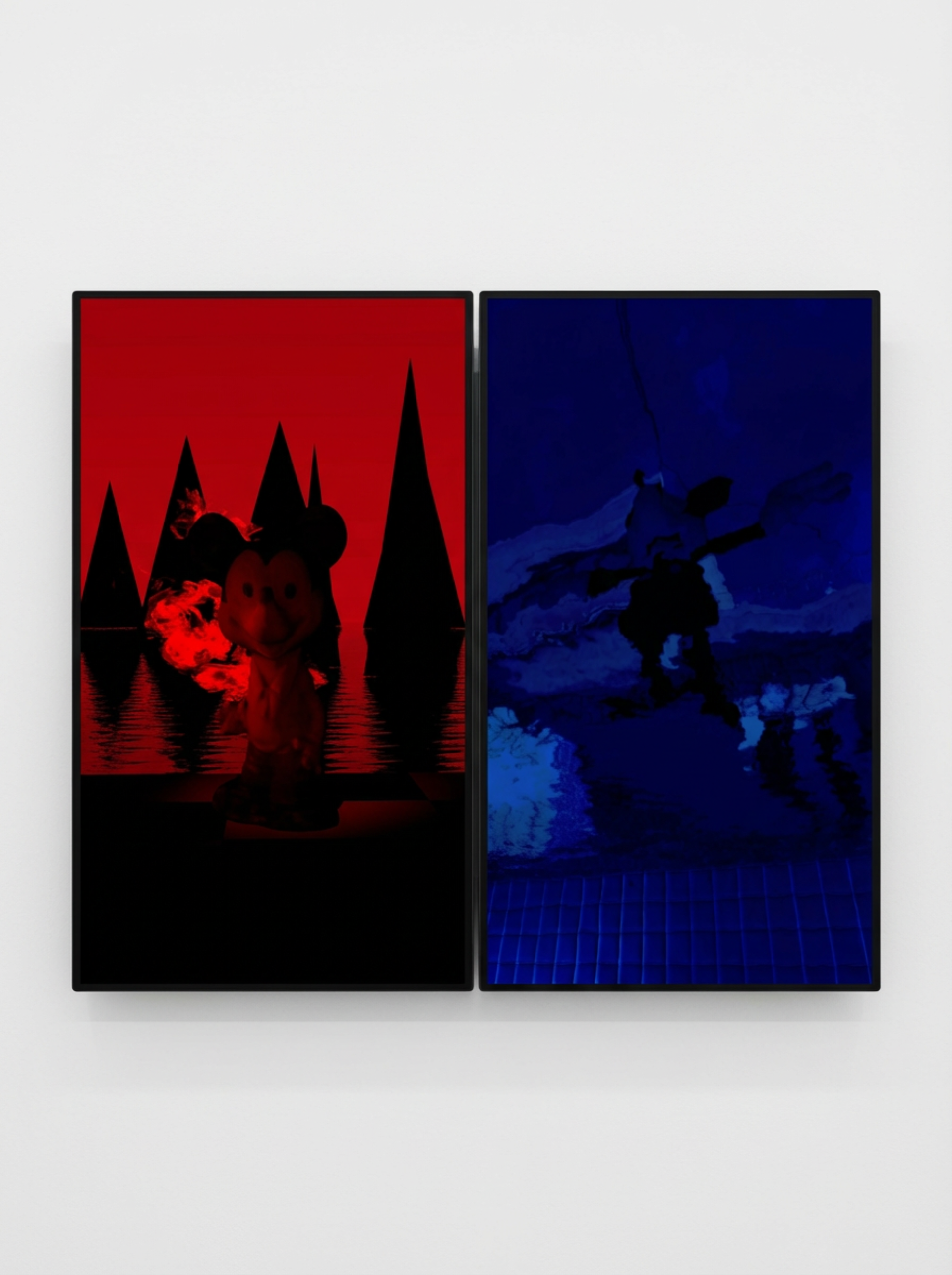
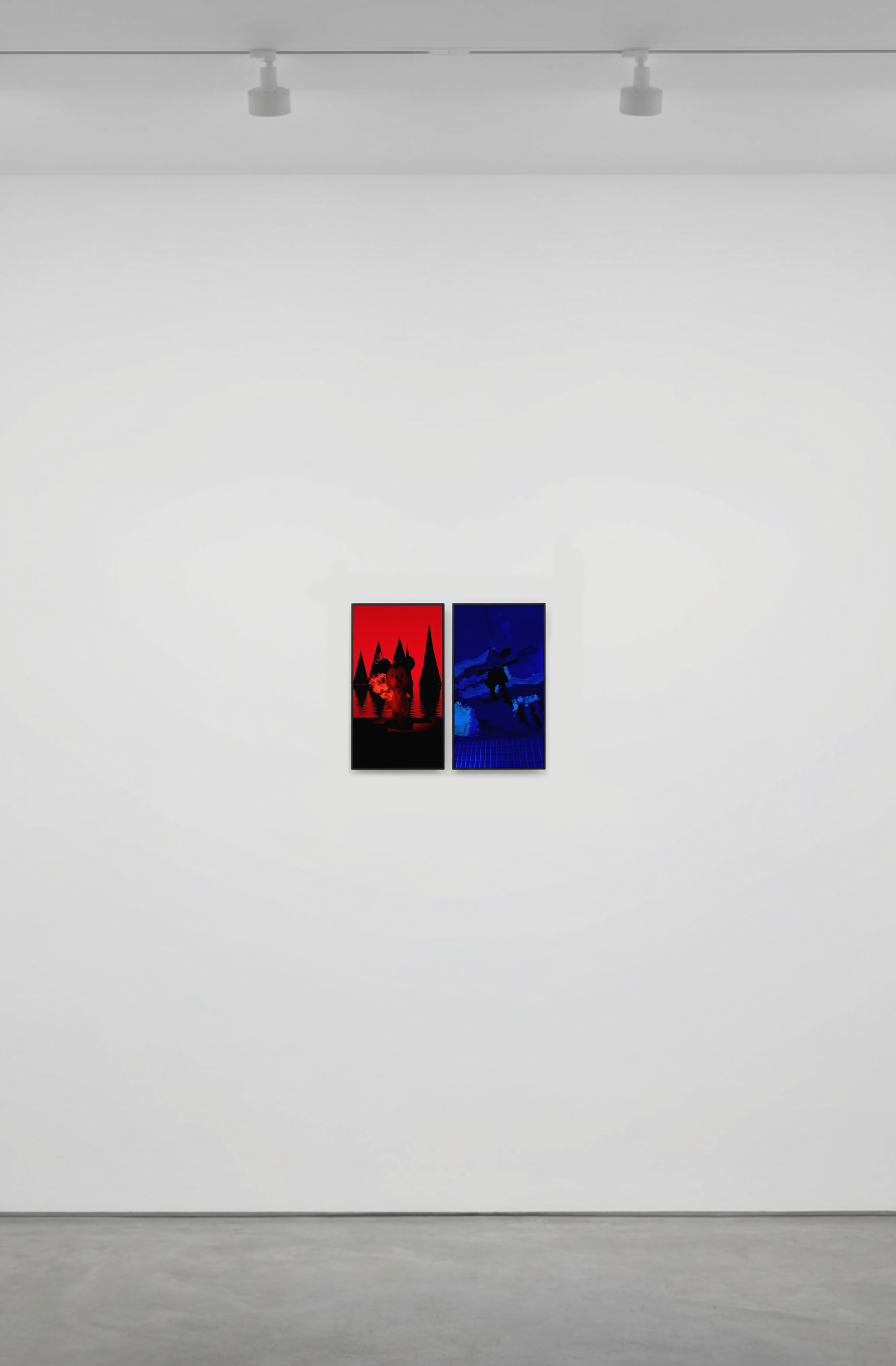
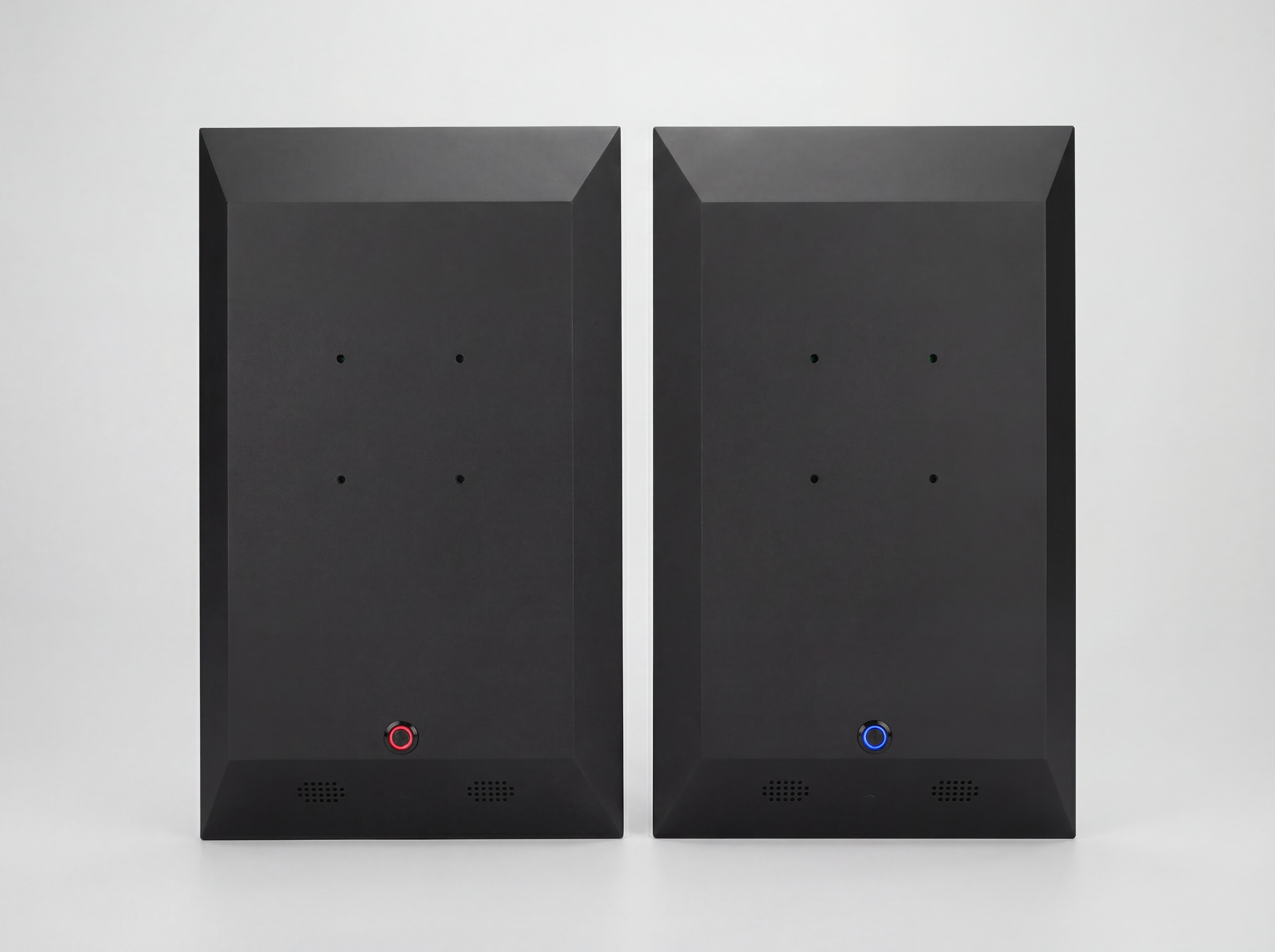
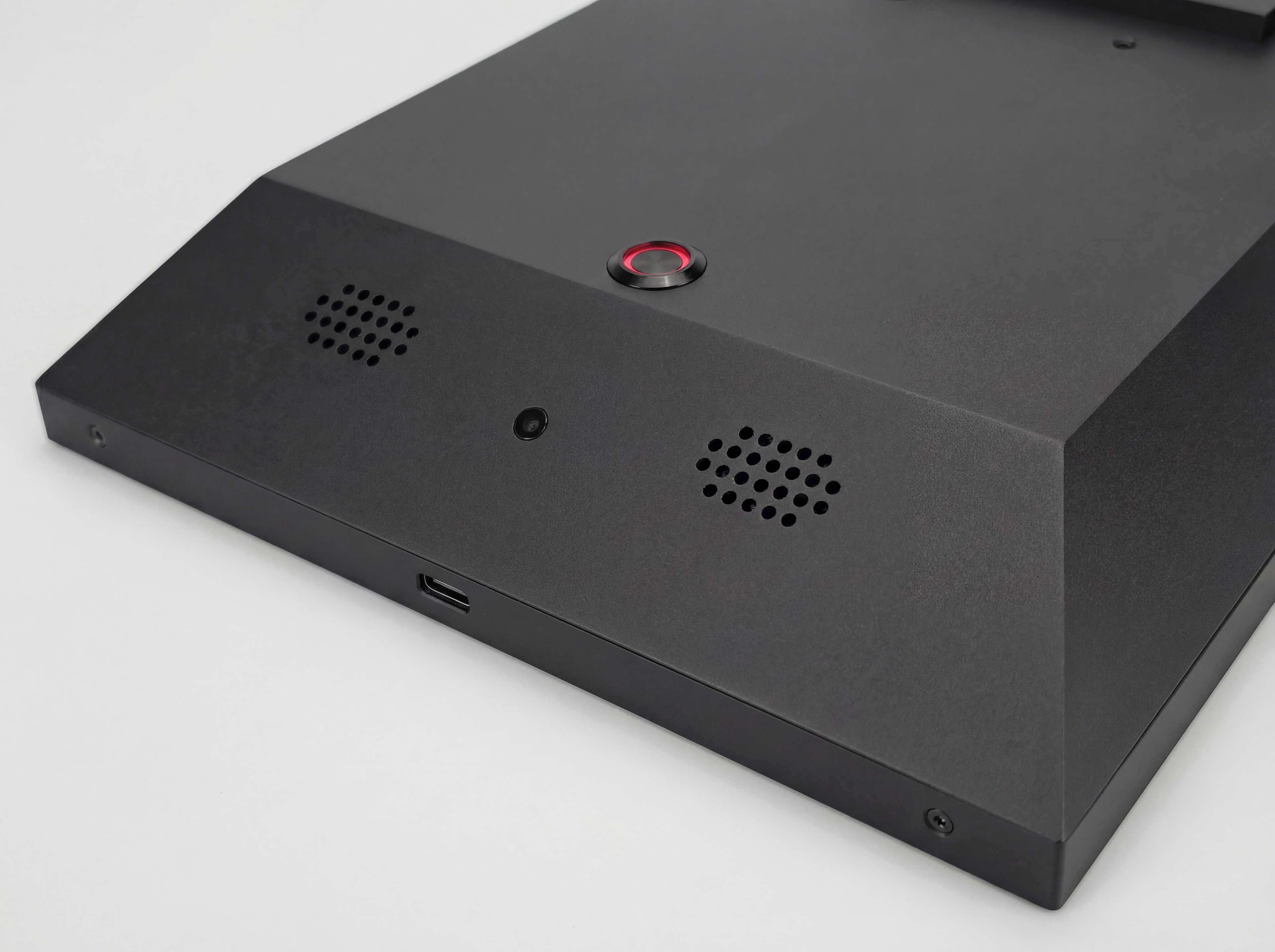
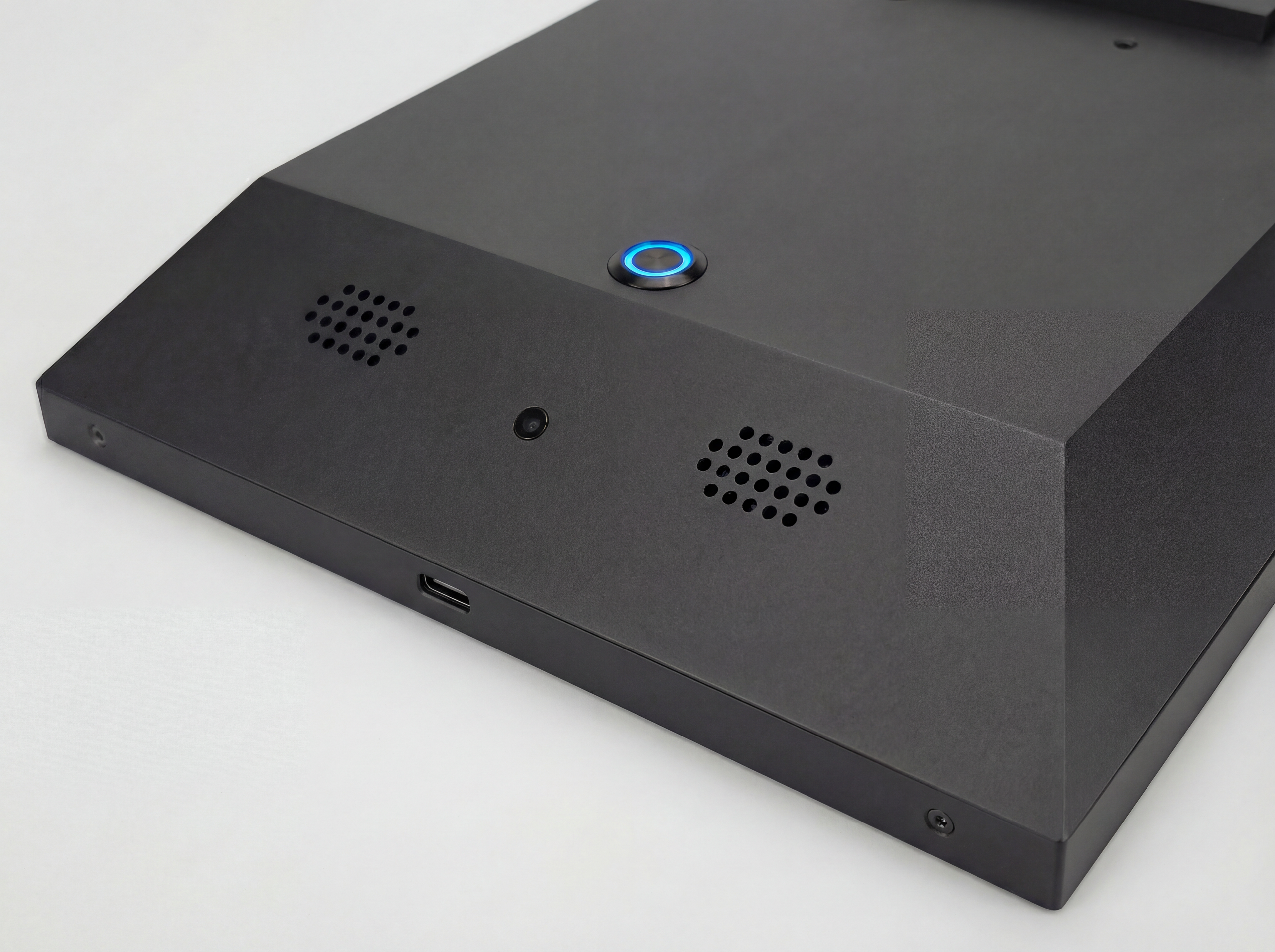
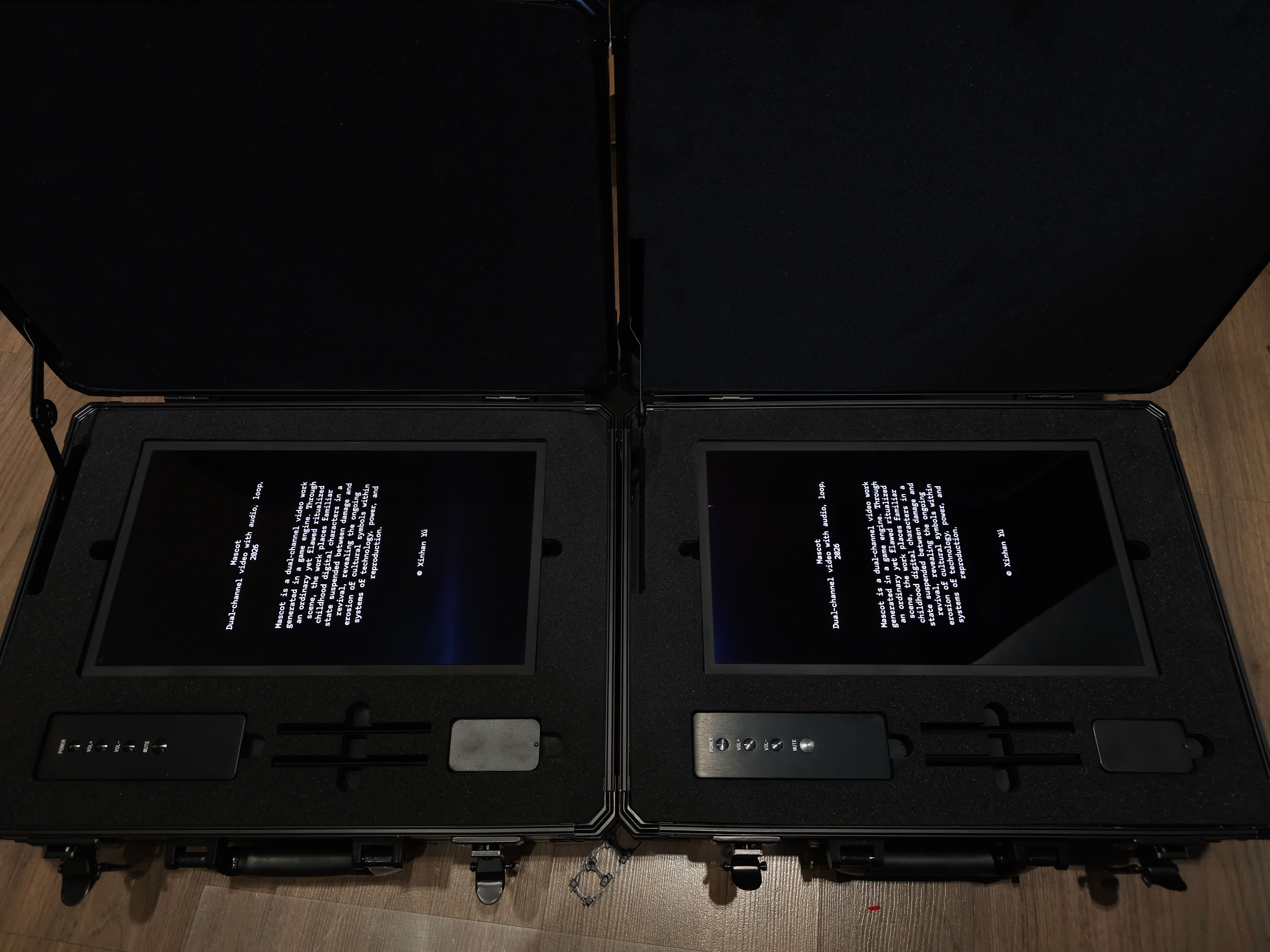
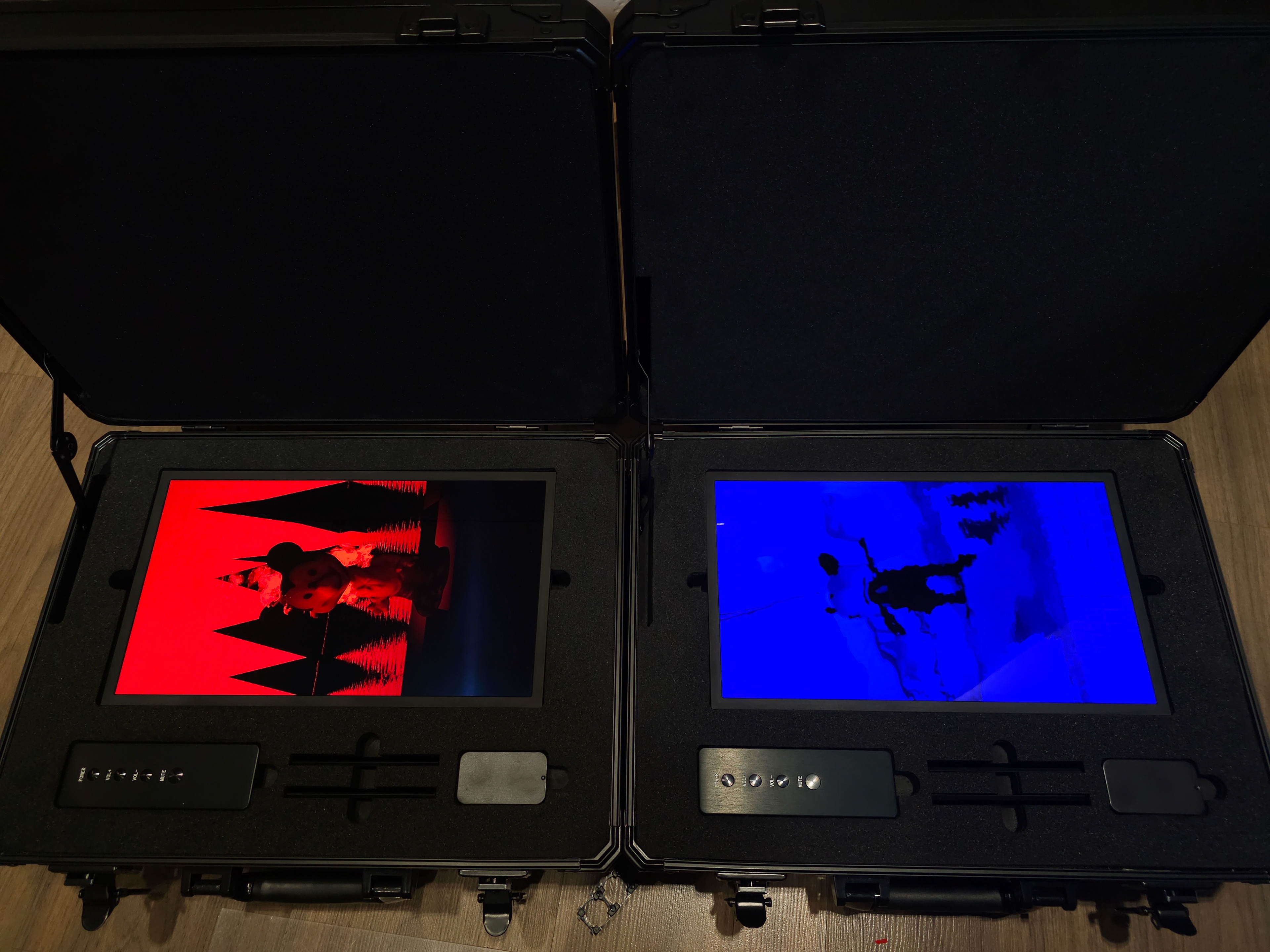
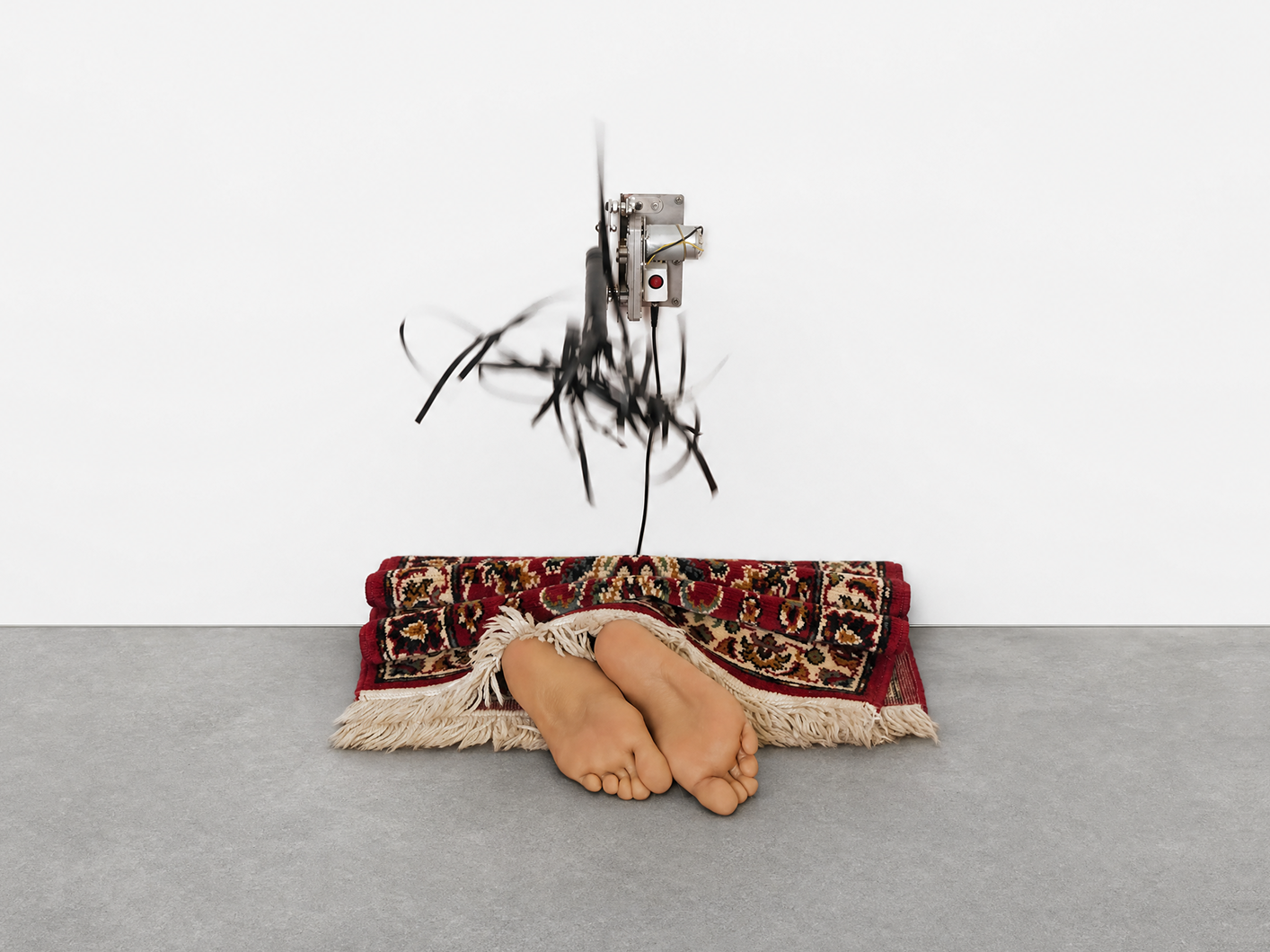
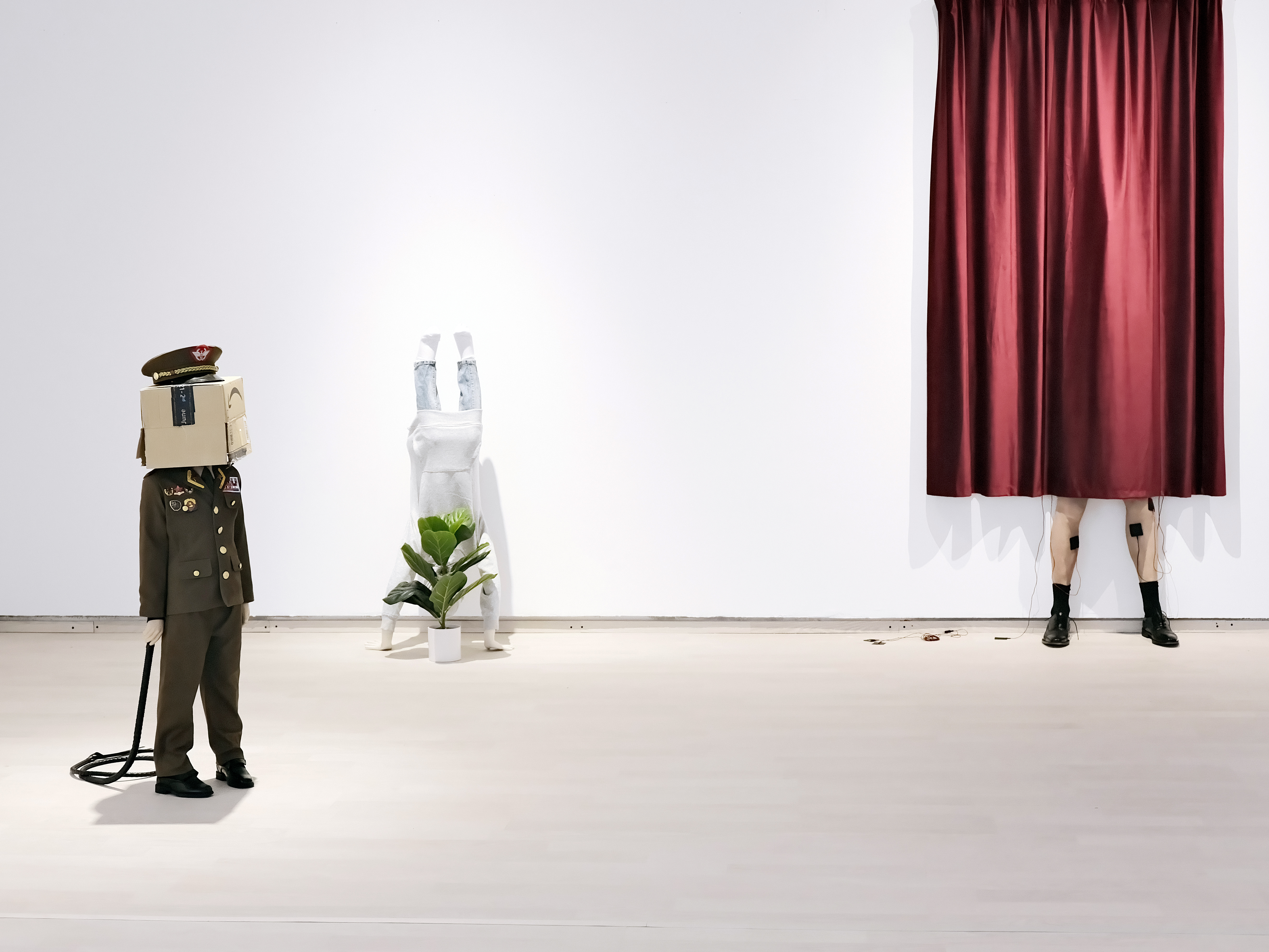
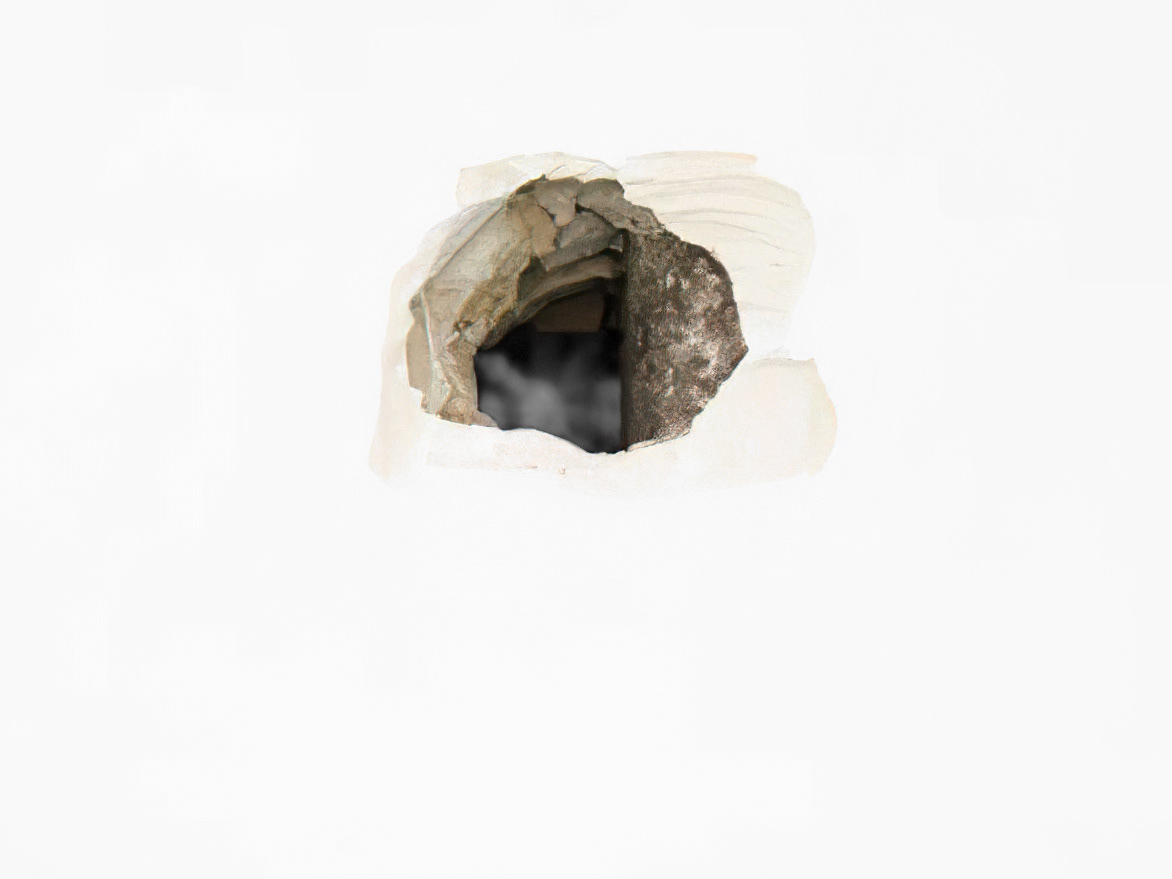
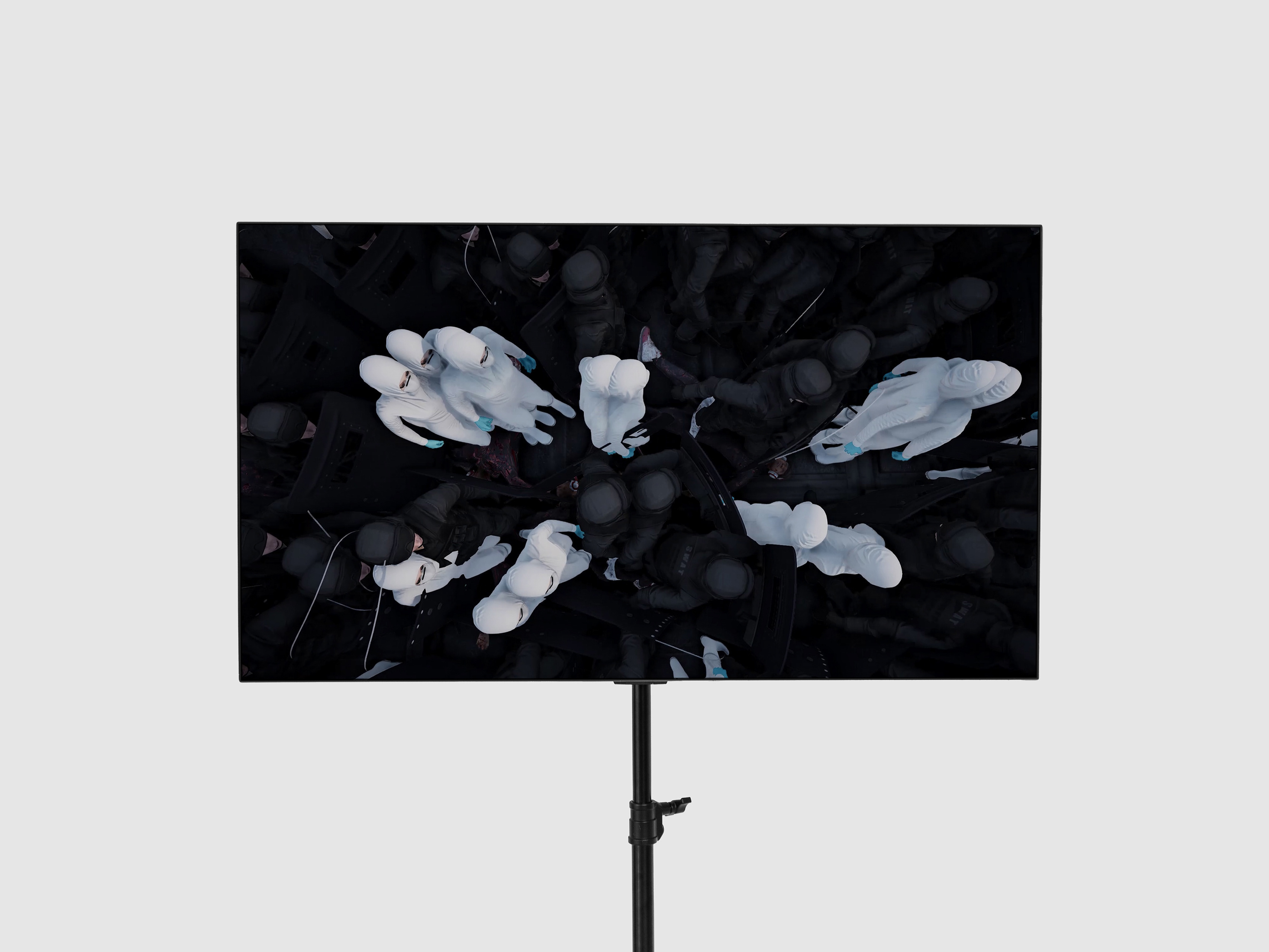
This dual-channel video installation by Xinhan Yu is generated entirely within a game engine. By layering fictional environments, digital symbols, and simulated physical phenomena, it constructs a fictional martyrdom ritual situated between childhood memory, cultural violence, and the afterlife of symbols. The work is presented through red and blue color filters that resemble game-engine post-processing effects or the split chromatic filtering of old 3D glasses. This added layer of optical processing subjects the images to a second form of technical violence as they enter physical space.
The left screen depicts a folk, bootleg wooden carving of a cartoon mouse placed at the center of a stage made of geometric black spires and a mirrored water surface. The black spire is a fully artificial graphic construct. The water reflection follows simulated physical logic. The wooden figure and the fire act as digital stand-ins for physical materials and combustion. The mix of a virtual setting and pseudo-physical effects forms a false ritual space. This space is not religious or mystical. It appears ordinary, absurd, and misaligned. As a low-end and counterfeit vernacular shanzhai symbol, the wooden mouse becomes a weakened echo of a global super IP. It appears low resolution, cheap, unauthorized, and pushed to the edges of copyright systems. In real contexts, a Mickey-type symbol must stay positive, clean, undying, and untouched. It must never appear in dirty or destructive scenes. Here the figure burns. It is pushed into the forbidden zone of death and the afterimage of cultural mascots.
The right screen presents another type of fragility within the same symbolic system. It shows a cartoon mouse rendered in a T-pose, which is the default posture of 3D models, standing in a game-engine water environment. The T-pose functions as a technical state of unassigned life. It also carries the stillness of a secular icon. The pose is imposed rather than chosen. It marks a point of origin with no exit. Its reflection on the virtual water surface is constantly broken, dissolved, and warped. The image becomes a digital body that starts to fall apart before it gains subjectivity. The reflection remains untouchable and weightless. It exists as a virtual remnant. This stands in sharp contrast to the wooden figure that can burn. One figure can be destroyed. The other fails to fully exist. Both remain in conditions of weak symbol, weak subject, weak narrative, and weak existence.
The red and blue filters strengthen the direction of these two forms of violence. Red acts as the color of danger, altar, and sacrifice. It gives the left screen a near monumental sense of force. Blue adds psychological depth and a sense of coldness to the right screen. It feels like fragments of a self collapsing at the level of consciousness. The color filters themselves act as tools of power. They shape and distort the images. They turn the images into controlled objects.
Together, the two screens reveal a central paradox in Xinhan Yu’s visual system. Childhood symbols and digital bodies are both pushed into remnant states under current forms of violence. These forms include cultural, technological, proprietary, and symbolic pressure. A global mascot designed for pleasure and positivity is forced into adult and dangerous systems of destruction. At the same time, a virtual character dissolves again and again before it ever gains life. Neither figure can hold a stable identity. Both are trapped in loops. One burns without end. The other remains endlessly distorted. Both are locked in a cycle of suffering.
In the end, the installation places the viewer in an unstable role. The burning scene on the left positions the viewer as a witness. The submerged view on the right turns the viewer into a voyeur. This work is a dual-channel study of the pain of symbols. It addresses not only the collapse of childhood icons but also the quiet drowning of digital bodies within visual systems.