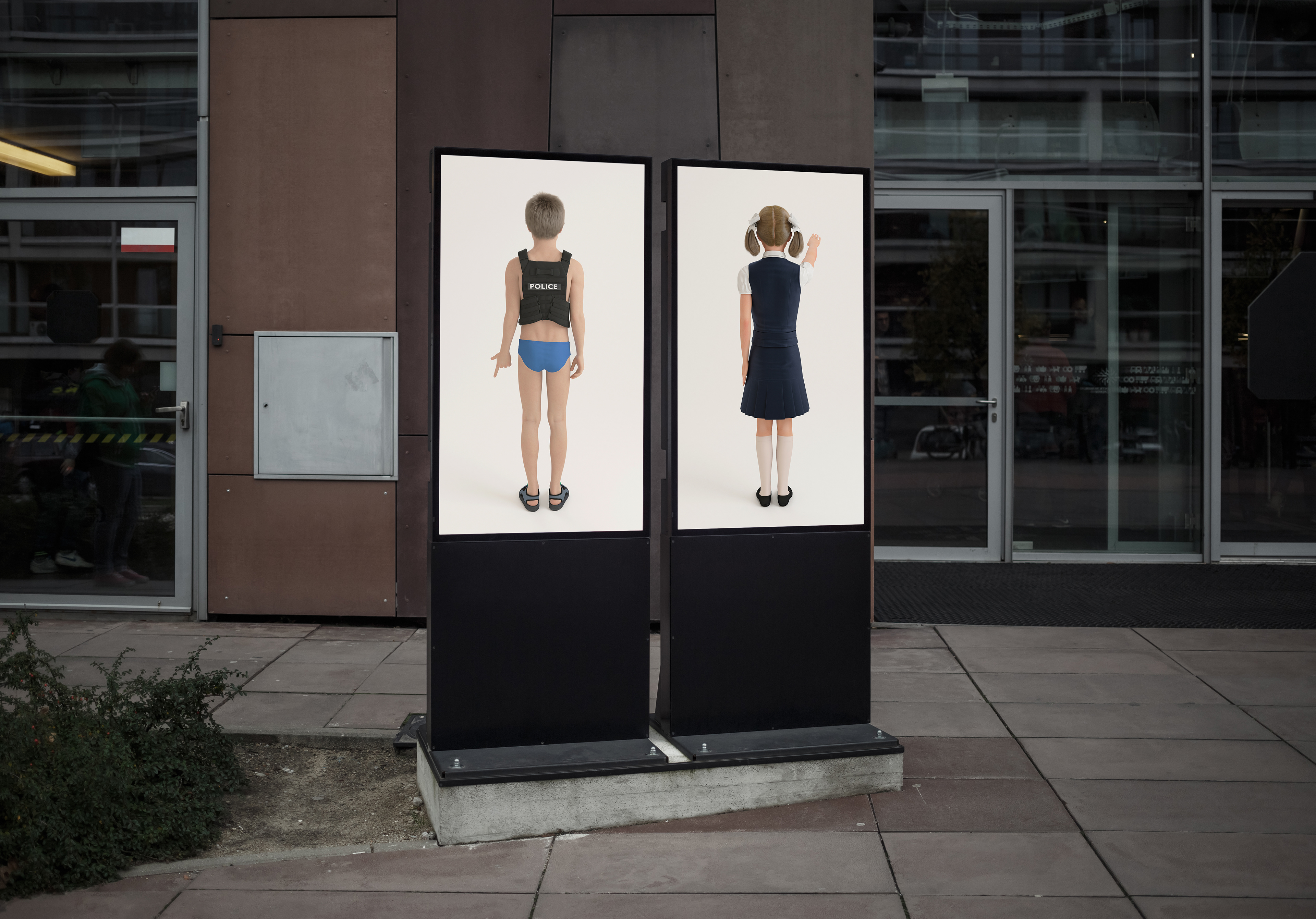
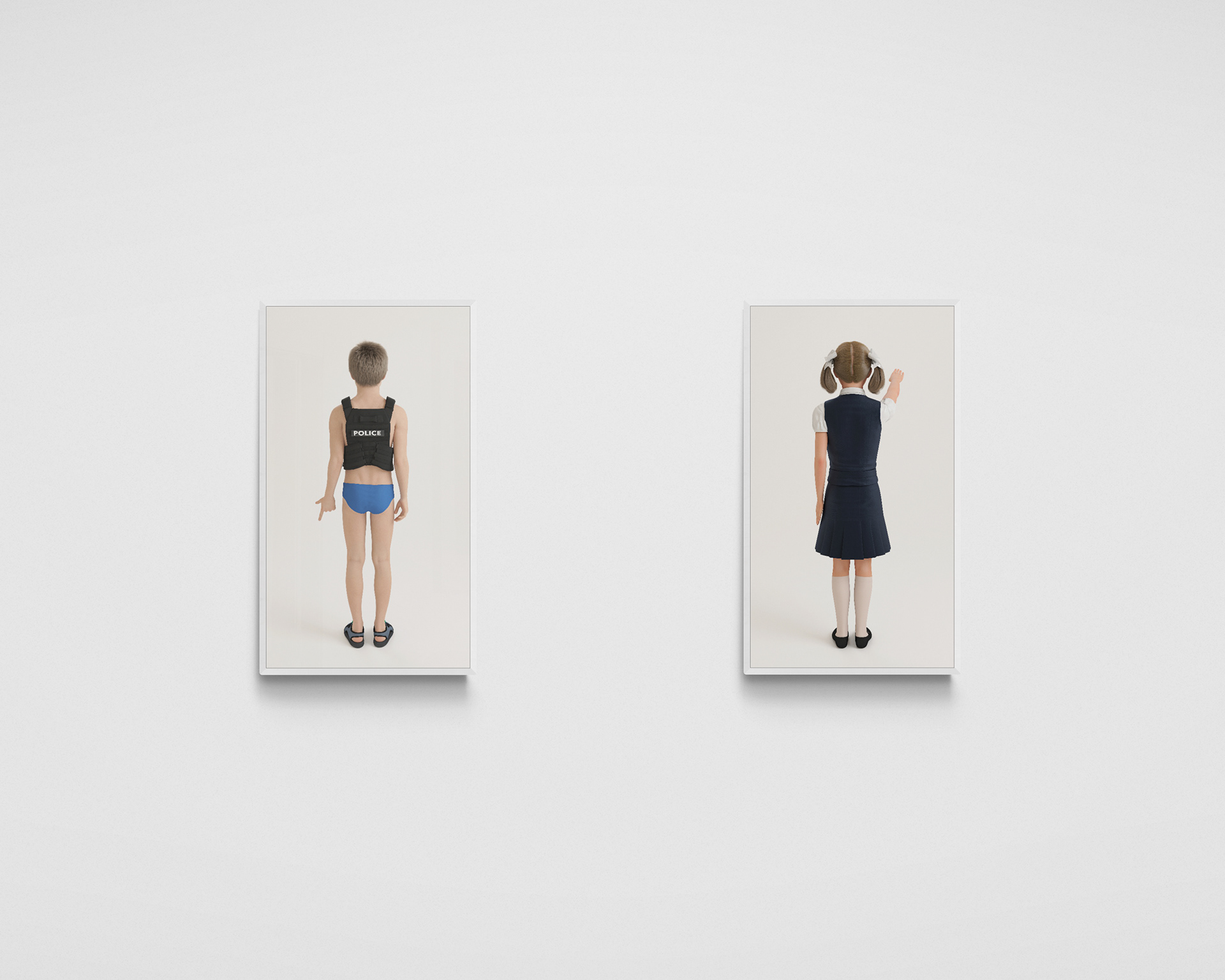
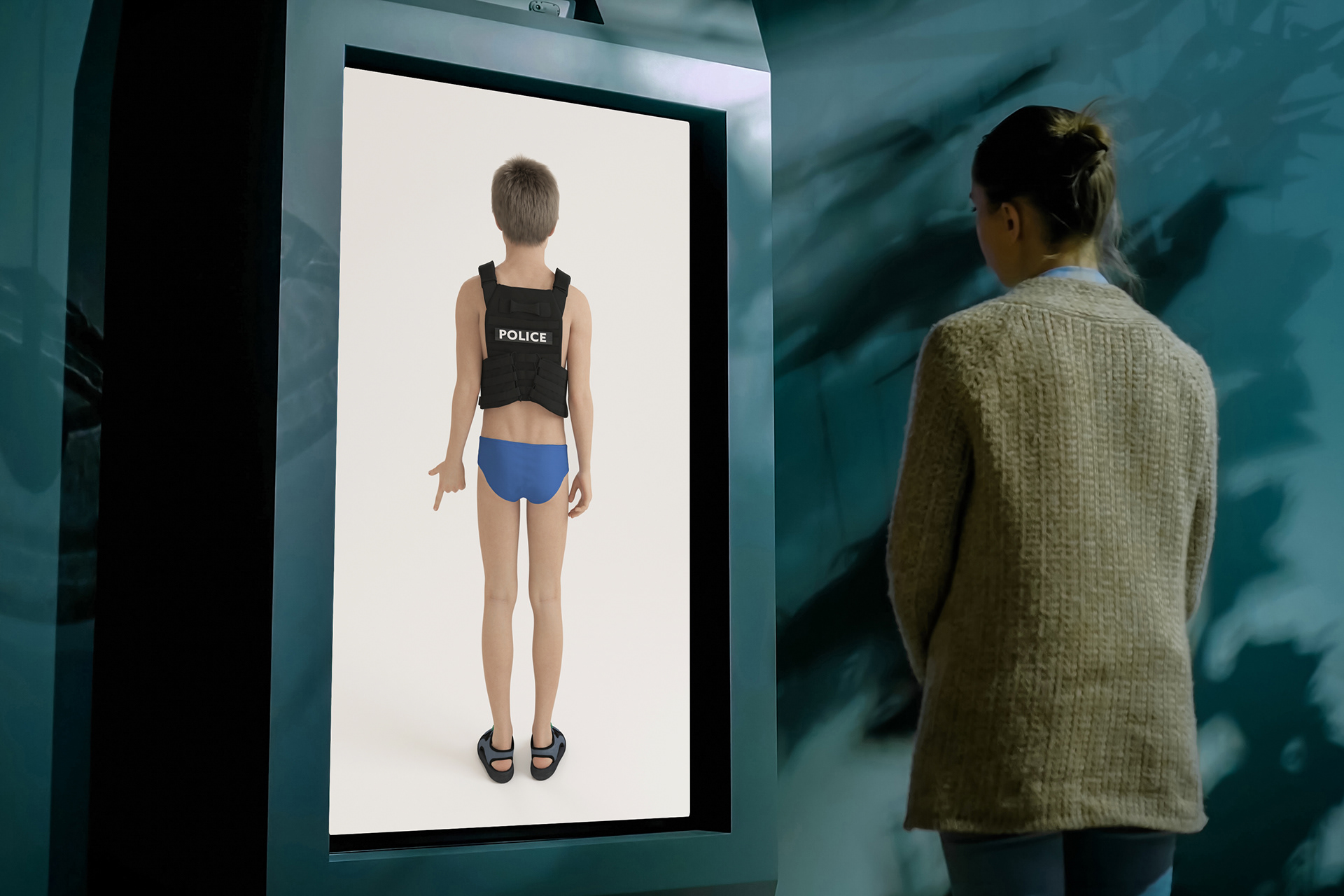
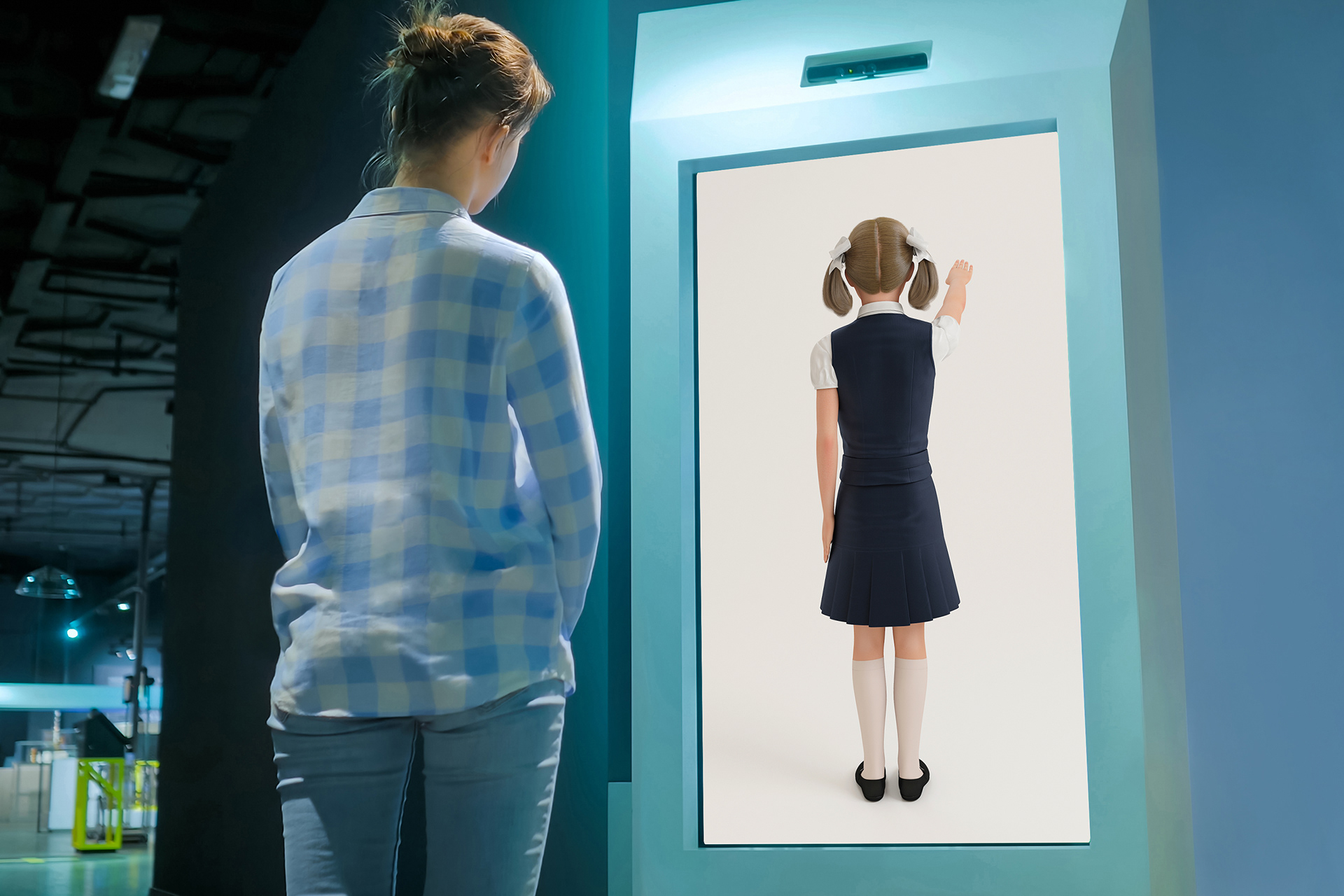
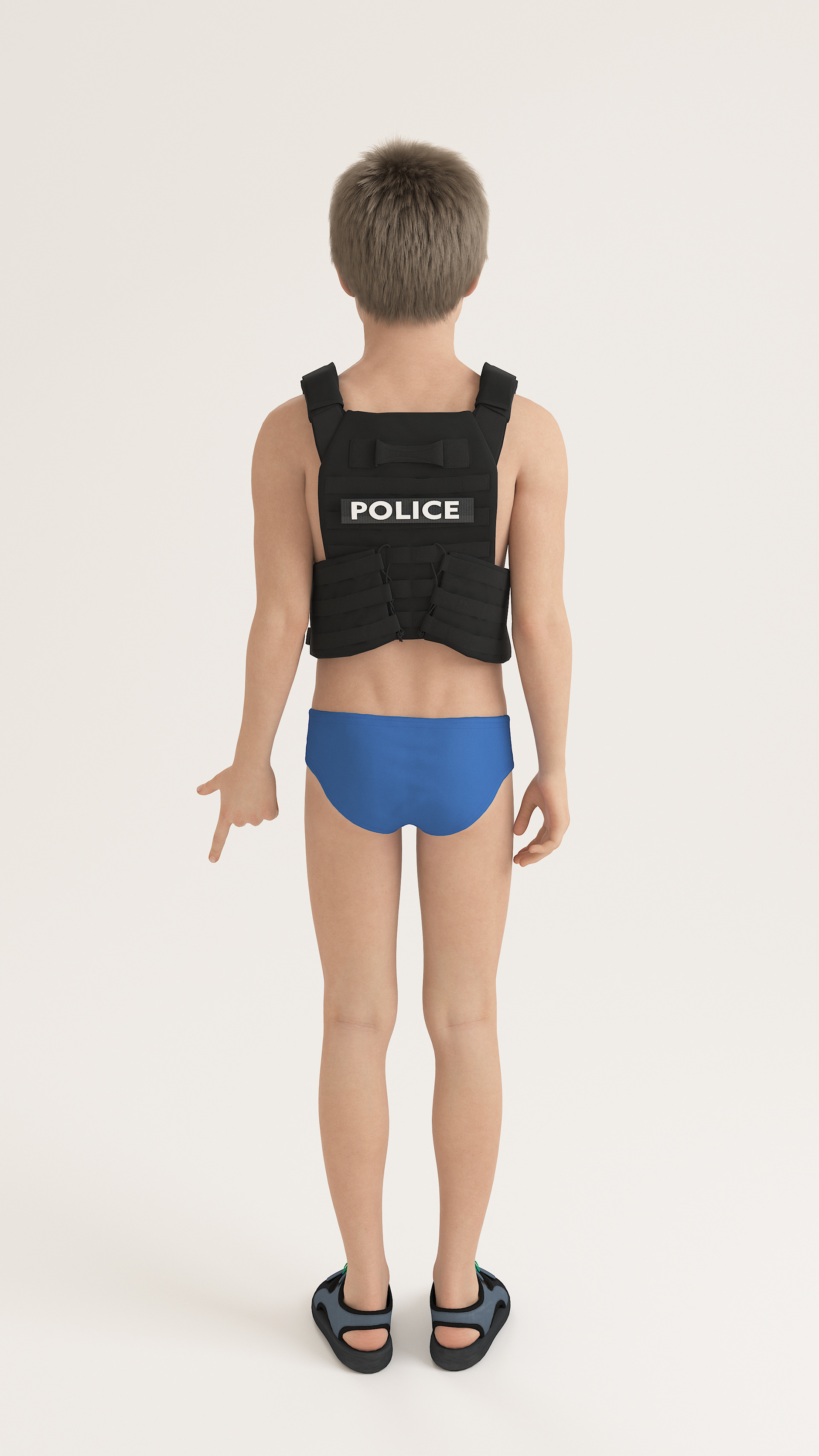
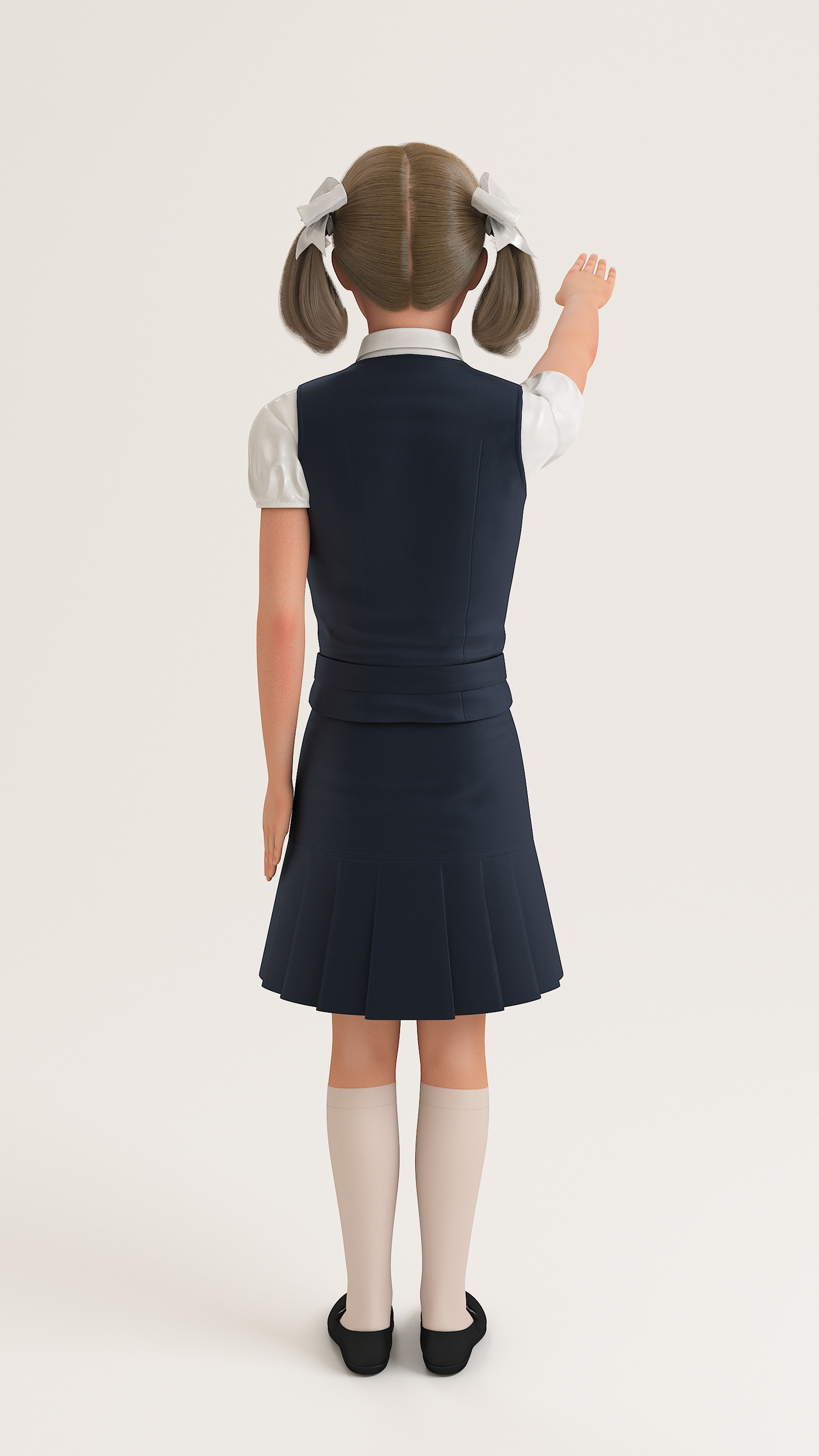
Harmless presents two child figures from behind, placed side by side as still images. On the left, a boy wears a black vest marked “POLICE” over an exposed child’s body. His bare back and legs make the costume look too heavy for him, while his left hand forms a finger-gun gesture beside his body. On the right, a girl in a school uniform raises her right hand in a dangerous oath-like gesture, somewhere between classroom obedience, salute, pledge, and political allegiance.
The work depends on the distance between the children’s bodies and the signs attached to them. Neither child is shown attacking anyone, yet both already carry signals of authority, discipline, and threat. The boy’s police vest and finger gun turn play into a rehearsal of force. The girl’s raised hand may begin as a learned school gesture, but it quickly slips toward salute, pledge, and obedience to power.
The title, Harmless, is not a reassurance but a trap. The children look calm, clean, and controlled, yet their gestures contain warning signals. Yú does not show violence as an event. He shows the moment when violence is still disguised as imitation, costume, and game. A hand shaped like a weapon and another hand raised as if taking an oath become small signs of how authority can enter the body before it appears as direct force.
By showing the children from behind, Yú removes facial expression and personal identity. We cannot read them through innocence or emotion. Instead, we are left with posture, clothing, and gesture. Without faces, the figures cannot be individualized or softened by expression. They become bodies shaped by instruction.
The image suggests that authority does not always enter childhood through open coercion. It can arrive as play, as uniform, as a repeated gesture, as a role that feels harmless until it has already been learned. The question the work leaves behind is what becomes of childhood when its games already contain the grammar of authority and violence.