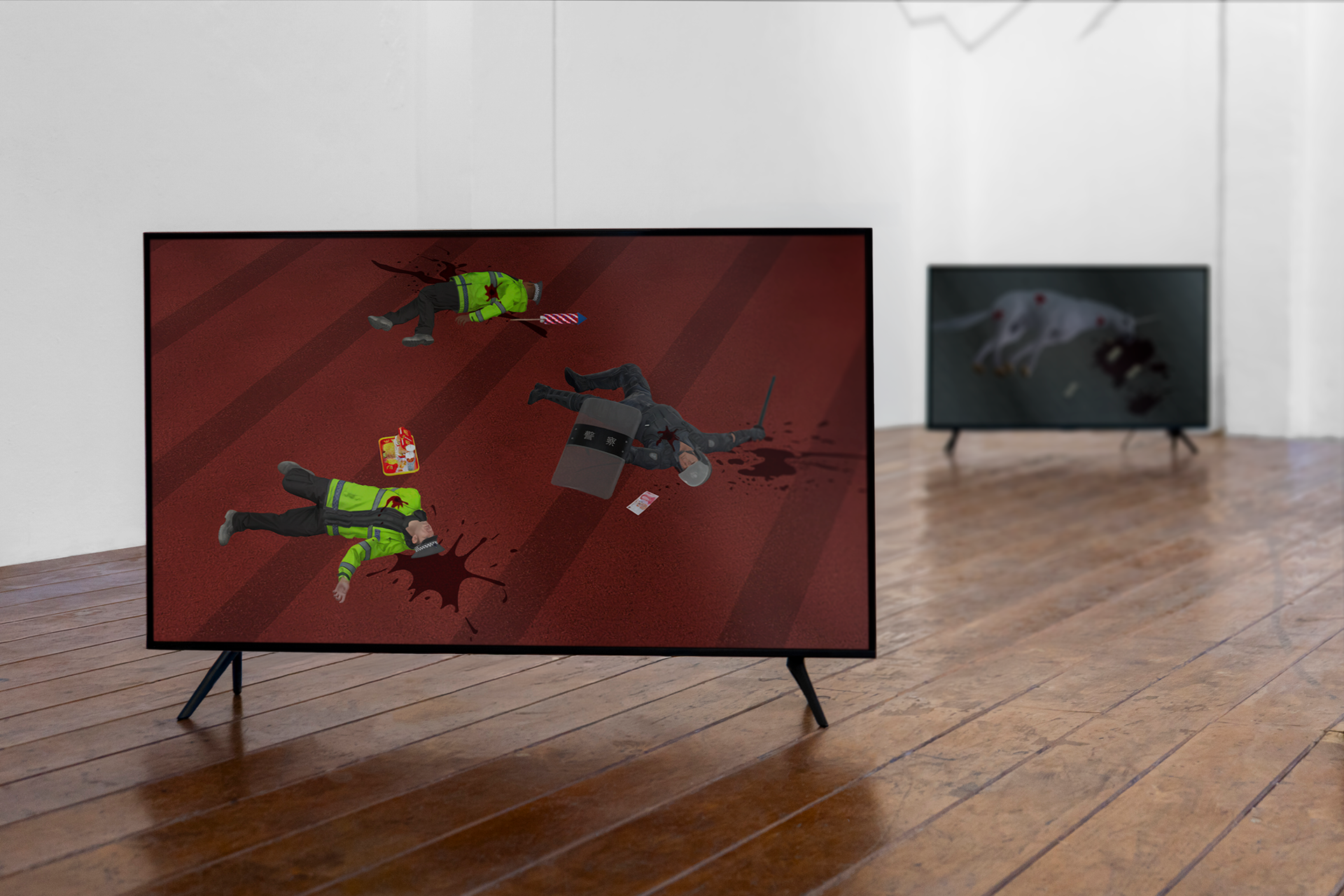
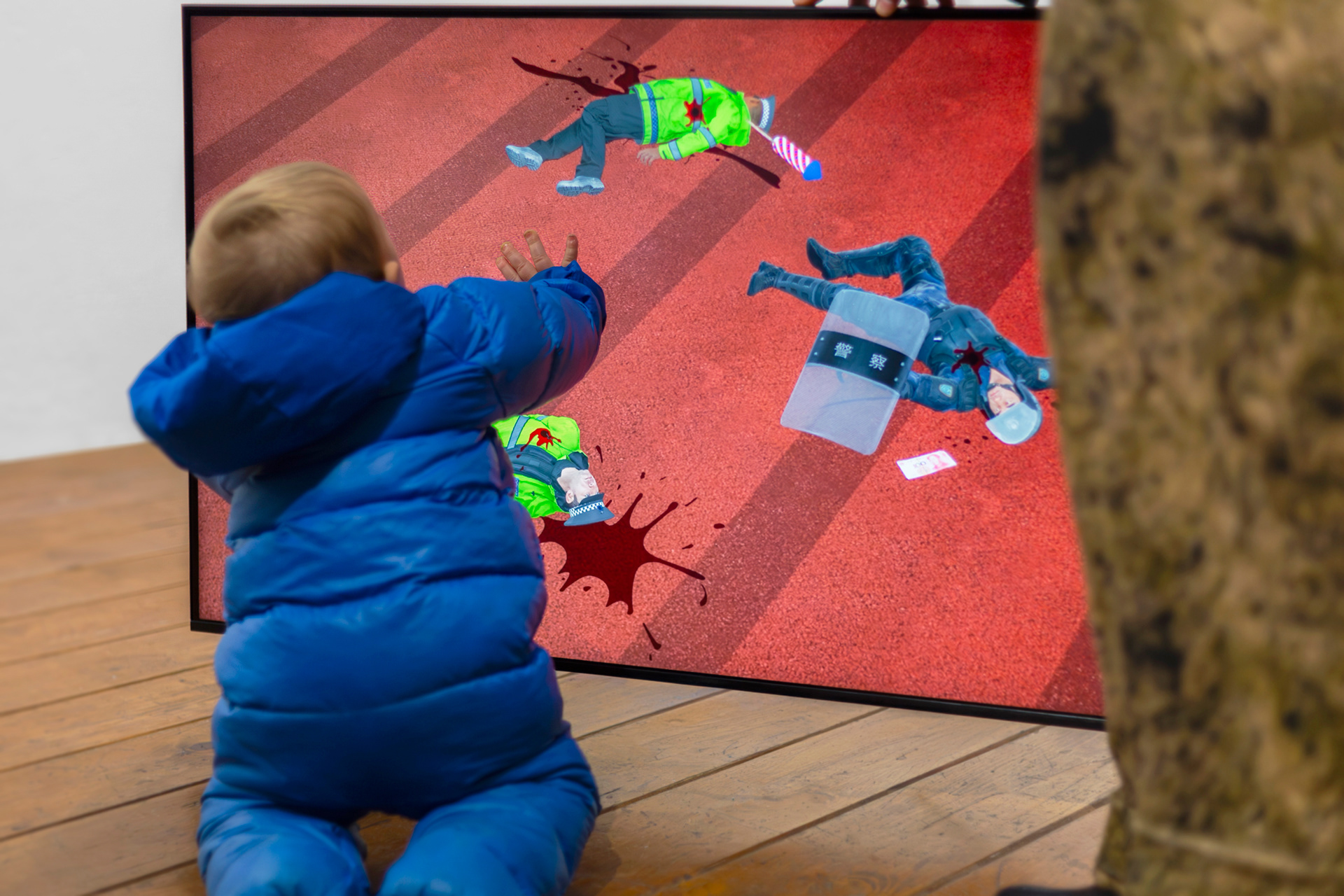
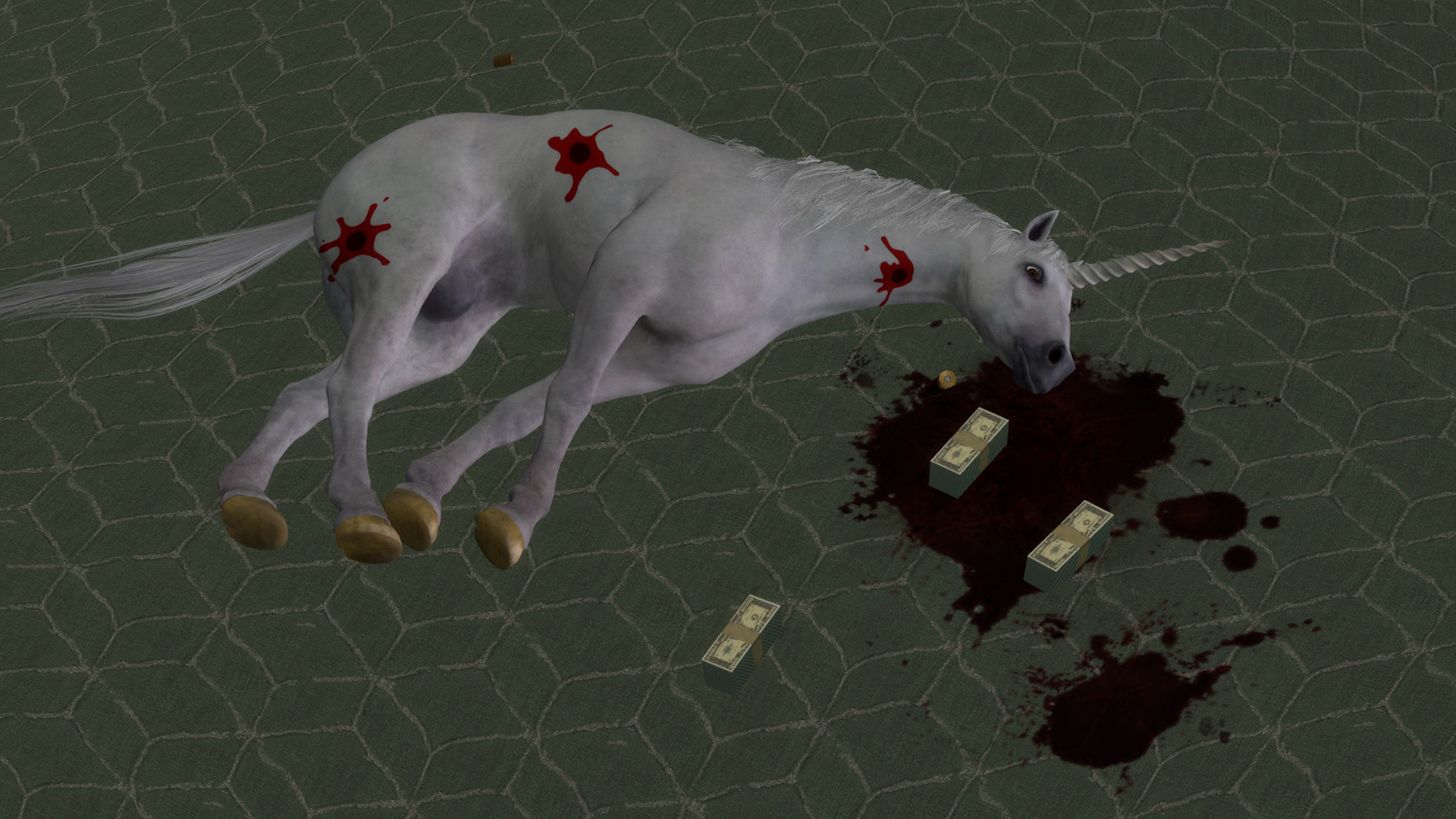
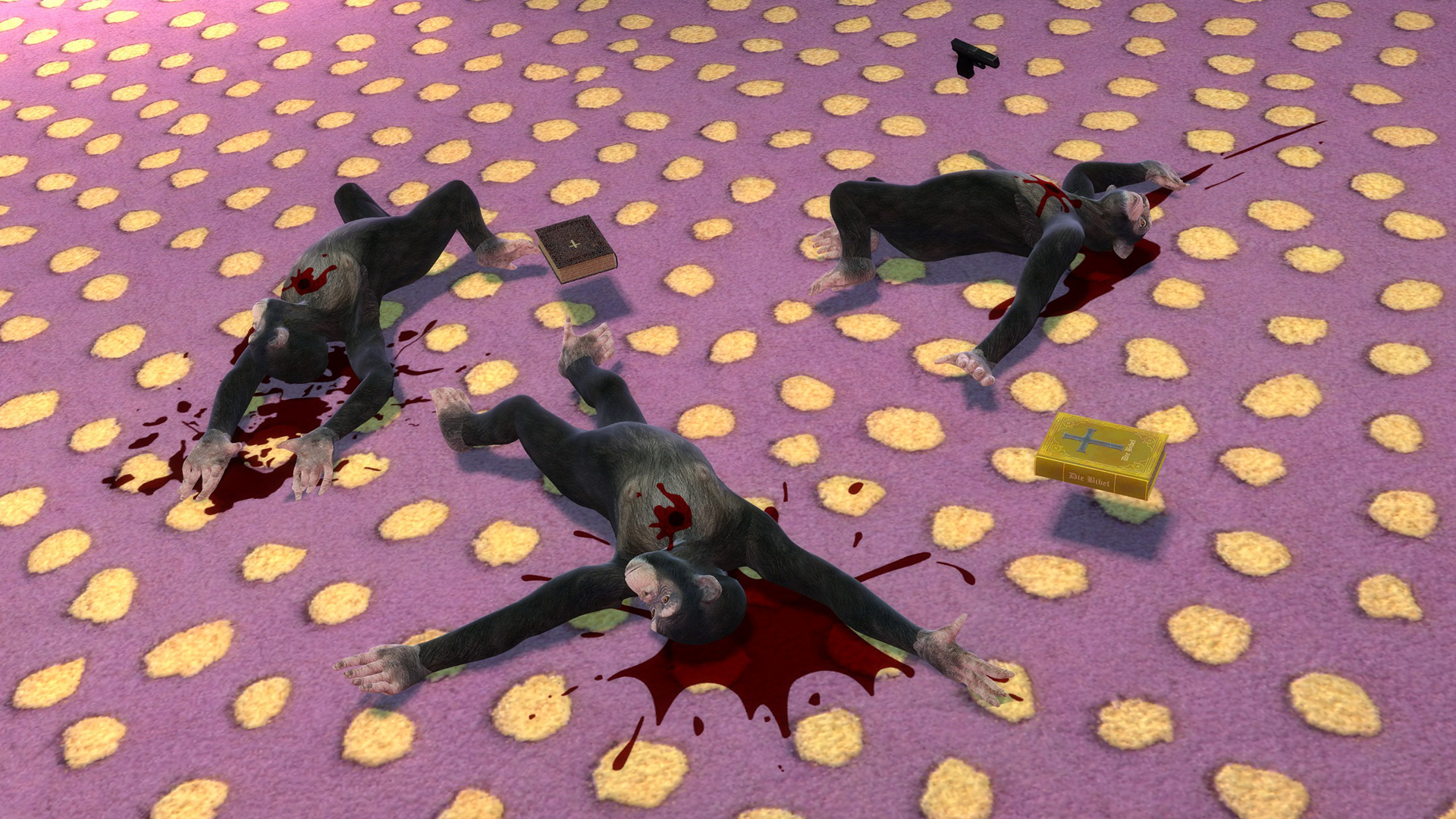
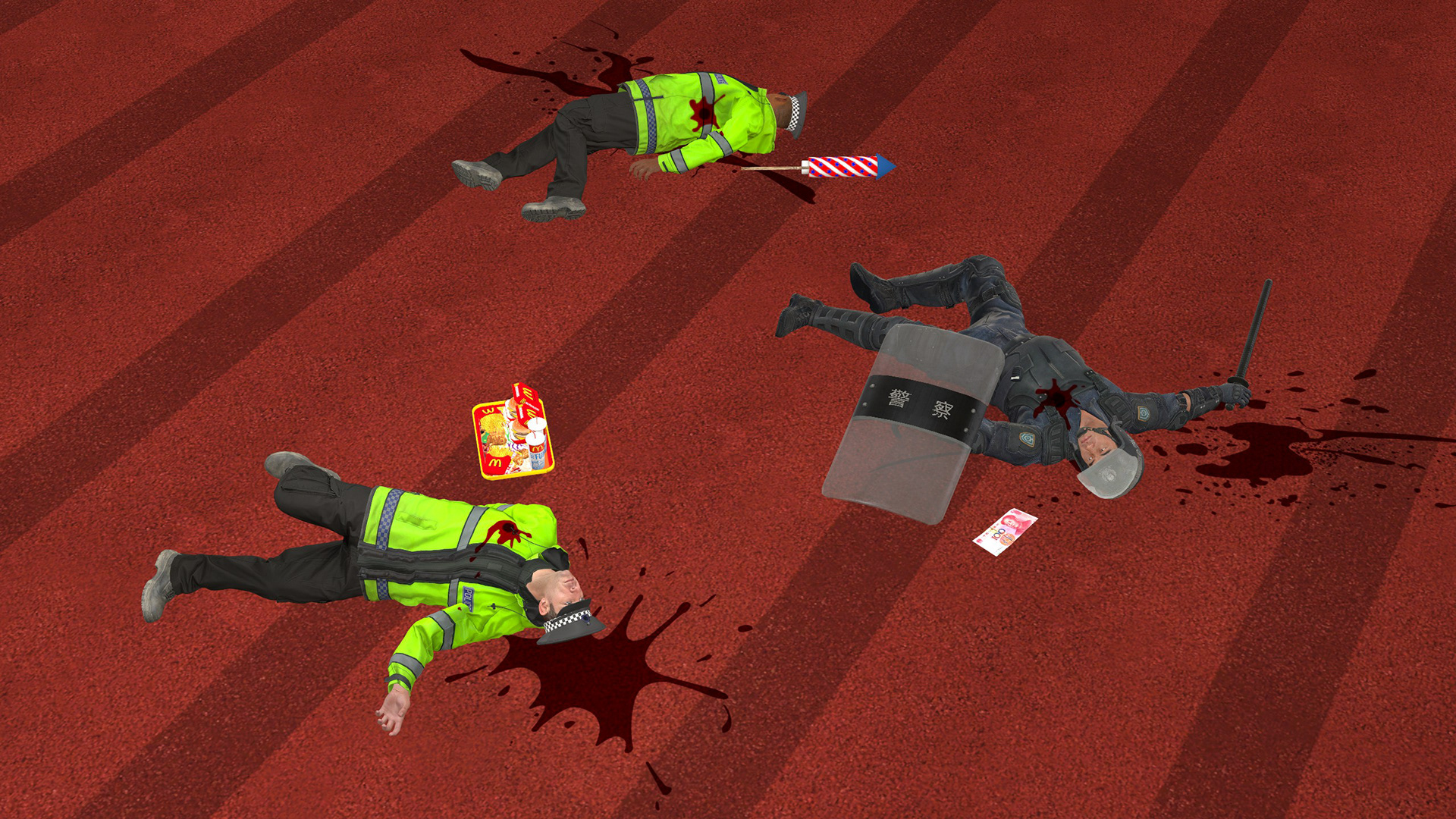
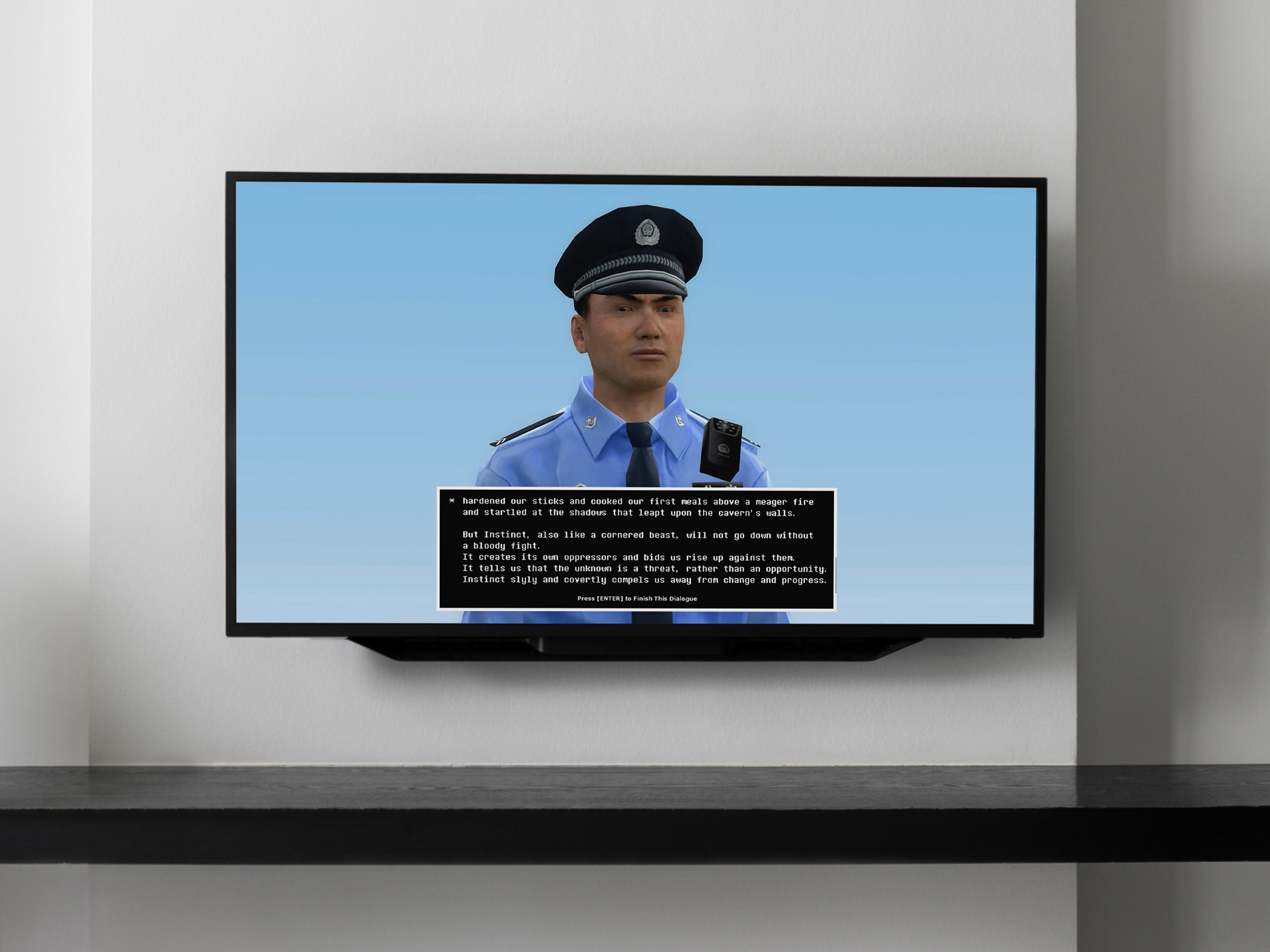
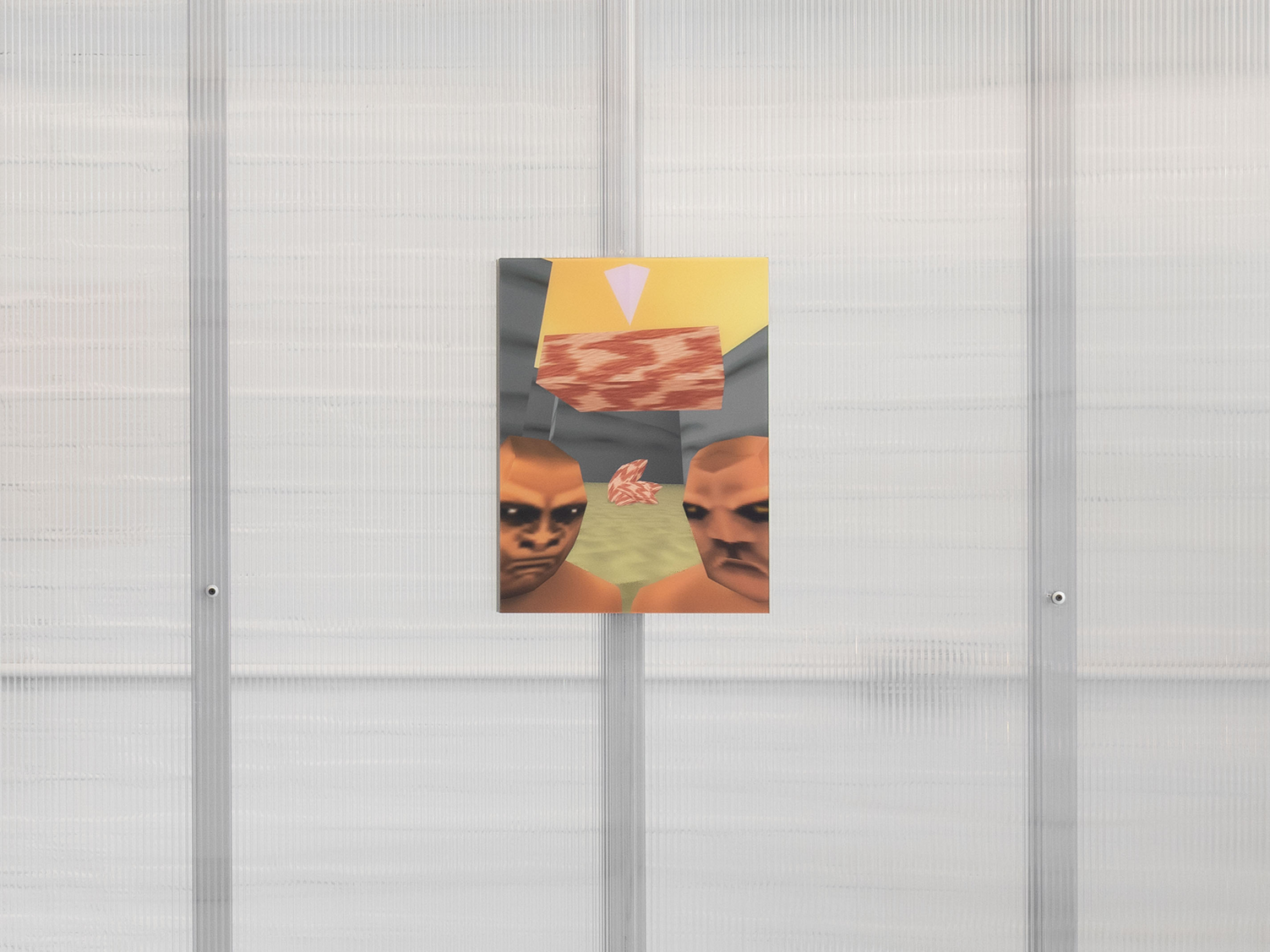
This three-screen floor installation by Xinhan Yu is fully constructed inside a game engine. Each screen shows a looping death scene. A unicorn, a police officer, and a chimpanzee lie motionless on textured virtual ground. Around each body, small objects float and rotate. These include cash, weapons, fireworks, fast-food packaging, and religious books. The motion copies a familiar game mechanic. In many games, killing a unit causes loot items to drop. Together, the three loops form a system of symbolic violence. This system links gameplay logic with cultural allegory.
The three figures come from different symbolic fields. The unicorn belongs to mythology and contemporary capitalist fantasy. It connects to ideas of miracles, rarity, and investment value. The police figure represents state authority. It points to law, discipline, public order, and sanctioned violence. The chimpanzee stands between animal and human. It often works as a distorted mirror of human behavior.
Inside the work, these figures are treated as equals. The game engine reshapes them through the logic of death. Their passing carries no tragedy, politics, or emotion. Their deaths serve a function. They turn into dead units inside a game economy. They exist as resources to be collected, not as lives that matter. Their bodies flatten into assets that support the larger system of the virtual world.
Each scene uses a different ground texture. One shows a red granular running track. One shows grey-green pavement. One shows pastel patterned fabric. These surfaces recall low-resolution, pre-made materials common in cheap or unfinished games. This visual choice removes drama from the deaths. The scenes avoid heroism and catastrophe. They appear routine and endlessly repeatable. The visual language feels intentionally low value. Violence stops being an ethical problem. It becomes procedural, casual, and system-driven.
The rotating objects around each body act as the work’s core structure. They follow pure loot logic. Kill a unit. Receive rewards. This rule reveals how virtual violence becomes gamified and economically organized. The unicorn drops money. The police drop fireworks, snack packaging, and paper currency. The chimpanzees drop Bibles and a handgun.
These objects are not random. Each group exposes tensions inside its symbolic system. The unicorn’s death produces capital. The police body breaks down into celebration items, consumer goods, and signs of authority. The chimpanzees split between religion and modern weapons.
Across all three scenes, symbols change when processed through the language of a game engine. Death turns into a state that produces resources instead of an endpoint. The loops never move forward. The bodies do not decay, disappear, or change. They remain fixed in a permanent post-death condition. This structure supports the idea of everlasting and meaningless violence. Violence no longer appears as an event. It functions as a neutral visual asset.
The installation rests directly on the floor. This placement forces the viewer to look down. The angle creates discomfort. It echoes the player’s viewpoint in games. The viewer looks from above. The position feels distant and instrumental. By placing the screens at ground level, the work copies how virtual worlds train us to watch death from a superior position, without emotional cost.
In the end, Xinhan Yu builds a post-narrative violence space through the language of the game engine. In this space, mythical creatures, state agents, and primate bodies all reduce to expendable gameplay units. Death works as a mechanic, not a moral break. Rotating loot objects acts as a cold parody of reward systems. The loop produces an endless and value-neutral form of destruction.